Blog

How telcos and police locate your SIM card

Trilateration, triangulation, and Wi-Fi RSSI in three steps

  • Patrik Pasko

  • August 25, 2026

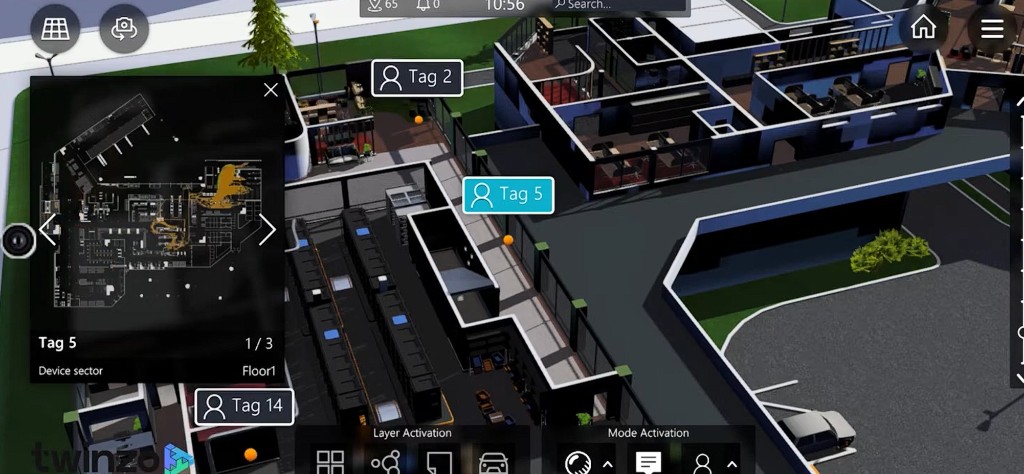
twinzo logistics analytics on a phone
How telcos and police locate your SIM card

How they find your phone

If you wonder how telco operators and police departments locate your SIM card, the answer is trilateration and triangulation.

It is simple geometry pin-pointing a phone using signal distance. No GPS required. The network already knows which towers can hear you, and from that it can reconstruct where you must be standing.

Trilateration vs triangulation

These two words get mixed up constantly. They are related, but they are not the same.

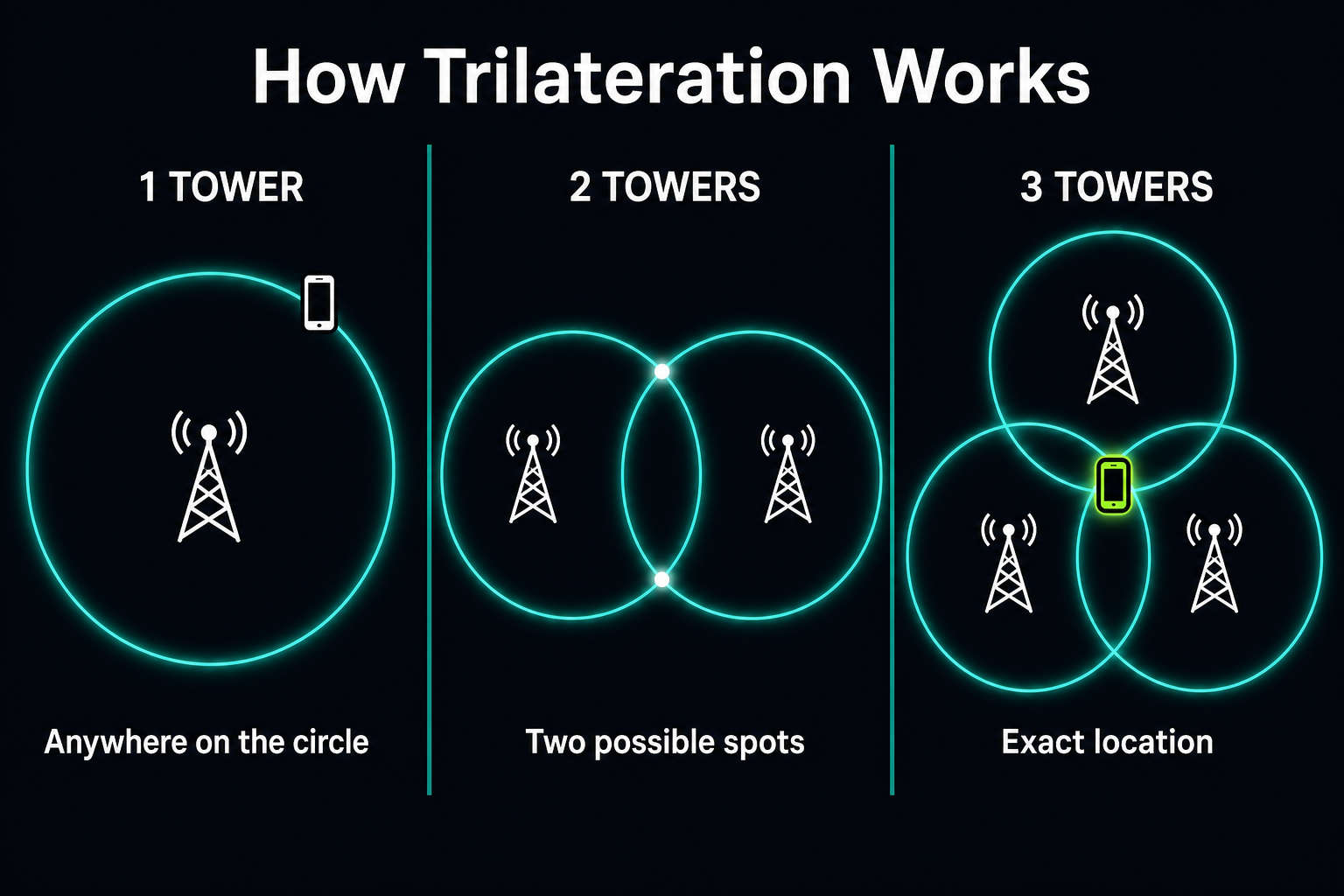
•  Trilateration uses distance. Each tower estimates how far away the phone is (from timing, signal delay, or power). Draw a circle with that radius. Do it from three towers and the circles meet at one point.

•  Triangulation uses angles. Towers measure the direction the signal arrived from. Two bearings are enough to cross on a map.

Cell networks use both. The three-circle picture is trilateration. That is the method we break down below.

How it actually works in 3 steps

1 tower: Gives a distance radius. Knowing you are somewhere on a circle 10 km wide isn't very helpful.

2 towers: Intersects two circles, narrowing the location down to just two possible spots.

3 towers: Adds the final circle. The single point where all three overlap is the exact location.

How trilateration works: one tower gives a radius, two towers leave two possible spots, three towers pin the exact location

Want even higher precision? That's where Wi-Fi RSSI comes in

Cell towers get you to a neighborhood. Indoor walls, reflections, and sparse rural towers all limit how tight that circle can get. For room-level accuracy, phones switch to a denser set of radio beacons: Wi-Fi access points.

Google maintains a massive background database of Wi-Fi IDs paired with GPS coordinates, constantly updated by Android phones passing by, even when sleeping. When a device scans nearby Wi-Fi networks and measures their signal strength (RSSI), it checks those IDs against the database.

RSSI is not a perfect distance meter, but with several known access points it is another trilateration problem: stronger signal, closer AP. Combining Wi-Fi signals with cell tower trilateration narrows the location down from a general neighborhood to the exact room you are standing in.

Same geometry, indoors

The math does not change when you walk into a factory. BLE beacons, UWB anchors, and Wi-Fi APs are just towers with shorter range. One anchor gives a radius. Two leave a pair of candidates. Three pin a point.

That is why indoor RTLS and outdoor cell location look different in hardware, but share the same geometry. If you want the industrial version of this stack, start with our guide to RTLS technologies.

You might also be interested in:

Quuppa BLE in a 3,000-Visitor Office Twin

Quuppa BLE in a 3,000-Visitor Office Twin

Reception knows who badge-scanned. Facilities still cannot see who is in the server room, which meeting room filled, or which parking bay is free. Quuppa BLE positions land on the twinzo 3D building so security, HVAC, and visitors work from one picture.

Read more
Intuitive UX for Digital Twin Configuration

Intuitive UX for Digital Twin Configuration

CRUD design is a curse of developers who know the backend entity model. Here is how twinzo is rebuilding notification setup into one next→next→next workspace so you can use IoT data in digital twins and make your factory smart.

Read more

Landscape mode is not supported, please rotate your device.

By clicking “Accept”, you agree to the storing of cookies on your device to enhance site navigation, analyze site usage, and assist in our marketing efforts. View our Privacy Policy for more information.