Where RTLS benefits show up
Real-time location system (RTLS) benefits are not a prettier map. They are three plant jobs that share one live pin: forklift fleet utilization, lower WIP levels, and faster maintenance response. Sort them by the decision each job will enforce, not by the vendor slide.
What an RTLS benefit means in plant language
On site, an RTLS benefit is the minutes between events other systems already own. A barcode at the dock is true at the scan. A WMS putaway is true when someone confirms a bin. An MES complete is true at Station 4. An ERP transfer is true when stock moves on paper. None of those records follow the asset after it moves. RTLS fills that gap as asset tracking that stays true while people, vehicles, materials, and tools still move, on a hall map people already trust.
The companion definition lives under what RTLS is. The filter for plants that should skip a grid lives under when RTLS helps, and when it does not. This page stays on the three jobs where a live pin usually pays.
Logistics fleet optimization
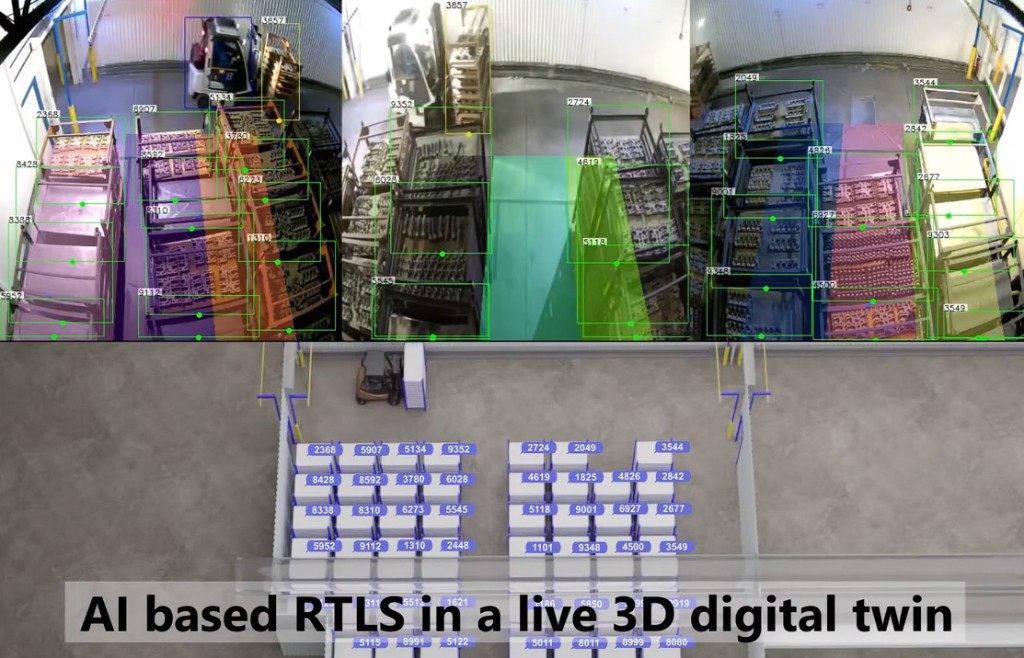
The main benefit on most floors is fleet management for forklifts and tuggers. Empty rounds, idle loops, and unbalanced workloads hide when location is only a last scan. Dense enough coverage rebuilds those paths into a spaghetti picture and a heat map logistics can act on this week. Utilization becomes a number you can cut trucks against, not a gut feel at month end.
That number is the hiring decision. If the same moves finish with fewer vehicles and fewer empty miles, the plant does not need another driver for the next volume bump, or it can shrink headcount when volume is flat. The benefit is not a faster forklift. It is the same throughput with less fleet and less labor sitting in search and empty travel. That picture is what internal logistics optimization actually runs on. Match radio accuracy to that job in start with the decision, not the technology.
Lower WIP levels
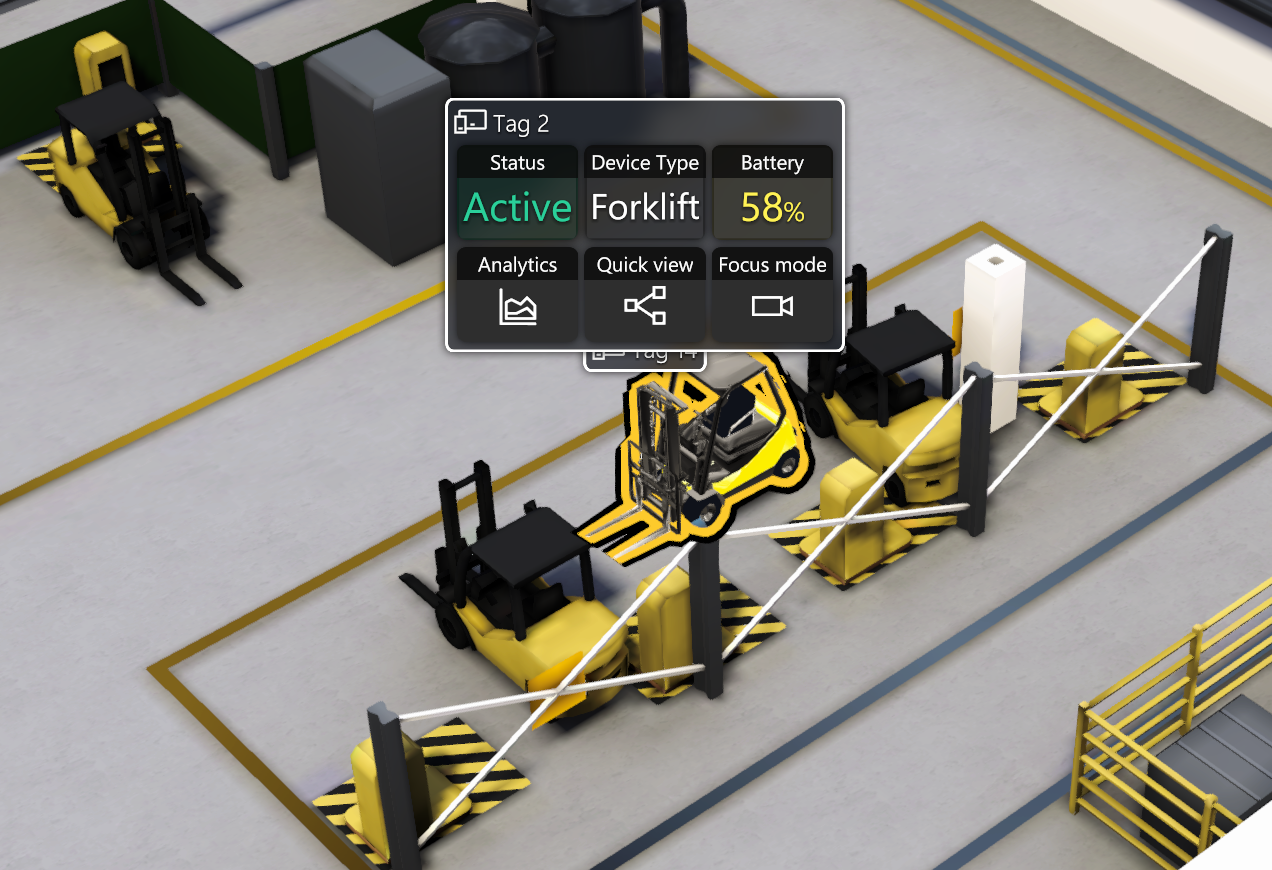
Work in progress (WIP) is material that has entered production but is not finished goods yet. Deep WIP levels are often a location problem dressed up as a shortage problem. When cages, stillages, and kits drift after the last WMS or MES event, teams protect the line by releasing more material than the process needs. Capital sits on the floor because nobody trusts where the last batch actually is.
A live pin changes that math. When the map shows which bay holds the cage, which buffer is blocked, and which kit is already next to the wrong cell, planners can cut safety stock that existed only to cover search time. Less material in process means less money tied in inventory, less floor congestion, and shorter dwell in buffers that used to hide missing loads. The same hall view that finds the cage also feeds production monitoring when a line wait is really a location wait.
Faster maintenance response
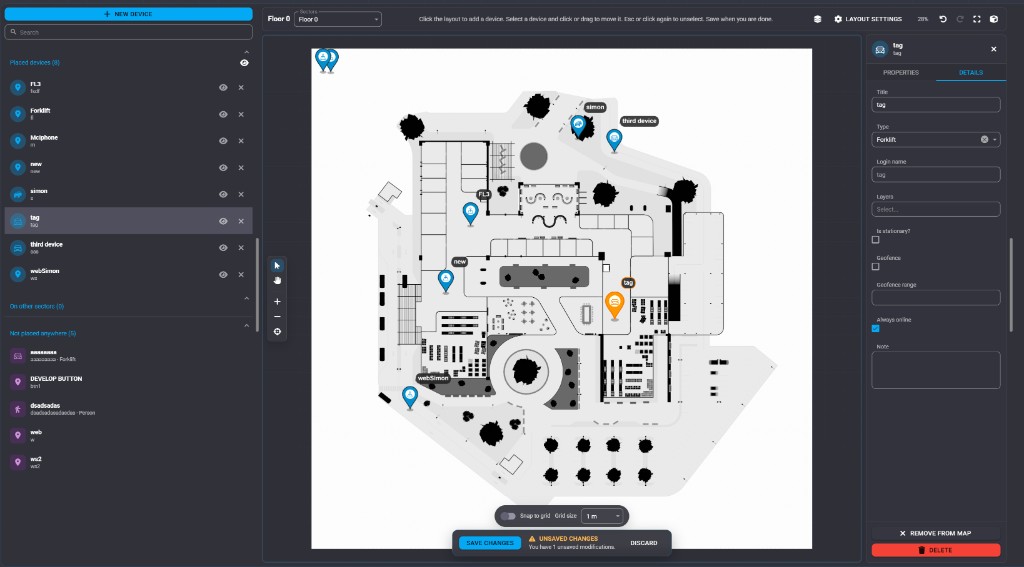
Maintenance response time is often travel and search, not wrench time. A line stops, the CMMS opens a work order, and the clock still burns while someone finds the nearest qualified technician, the right tool cart, or the spare that left its last rack. That hunt inflates mean time to repair (MTTR) even when the repair itself is short.
RTLS on badges, tool cages, and critical spares shortens the path to the asset. Dispatch sends the closest person. The cart is a pin, not a radio guess. The plant still needs procedures and parts master data. Location does not replace predictive maintenance. It removes the minutes that used to sit between the alarm and the first useful action on the floor.
How teams choose which benefit to buy first
1. Name the job this quarter will enforce - Fleet utilization and headcount, WIP capital on the floor, or maintenance response. If nobody will open the map during the shift, you bought a dashboard.
2. Tag the assets that job needs - Forklifts for fleet. Cages and kits for WIP. Badges, tool carts, and critical spares for maintenance. Mixing every SKU into one hardware buy is how total cost of ownership quietly explodes.
3. Match accuracy to that job - Aisle search and fleet paths often stay on Bluetooth Low Energy (BLE). Tight cells and painted rules may need ultra-wideband (UWB). Dock presence stays on an RFID gate. Proximity RFID covers a bay or station. The most advanced RFID RTLS mounts antennas on the ceiling and tracks a live X, Y, and Z, a different vendor and price point, covered in RFID for RTLS. The split is walked under accuracy floors set by BLE versus UWB.
4. Price tagged assets, not floor area - Hardware, licences, and battery rounds follow what you tag. The documented range of those outlays sits in the smallest documented RTLS case. A longer radio primer lives in getting started with RTLS.
Once the pin sits on a live twin
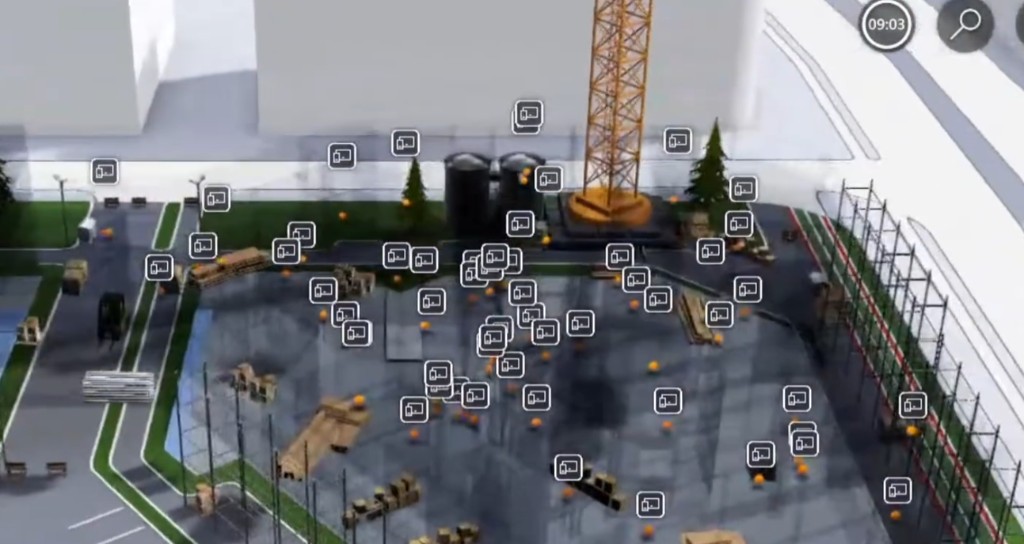
This is where twinzo sits after the concept is clear. The product job is not a second location vendor. It is the live hall view that can ingest BLE, UWB, RFID, or the systems you already run, then put those pins next to material state and production signals so fleet, WIP, and maintenance see the same floor. Capability detail lives on the features overview.
Buy the pin for the job this quarter will enforce. Then let the twin carry it into the work the dock, the line, and maintenance already own. Get in touch if you want to walk the same three benefits on your own facility model.