What to include when calculating RTLS ROI
A logistics or IT lead builds an ROI for RTLS from unit prices and a licence line. The payback only holds if the sheet also carries the install and upkeep work that never arrives as a neat SKU.
What the first quote usually covers
Most vendor numbers price tags, locators or gateways, and software. That is enough to start asset tracking talk and compare accuracy bands under accuracy floors set by BLE versus UWB. It is not the full bill the plant will own over three to five years. The gap between quote and total cost of ownership is what this page puts on the ROI checklist. Technology options themselves sit under RTLS technologies out there and BLE for RTLS.
Install work that rarely sits next to the hardware line
Ceiling or high-wall mounting means lifts, permits, and people cleared for work at height. Each locator or gateway needs a safe stop, a fixture, and often a power drop. PoE or separate mains changes labour time. Sparse halls finish faster. Dense grids for continuous paths or utilization stretch the same crew across weeks.
Cabling runs with the mounts. Backbone to a switch closet, drops for arrays, and cable trays through metal halls all add metres (feet) of material and electrician time. Plants that already own spare switch ports and tray routes absorb less. Plants that must open ceilings or cross fire zones add both cost and schedule risk before the first live position appears.
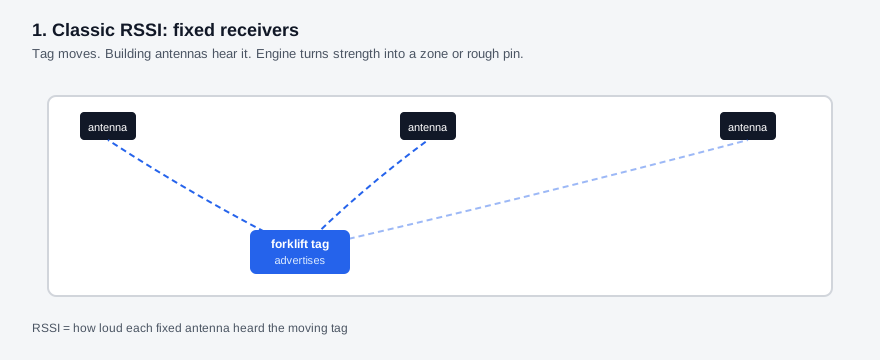
On-site compute and network limits
Many deployments keep location engines and history on plant LAN hardware rather than only in a public cloud. That means rack space, power, cooling budget, and a switch or firewall path that can carry position traffic without starving MES, WMS, or SCADA. Put the server or appliance count, spare U in the rack, and whether the location VLAN stays inside existing LAN distance and bandwidth limits on the same sheet as the tags.
If the engine sits across a WAN link, add latency, failover, and data-residency rules to the ROI assumptions. None of those lines appears in a tag unit price. They decide whether the live map stays usable on a busy shift.
Tag, battery, and update load after go-live
BLE tags often run 1-3 years on a cell. UWB tags may need a charge every few months when update rates stay honest. Multiply swaps, chargers, and spare housings by the fleet size. Forklifts collide with racks and leave tags in the workshop. Someone must remount, re-pair IDs after shop work, and keep a spare pool so a dead unit does not open a blind spot during empty-round or dwell analysis for internal logistics.
Firmware and software updates land on tags, locators, gateways, tablets, and the location server. Plan who applies them, whether a maintenance window is required, and how often vendors ship patches. Missed updates show up later as flaky coverage or unsupported hardware, which is still an ROI cost even when no purchase order fires that week.
Questions to put on the ROI sheet
1. Install labour - How many mounts need work at height, how many cable metres (feet), and who owns power and tray?
2. Plant IT footprint - How many rack units, power feeds, and LAN segments does the location stack need inside site limits?
3. Tag lifecycle - Battery swap interval, spare count, remount labour after damage, and ID checks after workshop returns?
4. Updates - Who patches tags, locators, and servers, and how often does that interrupt production IT windows?
5. Benefit assumptions - Which shift decisions will actually use live positions, as framed in start with the decision, not the radio and when RTLS helps, and when it does not?
Put those lines next to the hardware quote before you sign the payback number. Definitions of the layer itself start at what is RTLS. Get in touch if you want to walk the same cost list against your own facility model.