# twinzo

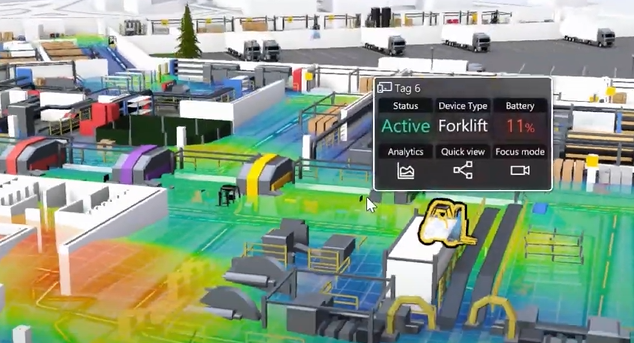
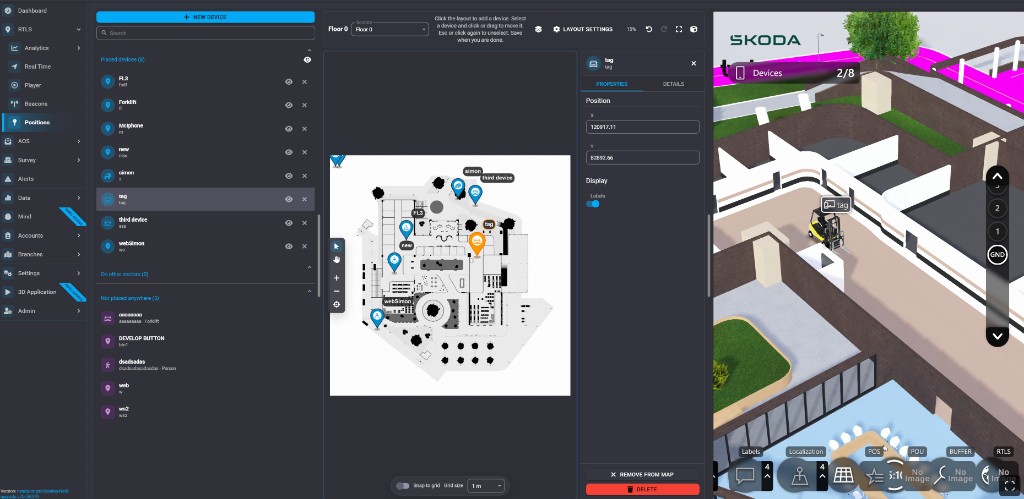
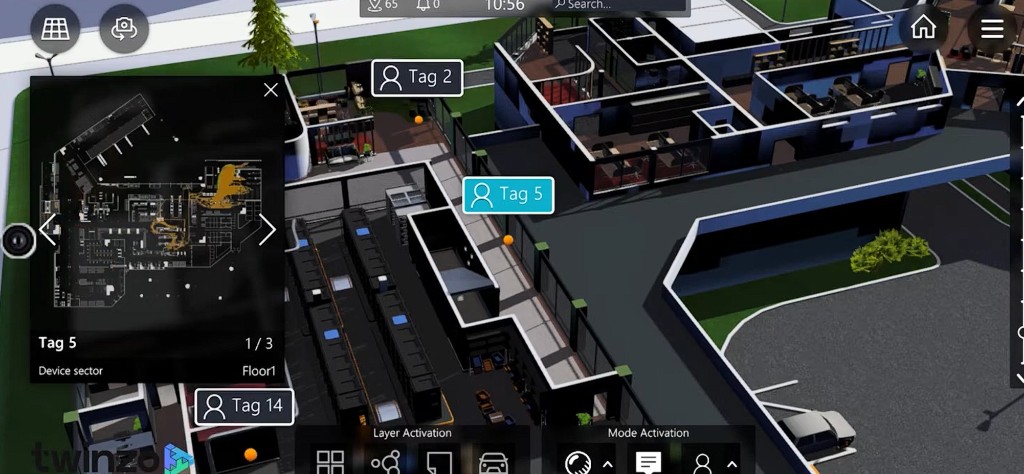
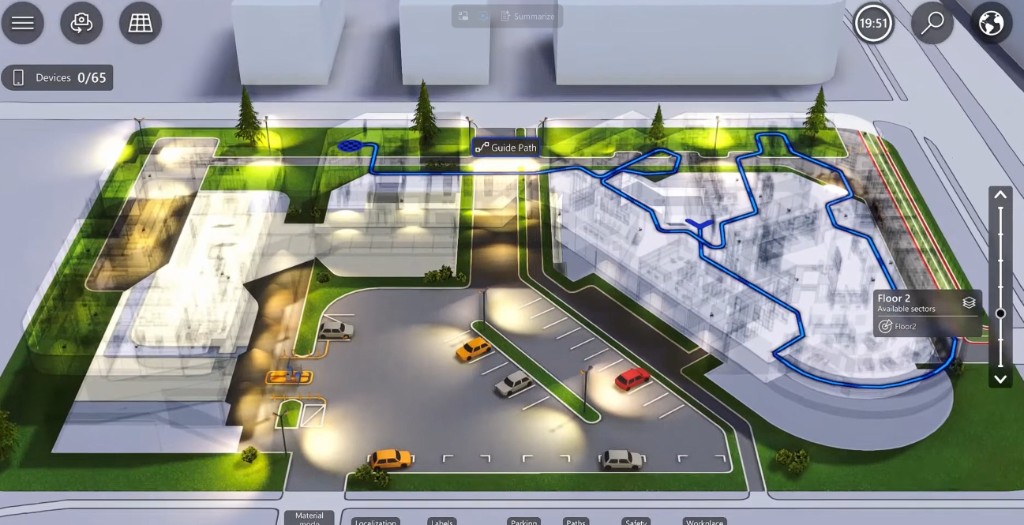
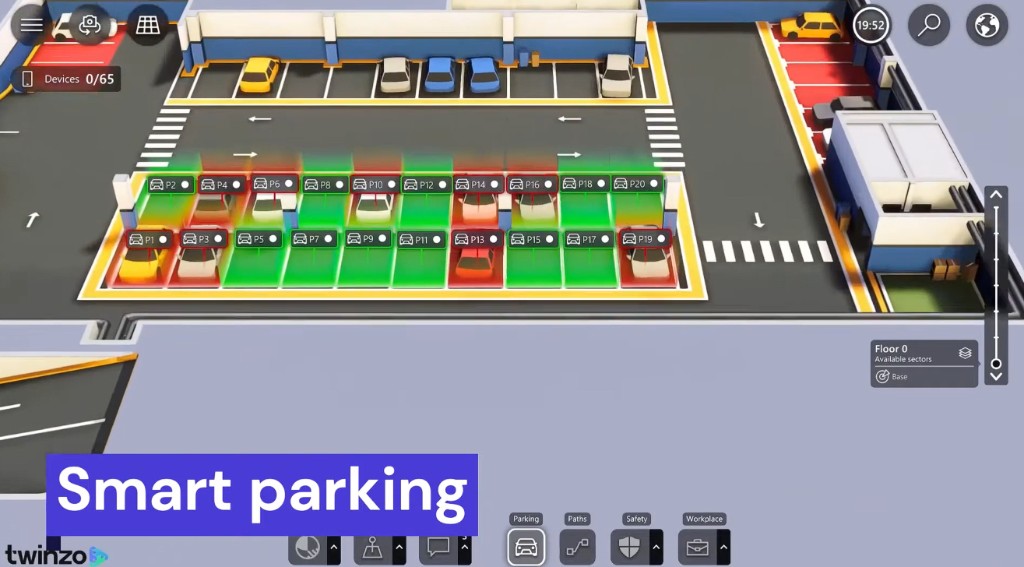
> twinzo is a live 3D digital twin of a factory or warehouse. It combines RTLS location data, IoT sensors, production KPIs, and material flow in one spatially accurate model that runs on phone, tablet, and desktop.

twinzo is the product of 5.0 technologies j.s.a. (IČO 54530300), based at Nezábudkova 471/8, 929 01 Dunajská Streda, Slovakia. CEO: Michal Ukropec. Contact: info@twinzo.eu, +421 2 323 132 14.

Typical outcomes: cut about 1/5 of a forklift fleet in 6 months, 35% faster decisions from real-time data, ROI in 3–8 months. First use cases are forklift utilization, automated material ordering, and a 3D Gemba board.

Full site map: https://www.twinzo.com/sitemap.xml

## Pages

- [Home](https://www.twinzo.com/): Live 3D digital twin for factory logistics, RTLS, and real-time operational visibility.
- [About](https://www.twinzo.com/about): Company story, team, and history of twinzo / 5.0 technologies.
- [Features](https://www.twinzo.com/features): See, know, and manage facility data in a live 3D digital twin.
- [Pricing](https://www.twinzo.com/pricing): Request a price offer for twinzo digital twin software.
- [Partners](https://www.twinzo.com/partner): Partner program for integrators and technology partners.
- [Contact](https://www.twinzo.com/contact-us): Sales and company contact form.
- [Whitepaper](https://www.twinzo.com/get-whitepaper): Free whitepaper on digital twins and logistics optimization.
- [Logistics optimization](https://www.twinzo.com/optimize-internal-logistics): RTLS-based forklift and internal logistics optimization.
- [Logistics management](https://www.twinzo.com/material-order-automation): Automated material ordering to avoid production micro-stoppages.
- [Gemba in 3D](https://www.twinzo.com/monitor-production): Production, quality, and logistics Gemba board in a 3D digital twin.
## Blog

- [Blog](https://www.twinzo.com/blog): Industry 4.0, digital twin, and logistics articles.
- [GPS Plus Indoor Location: Track Assets From Supplier Yard to Factory Floor](https://www.twinzo.com/blog-post/gps-indoor-location-asset-tracking-across-sites)
- [Correlate Plant Systems by Space on the Digital Twin](https://www.twinzo.com/blog-post/correlate-plant-systems-by-space-on-digital-twin)
- [How Photogrammetry Builds Plant 3D Models From Photos](https://www.twinzo.com/blog-post/photogrammetry-for-plant-3d-models)
- [Ignition MES Integration With the twinzo Digital Twin](https://www.twinzo.com/blog-post/ignition-mes-digital-twin-integration)
- [Man Down Detection With Live RTLS Position](https://www.twinzo.com/blog-post/man-down-detection-with-rtls)
- [SLAM Localization: Sensors, Algorithms, and Industrial Providers](https://www.twinzo.com/blog-post/slam-localization-technologies)
- [Add Assets to Your Digital Twin Without Live Tracking](https://www.twinzo.com/blog-post/add-assets-to-your-digital-twin-without-live-tracking)
- [Live 3D Stock From ERP Without Installing RTLS](https://www.twinzo.com/blog-post/live-3d-stock-from-erp-without-rtls)
- [Quuppa BLE in a 3,000-Visitor Office Twin](https://www.twinzo.com/blog-post/quuppa-ble-smart-building-office-twin)
- [How telcos and police locate your SIM card](https://www.twinzo.com/blog-post/how-telcos-and-police-locate-your-sim-card)
- [Intuitive UX for Digital Twin Configuration](https://www.twinzo.com/blog-post/intuitive-ux-for-digital-twin-configuration)
- [Strengthening Europe’s Defense Manufacturing](https://www.twinzo.com/blog-post/strengthening-europes-defense-manufacturing-why-intralogistics-is-the-new-front-line)
- [Seamless Data Integration from HighByte to Twinzo](https://www.twinzo.com/blog-post/seamless-integration-of-opc-ua-and-location-data-from-highbyte-to-twinzo)
- [Tutorial: Automate your orderings with Digital Twin](https://www.twinzo.com/blog-post/tutorial-automate-your-orderings)
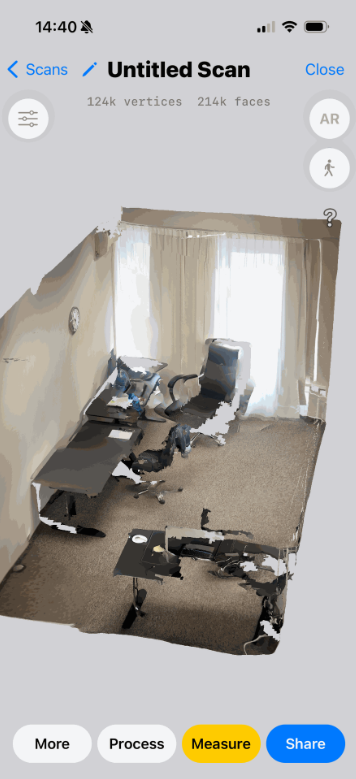
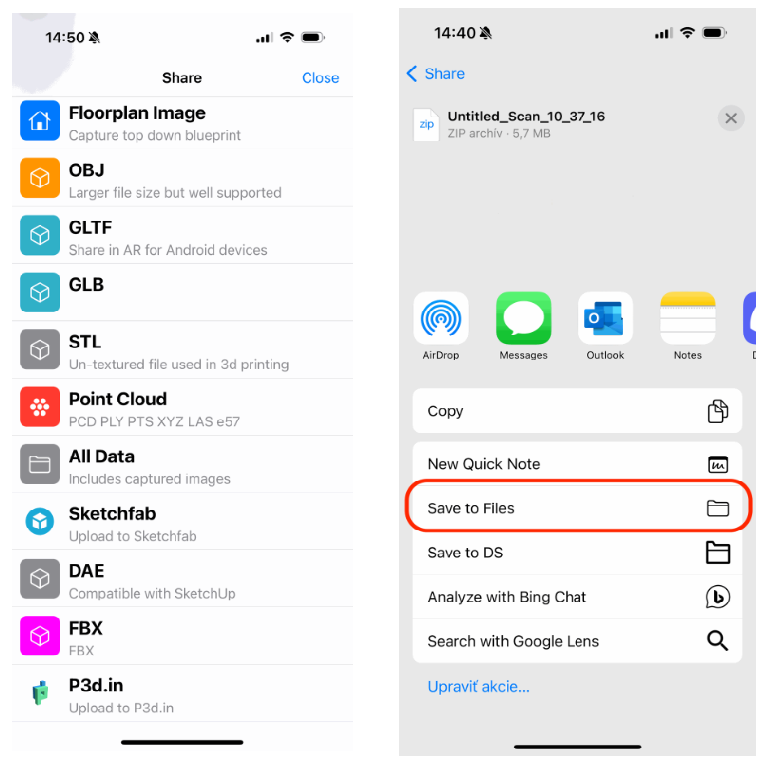
- [Tutorial: Scan your model with iPhone](https://www.twinzo.com/blog-post/tutorial-scan-your-model-with-iphone)
- [Tutorial: DIY Forklift Optimization with twinzo](https://www.twinzo.com/blog-post/tutorial-forklift-optimization-do-it-yourself)
- [How to scan your facility](https://www.twinzo.com/blog-post/how-to-scan-your-facility)
- [twinzo Excel](https://www.twinzo.com/blog-post/twinzo-excel)
- [AOS as an integral part of Digital twin](https://www.twinzo.com/blog-post/automatic-ordering-system-as-an-integral-part-of-digital-twin)
- [Getting started with RTLS](https://www.twinzo.com/blog-post/getting-started-with-rtls)
- [Logistics Analysis with Digital Twin](https://www.twinzo.com/blog-post/logistics-analysis-with-digital-twin)
- [Digital twins - future trend](https://www.twinzo.com/blog-post/digital-twins---future-trend)
- [What is industrial metaverse?](https://www.twinzo.com/blog-post/what-is-industrial-metaverse)
- [Industrial metaverse - from vision to reality](https://www.twinzo.com/blog-post/industrial-metaverse---from-vision-to-reality)
- [Digital Twin sources](https://www.twinzo.com/blog-post/digital-twin-sources)
- [3D Visualization benefits](https://www.twinzo.com/blog-post/3d-visualization-benefits)
- [Importance of Digital Twin accessibility](https://www.twinzo.com/blog-post/importance-of-digital-twin-accessibility)
- [Managing ports with digital twin](https://www.twinzo.com/blog-post/managing-ports-with-digital-twin)
- [Natural disasters and twinzo](https://www.twinzo.com/blog-post/natural-disasters-and-twinzo)
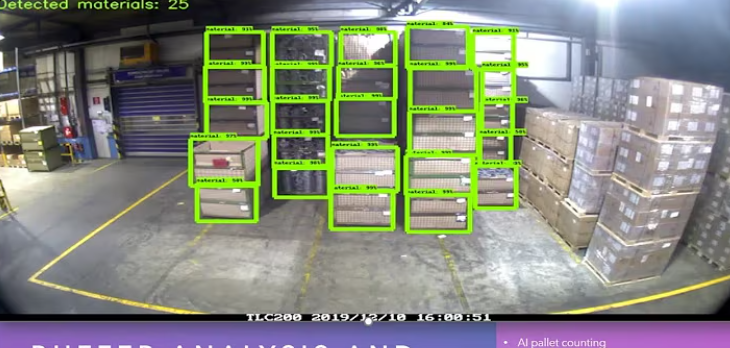
- [AI camera vision for smart buffer management](https://www.twinzo.com/blog-post/using-ai-camera-vision-for-smart-buffer-management)
- [Managing airports with digital twin](https://www.twinzo.com/blog-post/managing-airports-with-digital-twin)
- [Platform stores impact on software distribution](https://www.twinzo.com/blog-post/platform-stores-impact-on-software-distribution)
- [Bug in Google Chrome](https://www.twinzo.com/blog-post/bug-in-google-chrome)
- [Navigating the World of 3D Modeling](https://www.twinzo.com/blog-post/navigating-the-world-of-3d-modeling)
- [Celebrating Innovation in Prague](https://www.twinzo.com/blog-post/celebrating-innovation-in-prague)
- [Pushing the Boundaries](https://www.twinzo.com/blog-post/pushing-the-boundaries)
## Newsroom

- [Newsroom](https://www.twinzo.com/newsroom): Press coverage and company news.
- ["We Want to Build a Big Business Without Ego," Says Twinzo CEO After Securing a €2.3M Investment](https://www.twinzo.com/newsroom-posts/we-want-to-build-a-big-business-without-ego-says-twinzo-ceo-after-securing-a-eu2-3m-investment)
- [Advanced Slovak Technology: A Digital Twin That Fits in Your Pocket, Saves Time, and Cuts Costs](https://www.twinzo.com/newsroom-posts/advanced-slovak-technology-a-digital-twin-that-fits-in-your-pocket-saves-time-and-cuts-costs)
- [Athena Announces Strategic Authorised Reseller Partnership with Twinzo](https://www.twinzo.com/newsroom-posts/athena-partnership)
- [Big Brother is watching everything. Slovaks created a copy of what’s happening in factories, even selling it to India](https://www.twinzo.com/newsroom-posts/big-brother-is-watching-everything-slovaks-created-a-copy-of-whats-happening-in-factories-even-selling-it-to-india)
- [Critical Manufacturing and Twinzo Partner to Deliver Real-Time Digital Twin Visualization for Smart Factories](https://www.twinzo.com/newsroom-posts/critical-manufacturing-and-twinzo-partner-to-deliver-real-time-digital-twin-visualization-for-smart-factories-2)
- [Five Carmakers in Slovakia Have Secured Orders Until the End of 2026 – What Comes Next?](https://www.twinzo.com/newsroom-posts/five-carmakers-in-slovakia-have-secured-orders-until-the-end-of-2026---what-comes-next-an-expert-weighs-in)
- [How Can Digital Twins Improve Efficiency and Accelerate Processes Across Industries?](https://www.twinzo.com/newsroom-posts/how-can-digital-twins-improve-efficiency-and-accelerate-processes-across-industries)
- [Michal Ukropec: The “Good Old Days” Are Just a Trick of Memory – Slovakia Has Made Brutal Progress Since 1989](https://www.twinzo.com/newsroom-posts/michal-ukropec-the-good-old-days-are-just-a-trick-of-memory---slovakia-has-made-brutal-progress-since-1989)
- [Quuppa and Twinzo: A Strategic Partnership to Transform Real-Time Location Solutions](https://www.twinzo.com/newsroom-posts/quuppa-and-twinzo-a-strategic-partnership-to-transform-real-time-location-solutions)
- [Slovak Startup Helps Companies Optimize Operations and Cut Emissions - Now Backed by a €2M+ Investment!](https://www.twinzo.com/newsroom-posts/slovak-startup-helps-companies-optimize-operations-and-cut-emissions---now-backed-by-a-eu2m-investment)
- [They Help Companies Save Through Data: Slovak Startup Twinzo Secure an Investment](https://www.twinzo.com/newsroom-posts/they-help-companies-save-through-data-slovak-startup-twinzo-secure-an-investment-of-over-two-million-euros)
- [What Management Model Pays Off Even in Times of Crisis?](https://www.twinzo.com/newsroom-posts/what-management-model-pays-off-even-in-times-of-crisis)
## Optional

- [Privacy policy](https://www.twinzo.com/privacy-policy)
- [Terms](https://www.twinzo.com/terms)
- [Documentation](https://twinzo.atlassian.net/wiki/spaces/PUBD/overview)
- [App Store](https://apps.apple.com/us/app/twinzo-digital-twin/id1561970281)
- [Google Play](https://play.google.com/store/apps/details?id=eu.twinzo.digitaltwin)
- [LinkedIn](https://www.linkedin.com/company/twinzo)

## Source

### GPS Plus Indoor Location: Track Assets From Supplier Yard to Factory Floor

URL: https://www.twinzo.com/blog-post/gps-indoor-location-asset-tracking-across-sites

GPS shows the trailer on the motorway. Inside your hall it goes dark. Combine outdoor GPS with indoor RTLS so the same rack, container, or truck stays on the map from the supplier branch through your gate to the rack.

<div role="listitem" class="collection-item-3 w-dyn-item"><section class="content-section-wrapper"><div class="content-section-container"><h3 class="h4 blog-section-heading">Trailer on the Motorway, Then Nothing at the Dock</h3><div class="paragraph-24 blog-content w-richtext"><p>Production control is waiting on a dedicated trailer from a tier-one supplier. On the TMS map it is moving north on the D1, GPS ping every few minutes, ETA 09:40. At 09:55 someone calls the gate. The truck is in your yard. The live map still shows it twenty kilometres south because the moment it turned off the motorway and entered your site, the cellular tracker lost clean sky view and the dot stopped updating.</p><p>‍</p><p>Dock two is empty. Dock four has a different carrier. The forklift team walks the yard. Radio traffic starts. The trailer was visible for three hundred kilometres and invisible for the last three hundred metres — exactly where labour, bay time, and line feed actually matter.</p><p>‍</p><p>That gap is normal. GPS and cellular trackers work in open sky. Roofs, walls, and metal siding kill or scatter the signal. Most plants solve the last mile with phone calls, gate logs, and ASN paperwork that never lands on the same map planners use inside the hall. twinzo closes the handoff: keep the outdoor leg on GPS coordinates, pick up the asset with indoor RTLS once it crosses your geofence, and show both on one facility model so the dock team sees the truck at bay four instead of on the motorway.</p><p>‍</p></div><div class="div-block-7"><img src="/images/articles/logistic-analysis.png" loading="lazy" alt="Asset path from highway GPS track into a factory hall on the twinzo digital twin" class="image-10"/></div><div class="div-block-6"><div class="w-dyn-bind-empty w-video w-embed"></div></div><div class="blog-content-button w-dyn-bind-empty w-richtext"></div></div></section></div><div role="listitem" class="collection-item-3 w-dyn-item"><section class="content-section-wrapper"><div class="content-section-container"><h3 class="h4 blog-section-heading">Returnable Rack Between Supplier Branch and Your Line</h3><div class="paragraph-24 blog-content w-richtext"><p>Same pattern for returnable packaging. A steel rack leaves the supplier&#x27;s stamping branch with finished panels, rides GPS tagged on the truck, unloads at your inbound buffer, and should loop back empty next week. Industry practice for OEM returnables treats each rack as balance-sheet inventory — plants run cycle counts on them because a missing rack blocks the next shipment and suppliers invoice for unreturned units.</p><p>‍</p><p>Outdoor GPS tells you the truck left Brno at 06:00. It does not tell you whether the rack sits in your quarantine aisle, staging by line three, or still on the trailer in the yard. Indoor tags on the rack — BLE, UWB, or a rugged GPS tracker that also beacons indoors — land it on the same twin as your forklifts and WIP buffers. Planners see the rack in hall B. Logistics sees the truck still attached at the gate. One object, two legs, one map.</p><p>‍</p><p>Typical moment: supplier portal shows &#x27;delivered&#x27; because the truck GPS entered your geofence. Production still cannot find the rack because it never left the trailer. With indoor pickup at the gate or dock scan zone, the handoff timestamp matches physical reality, not just a fence crossing on the highway map.</p><p>‍</p></div><div class="div-block-7"><img src="/images/placeholder.60f9b1840c.svg" loading="lazy" alt="" class="image-10 w-dyn-bind-empty"/></div><div class="div-block-6"><div class="w-dyn-bind-empty w-video w-embed"></div></div><div class="blog-content-button w-dyn-bind-empty w-richtext"></div></div></section></div><div role="listitem" class="collection-item-3 w-dyn-item"><section class="content-section-wrapper"><div class="content-section-container"><h3 class="h4 blog-section-heading">Where GPS Stops and Indoor Positioning Starts</h3><div class="paragraph-24 blog-content w-richtext"><p>GPS needs line of sight to satellites. Indoor positioning uses anchors you control: BLE beacons, UWB anchors, Wi-Fi RSSI, or Quuppa-style locators in the ceiling grid. The asset carries a tag or telematics unit that switches modes — GNSS outdoors, UWB or BLE indoors — or you attach separate outdoor and indoor identifiers to the same logical device in twinzo.</p><p>‍</p><p>The operational boundary is not &#x27;technology A vs technology B.&#x27; It is the gate, the yard line, the warehouse door, the tunnel between two halls. Draw that boundary as a geofence on the outdoor map. When the asset enters, twinzo maps the last GPS fix to the indoor coordinate system and continues the trail on the hall floor plan. When it leaves for the return leg, indoor tracking ends and GPS picks up again. No duplicate objects, no manual merge in a spreadsheet.</p><p>‍</p><p>Plants with multiple buildings on one campus hit the same wall twice: GPS is fine in the courtyard, useless in hall C. Each building gets an indoor layer. The asset walks hall A → yard → hall C and the path stays continuous because the platform normalises positions into one 3D scene per site, not three disconnected PDF layouts.</p><p>‍</p></div><div class="div-block-7"><img src="/images/placeholder.60f9b1840c.svg" loading="lazy" alt="" class="image-10 w-dyn-bind-empty"/></div><div class="div-block-6"><div class="w-dyn-bind-empty w-video w-embed"></div></div><div class="blog-content-button w-dyn-bind-empty w-richtext"></div></div></section></div><div role="listitem" class="collection-item-3 w-dyn-item"><section class="content-section-wrapper"><div class="content-section-container"><h3 class="h4 blog-section-heading">Supplier Site, Highway, Your Gate — One Asset on the Map</h3><div class="paragraph-24 blog-content w-richtext"><p>Multi-site supply chains already run GPS on owned or leased trailers. Supplier branches often have a small yard and a staging hall — the same blind spot, just at the upstream end. If the supplier tags outbound racks or shares trailer telematics, twinzo can ingest those outdoor fixes alongside your indoor infrastructure.</p><p>‍</p><p>You do not need the supplier to deploy your full RTLS stack. Common patterns: they geofence their dispatch yard and you geofence your inbound gate; the asset ID stays constant; each leg appends to one history. For critical flows you place a portable tag on the rack at their dock and read it off at yours — outdoor GPS fills the gaps between sites, indoor anchors resolve the last metres at both ends.</p><p>‍</p><p>Dispatchers stop asking &#x27;which plant is it heading to&#x27; on one system and &#x27;which aisle did it land in&#x27; on another. The 3D twin shows the supplier branch model, the overland segment as a path, and your hall with the asset on the correct rack row. Same labels, same areas, same notification rules once it enters your no-go zones.</p><p>‍</p></div><div class="div-block-7"><img src="/images/placeholder.60f9b1840c.svg" loading="lazy" alt="" class="image-10 w-dyn-bind-empty"/></div><div class="div-block-6"><div class="w-dyn-bind-empty w-video w-embed"></div></div><div class="blog-content-button w-dyn-bind-empty w-richtext"></div></div></section></div><div role="listitem" class="collection-item-3 w-dyn-item"><section class="content-section-wrapper"><div class="content-section-container"><h3 class="h4 blog-section-heading">Each Building in 3D, Same Asset Crossing the Door</h3><div class="paragraph-24 blog-content w-richtext"><p>Indoor tracking only helps if operators recognise the hall. twinzo combines scans, CAD, and Blender meshes per building so the rack or trailer sits in geometry people walk every day — not a grey box on a generic floor plan.</p><p>‍</p><p>Your main plant might be a LiDAR scan of the assembly hall. The supplier branch is CAD from their layout team. The connecting yard is a simplified mesh with gate posts and dock bays marked. Mixed sources, one scene per site. When the asset moves from yard mesh to hall scan, the icon does not jump to a different product — it crosses a door you drew on the twin.</p><p>‍</p><p>Between two of your own buildings on one campus, the same applies: hall one scan, hall two CAD, outdoor GPS or a short yard BLE grid in the middle. Maintenance tool cages, AGV totes, and borrowed forklifts that never leave the site still benefit — GPS is irrelevant indoors, but the cross-building path is the job that breaks without a continuous trail.</p><p>‍</p></div><div class="div-block-7"><img src="/images/articles/place-assets-digital-twin-3d.png" loading="lazy" alt="Asset visible in the twinzo 3D hall model after handoff from outdoor GPS" class="image-10"/></div><div class="div-block-6"><div class="w-dyn-bind-empty w-video w-embed"></div></div><div class="blog-content-button w-dyn-bind-empty w-richtext"></div></div></section></div><div role="listitem" class="collection-item-3 w-dyn-item"><section class="content-section-wrapper"><div class="content-section-container"><h3 class="h4 blog-section-heading">Area Occurrence From Yard to Rack</h3><div class="paragraph-24 blog-content w-richtext"><p>Analytics on the combined path answer questions neither GPS nor indoor RTLS answers alone. How long did the trailer sit in the yard after the geofence ping said &#x27;arrived&#x27;? Did the rack enter quarantine or go straight to line-side staging? Which supplier trucks consistently miss the dock appointment window but still consume gate labour?</p><p>‍</p><p>Area occurrence runs on the full trail: highway segment (speed, dwell at rest stops if you care), supplier dispatch yard, your gate, yard, dock, inbound aisle, buffer. Compare dwell at the supplier&#x27;s staging hall vs your inbound — that is where balance-sheet returnables actually get lost, not on the motorway.</p><p>‍</p><p>Same stack as live forklift tracking. You are not exporting GPS CSVs and merging with a separate indoor report. One asset history, one set of areas, congestion and dwell computed whether the fix came from GNSS or a ceiling anchor.</p><p>‍</p></div><div class="div-block-7"><img src="/images/placeholder.60f9b1840c.svg" loading="lazy" alt="" class="image-10 w-dyn-bind-empty"/></div><div class="div-block-6"><div class="w-dyn-bind-empty w-video w-embed"></div></div><div class="blog-content-button w-dyn-bind-empty w-richtext"></div></div></section></div><div role="listitem" class="collection-item-3 w-dyn-item"><section class="content-section-wrapper"><div class="content-section-container"><h3 class="h4 blog-section-heading">Alerts at the Gate and Inside the No-Go</h3><div class="paragraph-24 blog-content w-richtext"><p>Notifications follow the same rules as tagged shop-floor devices. Geofence the supplier&#x27;s outbound lane: alert your planner when the trailer starts the run. Geofence your gate: alert the dock when GPS enters, switch to indoor rules once the tag reads at the door.</p><p>‍</p><p>Inside, draw no-go zones — pedestrian aisles, clean rooms, fire lanes. A trailer tagged only with GPS never triggered those rules because it never appeared indoors. After handoff, a rack parked across a fire route or a forklift pulling a supplier cage through a pedestrian corridor raises the same alert as your own fleet would.</p><p>‍</p><p>For trials, simulate the path: gate → yard → dock → aisle. If area occurrence shows time in a no-go before you tag the fleet, fix the route with the supplier instead of discovering it on the first live delivery.</p><p>‍</p></div><div class="div-block-7"><img src="/images/placeholder.60f9b1840c.svg" loading="lazy" alt="" class="image-10 w-dyn-bind-empty"/></div><div class="div-block-6"><div class="w-dyn-bind-empty w-video w-embed"></div></div><div class="blog-content-button w-dyn-bind-empty w-richtext"></div></div></section></div><div role="listitem" class="collection-item-3 w-dyn-item"><section class="content-section-wrapper"><div class="content-section-container"><h3 class="h4 blog-section-heading">Simulate

### Correlate Plant Systems by Space on the Digital Twin

URL: https://www.twinzo.com/blog-post/correlate-plant-systems-by-space-on-digital-twin

Gate open next to an HVAC zone, voltage imbalance on the same energy lane as rising scrap, smart bins ignored by the forklift loop. Put the signals on one map and the nearby impacts stop living in separate dashboards.

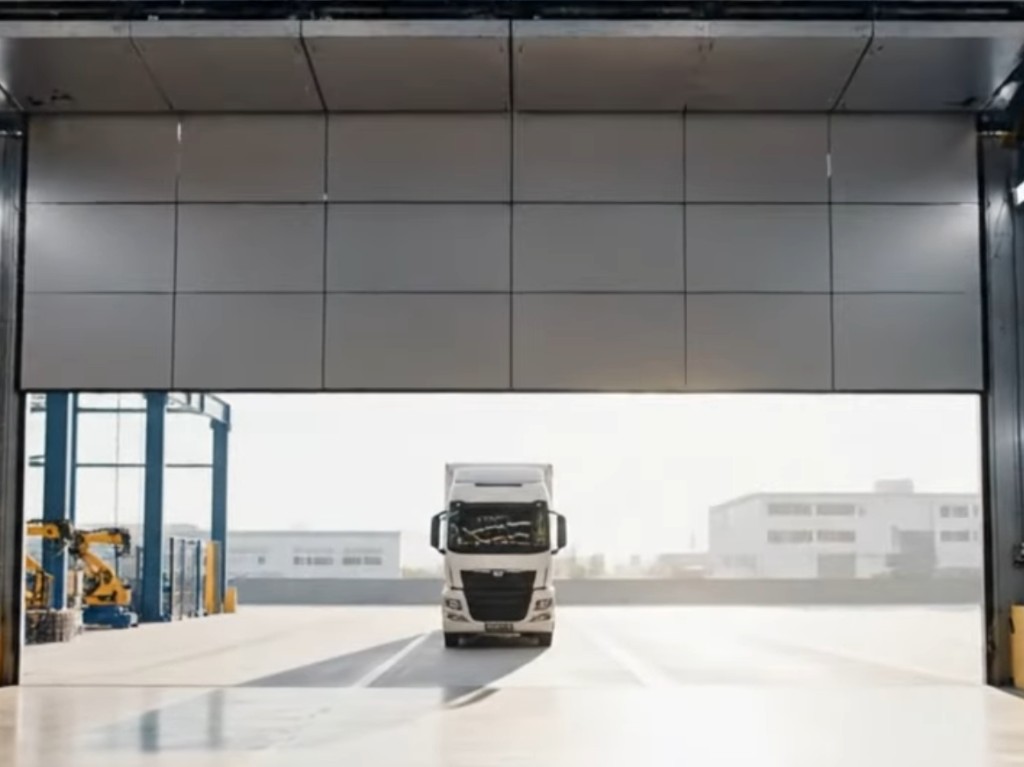
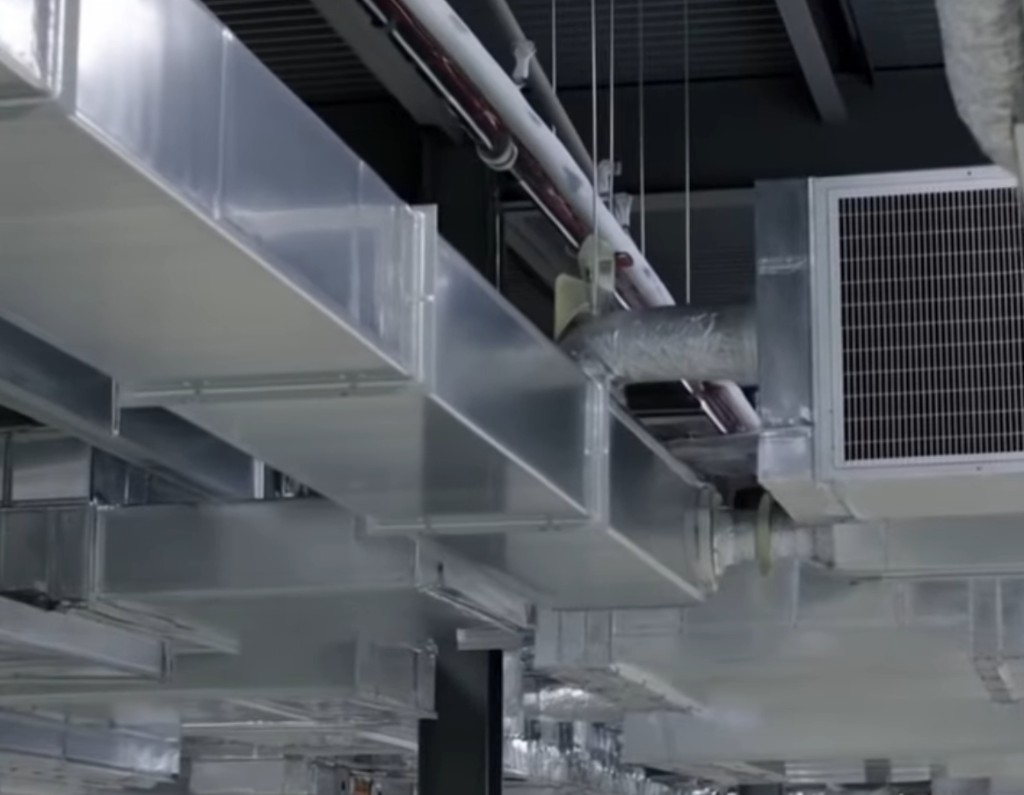
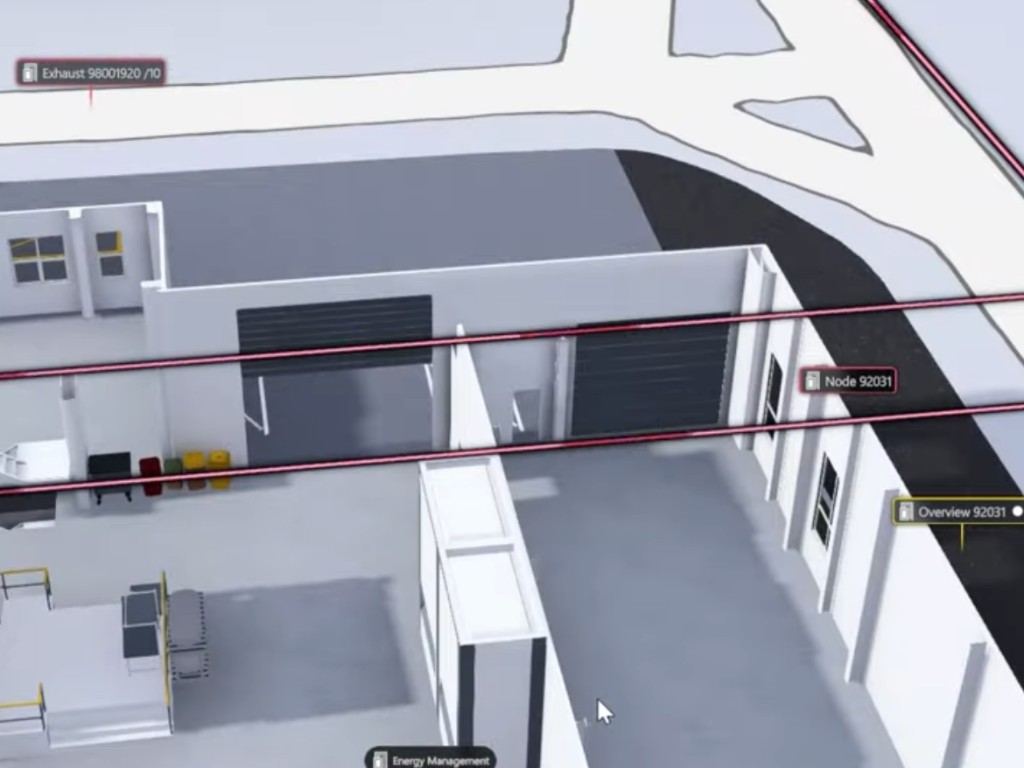
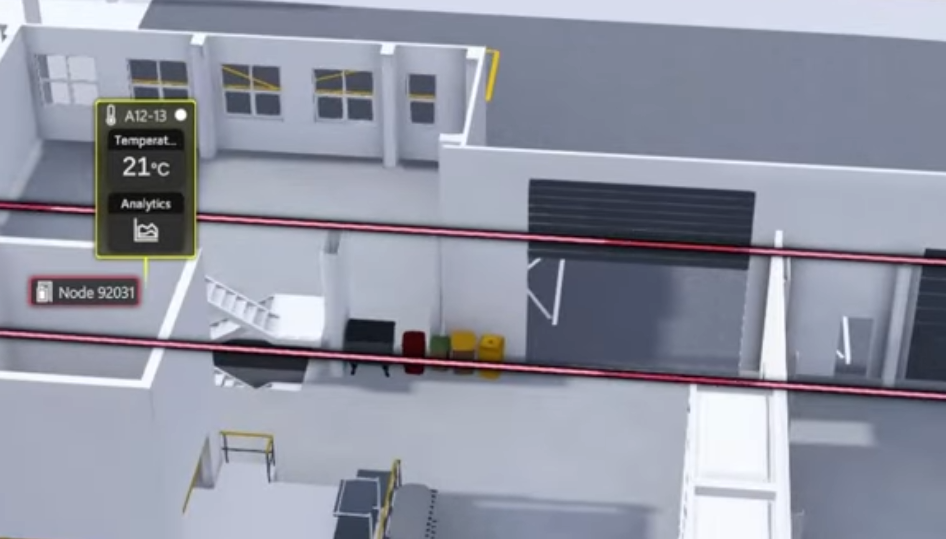
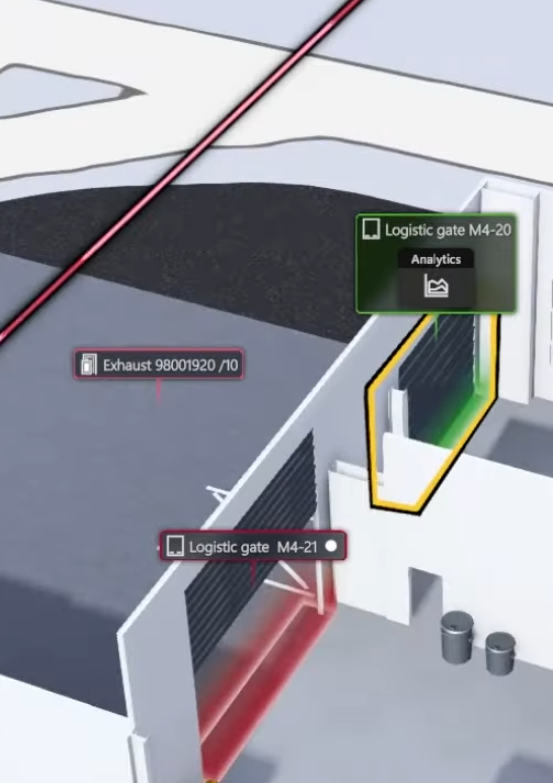
<div role="listitem" class="collection-item-3 w-dyn-item"><section class="content-section-wrapper"><div class="content-section-container"><h3 class="h4 blog-section-heading">Dock Gate Left Open, Heaters Still Fighting Winter</h3><div class="paragraph-24 blog-content w-richtext"><p>On a January second shift the supplier truck finishes at dock M4-21, the driver pulls clear of the bay, and logistics already has the next ASN on the radio. The overhead door stays up. Cold yard air pours across the threshold while the hall heaters keep pushing heat into a volume that is no longer a closed room. Facilities watches zone temperature fall on a BMS screen that has never heard of a logistic gate. Nobody on either tool is lying. The money leaves in the gap between them: one team owns the door habit, the other owns the energy bill, and neither view shows that the open bay and the fighting HVAC sit a few meters apart.</p><p>‍</p><p>Warehouse energy practice already treats dock doors as one of the biggest leak paths on site. Open time at loading bays drives heating and cooling load harder than most weekly reports admit, because the gate sensor lives in a logistics or IoT stack and the setpoints live in building management. You heat all winter because somebody forgot to close the gate right after the truck left, and you cool all summer for the same reason. High-speed doors, air curtains, and dock seals exist because plants already know this failure mode. What they still lack is a shared picture where door state and nearby climate data occupy the same hall, so the next open-door hour is visible before it becomes another unexplained spike on the facilities export.</p><p>‍</p><p>Put both on the twinzo map and the argument changes. Gate open/close becomes an IoT position on M4-21. Exhaust or zone temperature becomes a node a few meters inside the hall. When the door stays open and the neighboring zone keeps climbing in load, dock lead and energy owner are looking at one facility model instead of two CSVs. The waste stops being a debate about whose dashboard is right and becomes a concrete bay that stayed open too long next to equipment that was still trying to hold setpoint.</p><p>‍</p></div><div class="div-block-7"><img src="/images/articles/spatial-correlation-open-dock-gate.png" loading="lazy" alt="Open warehouse dock gate with a truck at the bay, cold outside air entering the hall" class="image-10"/></div><div class="div-block-6"><div class="w-dyn-bind-empty w-video w-embed"></div></div><div class="blog-content-button w-dyn-bind-empty w-richtext"></div></div></section></div><div role="listitem" class="collection-item-3 w-dyn-item"><section class="content-section-wrapper"><div class="content-section-container"><h3 class="h4 blog-section-heading">Same Bay in July: Cooling the Yard Air</h3><div class="paragraph-24 blog-content w-richtext"><p>July flips the sign on the thermometer without changing the job. The hall is held for process comfort or product limits, an open dock pulls hot humid air across the same threshold, and chillers with AHUs ramp while operators near the bay complain that the air feels sticky and blame &#x27;the AC.&#x27; Maintenance trims a setpoint that was never the root cause, because the gate sat open through a long unload and the quiet minutes after the truck left. You are not cooling a closed hall. You are conditioning a strip of yard that happens to sit under your roof line.</p><p>‍</p><p>A typical afternoon makes the mismatch obvious. Quality calls that packaging near dock 3 is softening in the heat. Facilities opens zone A12 and watches temperature creep. Logistics swears the truck was only there twenty minutes. Replay on the twin shows gate M4-21 open for forty-five, with the HVAC node beside that bay tracking the climb in the same window. That is not a smarter thermostat story. It is two systems finally forced to share space and time, so the soft packaging and the energy ramp point back to an open door instead of a mysterious climate problem.</p><p>‍</p><p>Spatial correlation does not replace door hardware or unload discipline. It shows when procedure and seals still fail on a given shift, and which nearby sensors prove it, so you stop paying to condition air you never meant to hold. Once the summer pattern sits next to the winter one on the same map, the plant stops treating each season as a new surprise and starts treating open-bay minutes next to conditioned zones as a controllable cost.</p><p>‍</p></div><div class="div-block-7"><img src="/images/articles/spatial-correlation-hvac-ducts.png" loading="lazy" alt="Industrial HVAC ductwork and exhaust units over a plant ceiling" class="image-10"/></div><div class="div-block-6"><div class="w-dyn-bind-empty w-video w-embed"></div></div><div class="blog-content-button w-dyn-bind-empty w-richtext"></div></div></section></div><div role="listitem" class="collection-item-3 w-dyn-item"><section class="content-section-wrapper"><div class="content-section-container"><h3 class="h4 blog-section-heading">Voltage Imbalance on the Lane, Scrap Up Two Percent</h3><div class="paragraph-24 blog-content w-richtext"><p>Quality opens the morning scrap report and line 7 is roughly two percent higher on malfunctioning pieces than yesterday. Maintenance pulls the machine log looking for a process drift. Electrical already has a phase imbalance on the feeder that supplies that bay. Each team walks away with a clean story that fits their own screen, and nobody has a shared map that says this energy lane feeds these machines and the imbalance window overlaps the scrap spike. The hunt spreads across the whole hall while the real neighbor relationship sits unused between the meter and the cell.</p><p>‍</p><p>Industry practice already links voltage unbalance to motor heating, torque ripple, and early failures. NEMA guidance and plant electrical standards treat phase imbalance as something you correct, not something you tolerate until a motor dies. What plants still miss is the spatial join to yield. The meter and the PLC scrap counter rarely live in one view with the machine&#x27;s floor position, so a two percent scrap bump reads like process noise until you overlay the feeder that was off-spec for that shift. When those positions sit on the twin along the same lane, the morning meeting stops guessing and sends electrical to the bay that actually shares the wire and the scrap.</p><p>‍</p><p>Place the energy meter or imbalance tag on the twin along the lane, place the machine and its quality feed at the cell, and the correlation becomes something you can point at. Scrap rises while the nearby energy node is off-spec in the same hours, and you do not need three CSV exports stapled into a slide. You fix power first where the map says the feeder and the defective pieces meet, then reopen the process hunt only if the lane is clean.</p><p>‍</p></div><div class="div-block-7"><img src="/images/articles/spatial-correlation-twin-overview.png" loading="lazy" alt="twinzo 3D plant twin with exhaust, energy management, and gate labels on one layout" class="image-10"/></div><div class="div-block-6"><div class="w-dyn-bind-empty w-video w-embed"></div></div><div class="blog-content-button w-dyn-bind-empty w-richtext"></div></div></section></div><div role="listitem" class="collection-item-3 w-dyn-item"><section class="content-section-wrapper"><div class="content-section-container"><h3 class="h4 blog-section-heading">Smart Bins Full, Forklift Loop Still Empty-Handed</h3><div class="paragraph-24 blog-content w-richtext"><p>Smart bins already report fill level, and the WMS or waste contract already knows when a pickup should happen, yet intralogistics still runs a fixed forklift or tugger loop that skips a corner because &#x27;that bank never fills.&#x27; Then a red bin overflows into an aisle, or a scrap cage creeps into a fire path, and the radio fills with a problem that both systems could have prevented if they had shared a floor. The fill signal lived in one app. The traffic path lived in another. The aisle is where they finally met, too late.</p><p>‍</p><p>Put the fill sensors on the twin beside the rack or hall they actually occupy, and overlay forklift tracks or the planned loop on the same layout. Area occurrence shows whether drivers visit the bins that are full, or only the empty ones on the habitual outer route. Facilities sees overflow risk while it is still a level on a sensor. Logistics sees that the loop needs a stop at that cluster when fill crosses a threshold, not only when the calendar says it is pickup day.</p><p>‍</p><p>Night shift leaves two yellow bins near packaging sitting around ninety percent. Morning tugger runs the usual outer loop because that is what the route card says. By mid-morning the aisle is blocked and a pedestrian near-miss report starts working its way up the chain. On the twin those bins had been calling next to a path that never entered the pocket. The fix is not another email asking people to &#x27;please check the bins.&#x27; It is a route that reacts when nearby fill is high, because fill and traffic finally share the same map.</p><p>‍</p></div><div class="div-block-7"><img src="/images/articles/spatial-correlation-temp-near-gate.png" loading="lazy" alt="Temperature node A12-13 at 21°C on a twinzo twin near a closed industrial gate and color-coded bins" class="image-10"/></div><div class="div-block-6"><div class="w-dyn-bind-empty w-video w-embed"></div></div><div class="blog-content-button w-dyn-bind-empty w-richtext"></div></div></section></div><div role="listitem" class="collection-item-3 w-dyn-item"><section class="content-section-wrapper"><div class="content-section-container"><h3 class="h4 blog-section-heading">Energy Spike With No Machine Story</h3><div class="paragraph-24 blog-content w-richtext"><p>Energy dashboards light up with a peak while production reports OEE as fine and maintenance swears there were no unusual start-ups. The kilowatt-hours still cost money. Often the driver is spatial rather than mechanical: heaters fighting an open bay, compressed-air losses clustered in one hall, or idle equipment left powered in a wing that looks empty on the MES yet still draws on the meter that covers that zone. A plant-wide chart cannot tell you which neighbors misbehaved. A map can.</p><p>‍</p><p>When consumption, HVAC, and gate or occupancy signals sit together on the twin, the question changes from &#x27;why did the plant spike&#x27; to &#x27;which nearby positions were abnormal in the same window.&#x27; An open logistic gate with a red floor highlight next to a climbing exhaust node is a clearer story than another slide of total kWh. You chase the bay and the setpoint instead of a mystery peak that every department can honestly claim is not theirs.</p><p>‍</p><p>That is where significant savings actually appear. Not from a slogan about digital twins, but from stopping repeat open-door hours, imbalance windows that trash yield, and routes that ignore full bins until they become incidents. Space is the join key the separate systems never agreed on, and once you use it, the expensive coincidences stop looking like coincidence.</p><p>‍</p></div><div class="div-block-7"><img src="/images/articles/spatial-correlation-logistic-gates.png" loading="lazy" alt="Logistic gates M4-20 and M4-21 highlighted green and red next to exhaust labels on the twin" class="image-10"/></div><div class="div-block-6"><div class="w-dyn-bind-empty w-video w-embed"></div></div><div class="blog-content-button w-dyn-bind-empty w-richtext"></div></div></section></div><div role="listitem" class="collection-item-3 w-dyn-item"><section class="content-section-wrapper"><div class="content-section-container"><h3 class="h4 blog-section-heading">Place Disconnected Signals on One Floor</h3><div class="paragraph-24 blog-content w-richtext"><p>Correlation starts when every stream gets an address on the layout people already walk: docks, halls, energy la

### How Photogrammetry Builds Plant 3D Models From Photos

URL: https://www.twinzo.com/blog-post/photogrammetry-for-plant-3d-models

When the CAD aisle no longer exists, overlapping photos still can. Here is how feature matching, bundle adjustment, dense stereo, and meshing turn hall, drone, and satellite captures into a scaled twin mesh.

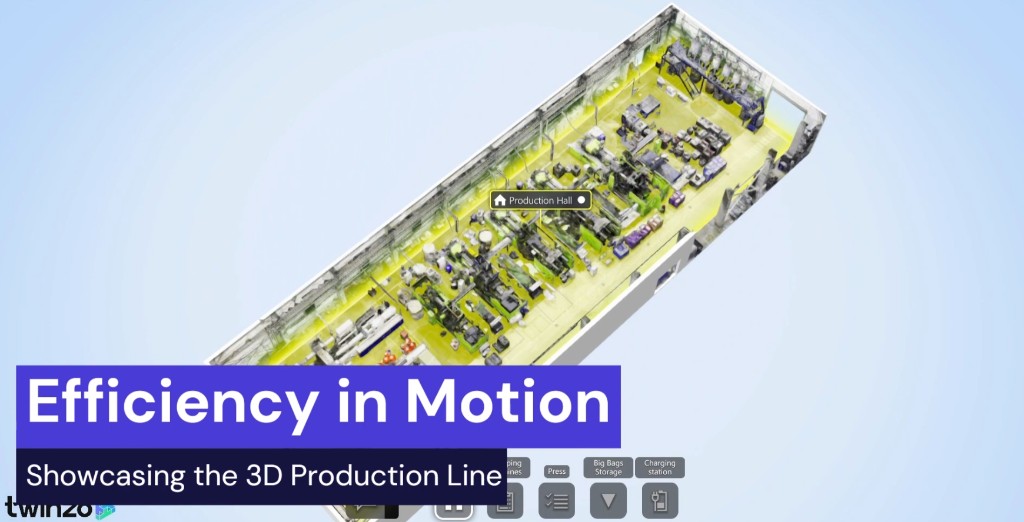
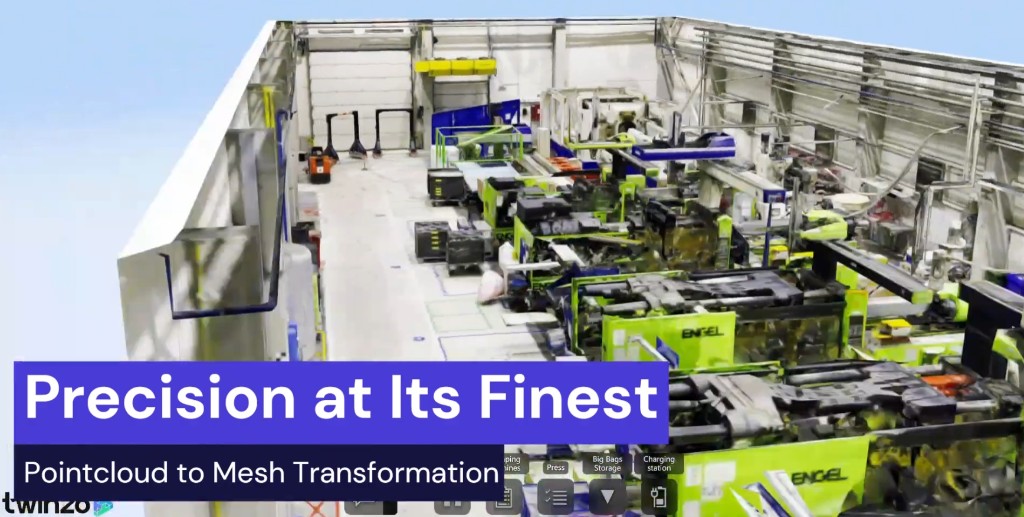
<div role="listitem" class="collection-item-3 w-dyn-item"><section class="content-section-wrapper"><div class="content-section-container"><h3 class="h4 blog-section-heading">CAD Says Clear Aisle, Forklift Hits a New Rack</h3><div class="paragraph-24 blog-content w-richtext"><p>Second shift starts a tugger trial on the east hall. The layout PDF from engineering still shows a wide aisle between presses and the big-bag buffer. On the floor that aisle closed six months ago when packaging dropped a new rack bank overnight. The driver follows the drawing, not the hall, and stops short against steel that was never on the twin. Logistics blames the map. Engineering blames the undocumented move. Both are right about their own files. Neither has a 3D model of the plant as it stands tonight.</p><p>‍</p><p>Brownfield sites live this gap constantly. Industry practice already treats as-built surveys as mandatory before major layout changes, fire-route reviews, or AGV path design, because paper CAD drifts the moment maintenance relocates a column guard, a charging station, or a temporary buffer. Photogrammetry closes that gap by recovering metric geometry from photographs of the real hall: machines, floor paint, clutter, and the rack that nobody drew. When that mesh becomes the twinzo facility model, the next route trial runs against the aisle people walk, not the aisle last year&#x27;s drawing promised.</p><p>‍</p><p>Typical moment: a weekend line move finishes Sunday night. Monday morning RTLS and forklift analytics still sit on last week&#x27;s walls. Someone walks the hall with a camera or flies the yard, processes the capture through alignment, dense reconstruction, and meshing, then swaps the model under the same live positions. Operators open 3D and recognize their presses. That is the operational job. The rest of this article is the technical path that makes that mesh possible.</p><p>‍</p></div><div class="div-block-7"><img src="/images/articles/photogrammetry-production-hall-3d.png" loading="lazy" alt="twinzo 3D production hall mesh from photogrammetry with presses, floor paths, and area labels" class="image-10"/></div><div class="div-block-6"><div class="w-dyn-bind-empty w-video w-embed"></div></div><div class="blog-content-button w-dyn-bind-empty w-richtext"></div></div></section></div><div role="listitem" class="collection-item-3 w-dyn-item"><section class="content-section-wrapper"><div class="content-section-container"><h3 class="h4 blog-section-heading">What Photogrammetry Actually Measures</h3><div class="paragraph-24 blog-content w-richtext"><p>Photogrammetry is the measurement of shape and position from photographs. It does not invent depth from a single image. It uses the same geometric fact stereo vision uses: a point on a surface projects to different pixel locations when the camera moves, and that parallax encodes distance once you know the relative pose of the cameras and their internal optics.</p><p>‍</p><p>Classical aerial photogrammetry formalized this with the collinearity equations. A 3D object point, the camera projection center, and the image point lie on one ray. With two or more calibrated views of the same point, those rays intersect in object space. Modern Structure-from-Motion (SfM) and Multi-View Stereo (MVS) automate that idea at plant scale. They recover camera poses and sparse structure from unordered photo sets, then densify the cloud until every well-textured surface has enough samples to mesh.</p><p>‍</p><p>That is why overlapping coverage is mandatory. One photo of a press bay is documentation. Fifty photos with high forward and side overlap are a measurable volume. Without baseline between views, parallax collapses and depth becomes unstable. Without texture that the matcher can lock onto, rays never find reliable correspondences. Photogrammetry is optics plus geometry plus image matching, not a filter that &#x27;3D-ifies&#x27; a single frame.</p><p>‍</p></div><div class="div-block-7"><img src="/images/placeholder.60f9b1840c.svg" loading="lazy" alt="" class="image-10 w-dyn-bind-empty"/></div><div class="div-block-6"><div class="w-dyn-bind-empty w-video w-embed"></div></div><div class="blog-content-button w-dyn-bind-empty w-richtext"></div></div></section></div><div role="listitem" class="collection-item-3 w-dyn-item"><section class="content-section-wrapper"><div class="content-section-container"><h3 class="h4 blog-section-heading">Pipeline: Features, Poses, Dense Cloud, Mesh, Texture</h3><div class="paragraph-24 blog-content w-richtext"><p>Production tools (RealityCapture, Agisoft Metashape, Autodesk ReCap, Pix4D, and survey vendor suites) hide the math behind stages, but the stages are consistent.</p><p>‍</p><p><strong>1. Feature detection and description</strong> - Algorithms such as SIFT, SURF, AKAZE, or learned detectors find keypoints that stay stable under viewpoint and lighting change: bolt heads, logos, floor paint corners, rack joints. Each keypoint gets a descriptor vector used for matching across images.</p><p><strong>2. Feature matching and geometric verification</strong> - Putative matches are filtered with epipolar constraints and RANSAC so wrong pairs from repeating racks or identical machines do not corrupt the solution. Remaining matches become the observations that drive pose estimation.</p><p><strong>3. Sparse reconstruction and bundle adjustment</strong> - Incremental or global SfM estimates extrinsic camera poses (position and orientation) and a sparse 3D point set. Bundle adjustment jointly refines poses, points, and often intrinsic parameters by minimizing reprojection error across the whole block. This is the step that keeps a 200-meter hall from drifting when you walk it end to end.</p><p><strong>4. Dense Multi-View Stereo</strong> - Once poses are solid, MVS fills depth for nearly every pixel that has multi-view support. Output is a dense colored point cloud, often tens or hundreds of millions of points for a plant hall.</p><p><strong>5. Meshing and texturing</strong> - Surface reconstruction (Poisson, Delaunay, or proprietary variants) grows a triangle mesh through the cloud. Photo textures are projected or blended onto that mesh so operators see presses and aisle paint, not a grey shell.</p><p>‍</p><p>If any early stage is weak, later stages cannot rescue it. Bad overlap or motion blur fails matching. Soft bundle adjustment fails scale and aisle width. Thin dense coverage fails meshing around machines. Treat the pipeline as a chain with known weak links, not as a one-click magic button.</p><p>‍</p></div><div class="div-block-7"><img src="/images/articles/photogrammetry-pointcloud-to-mesh.png" loading="lazy" alt="Point cloud to mesh transformation of an injection molding hall with ENGEL presses in twinzo" class="image-10"/></div><div class="div-block-6"><div class="w-dyn-bind-empty w-video w-embed"></div></div><div class="blog-content-button w-dyn-bind-empty w-richtext"></div></div></section></div><div role="listitem" class="collection-item-3 w-dyn-item"><section class="content-section-wrapper"><div class="content-section-container"><h3 class="h4 blog-section-heading">Capture Geometry: Overlap, Baseline, and GSD</h3><div class="paragraph-24 blog-content w-richtext"><p>Capture planning is where most plant projects succeed or fail before software opens. Overlap is the fraction of scene content shared between neighboring images. UAV mapping practice commonly targets roughly 70–80% forward overlap and 60–70% side overlap for nadir grids. Terrestrial hall walks need the same idea in 3D: every surface you care about should appear in several frames from meaningfully different angles, not from a single orbit that never changes baseline.</p><p>‍</p><p>Baseline (distance between camera positions) trades against matching difficulty. Too small and depth noise grows because parallax is tiny. Too large and correspondence fails on complex machines with occlusion. Good capture keeps successive frames close enough to match, while still spanning enough viewpoint diversity around racks and presses that hidden faces get covered on later passes.</p><p>‍</p><p>Ground Sample Distance (GSD) is the real-world size of one pixel on the surface. Lower GSD (finer) means more detail and heavier processing. Indoor twin work that must show aisle paint and machine silhouettes usually needs finer GSD than a campus roof model that only needs building footprints. Flight height, focal length, and sensor pixel pitch set outdoor GSD. Walking distance and lens choice set indoor GSD. If you need sub-centimeter edges for AGV clearance checks, plan capture accordingly. A pretty but coarse mesh will not answer that measurement.</p><p>‍</p></div><div class="div-block-7"><img src="/images/placeholder.60f9b1840c.svg" loading="lazy" alt="" class="image-10 w-dyn-bind-empty"/></div><div class="div-block-6"><div class="w-dyn-bind-empty w-video w-embed"></div></div><div class="blog-content-button w-dyn-bind-empty w-richtext"></div></div></section></div><div role="listitem" class="collection-item-3 w-dyn-item"><section class="content-section-wrapper"><div class="content-section-container"><h3 class="h4 blog-section-heading">Cameras, Intrinsics, and Why Calibration Matters</h3><div class="paragraph-24 blog-content w-richtext"><p>Every photo is interpreted through a camera model: focal length, principal point, and lens distortion (radial and tangential). Photogrammetry can estimate many of those intrinsics during bundle adjustment, especially with many convergent views. It still helps to use a stable lens, fixed focal length, and consistent settings. Zoom lenses and heavy rolling shutter from cheap video frames add systematic error that looks like warped aisles or bowed walls.</p><p>‍</p><p>Prefer still frames with low ISO noise, fast enough shutter to freeze walking motion, and depth of field that keeps the working volume sharp. Motion blur kills keypoints. High compression kills fine texture. RAW or high-quality JPEG from a DSLR or industrial camera outperforms casual phone video for hall-scale metric work, even though phones are fine for small pilot cells when expectations match the sensor.</p><p>‍</p><p>Exposure consistency across a long hall matters for texturing more than for geometry. Huge lighting swings between sunny dock doors and dark machine pits produce texture seams and matching dropouts. Teams often scan by zone under controllable light, or accept that texture quality will vary and keep measurement trust on well-lit, well-overlapped structure.</p><p>‍</p></div><div class="div-block-7"><img src="/images/placeholder.60f9b1840c.svg" loading="lazy" alt="" class="image-10 w-dyn-bind-empty"/></div><div class="div-block-6"><div class="w-dyn-bind-empty w-video w-embed"></div></div><div class="blog-content-button w-dyn-bind-empty w-richtext"></div></div></section></div><div role="listitem" class="collection-item-3 w-dyn-item"><section class="content-section-wrapper"><div class="content-section-container"><h3 class="h4 blog-section-heading">Scale, Control Points, and Plant Grid Alignment</h3><div class="paragraph-24 blog-content w-richtext"><p>An unscaled SfM reconstruction is defined only up to similarity. It can look correct and still measure wrong. For digital twin use you need absolute scale and, ideally, registration to the plant coordinate system so RTLS tracks, ERP bin coordinates, CAD walls, and the photogrammetry mesh share one floor.</p><p>‍</p><p>Common methods: measured scale bars or known tape distances between marked points, Ground Control Points (GCPs) surveyed with total station or GNSS outdoors, and alignment to existing CAD control or building grid. Bundle adjustment can constrain those observations so the whole block snaps to meters and orientation. Check residuals. High GCP error means bad survey, bad target visibility, or a deformed block that needs more overlap or a split into zones.</p><p>‍</p><p>Without this step, area occurrence and path si

### Ignition MES Integration With the twinzo Digital Twin

URL: https://www.twinzo.com/blog-post/ignition-mes-digital-twin-integration

Ignition is the SCADA and MES platform many plants already run. Here is who uses it, how Gateway tags and modules work, and how the twinzo plugin maps that data onto a live 3D twin.

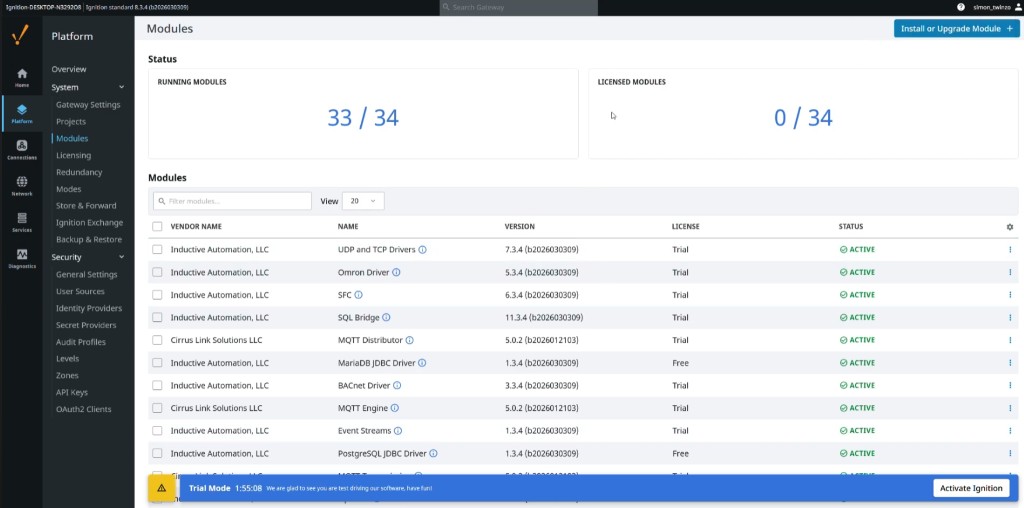
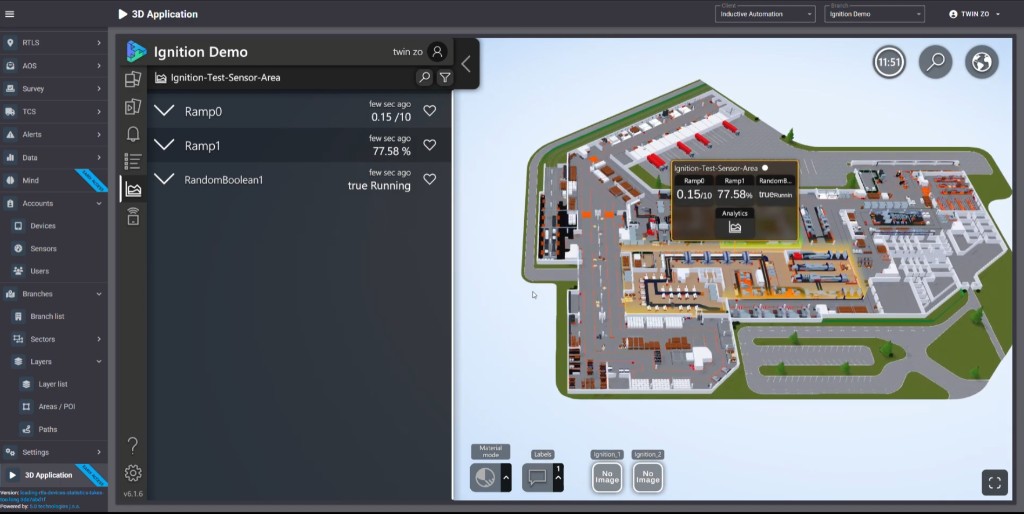
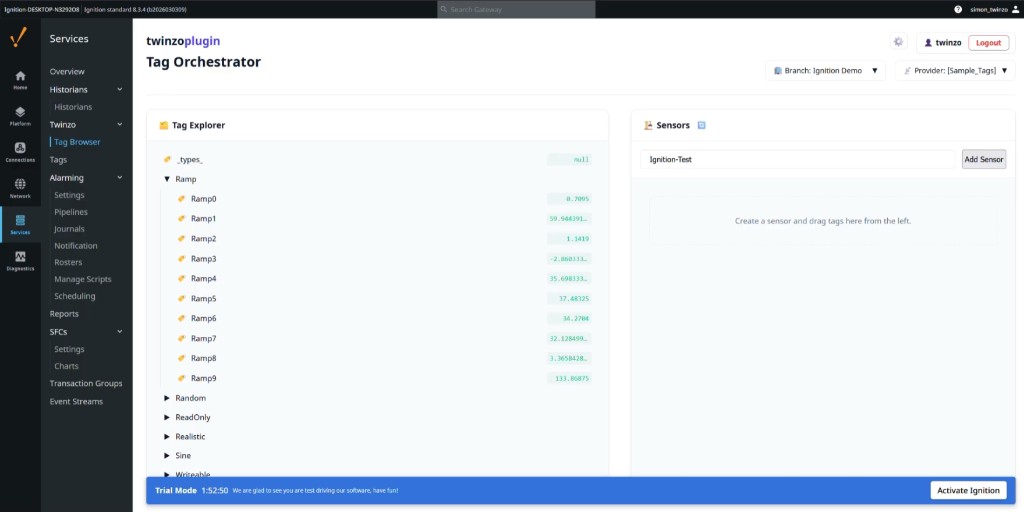
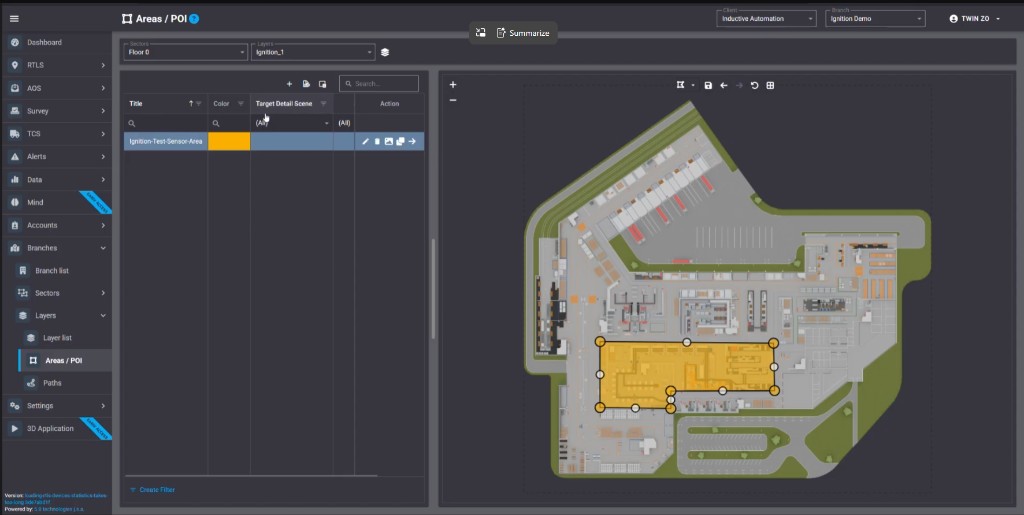
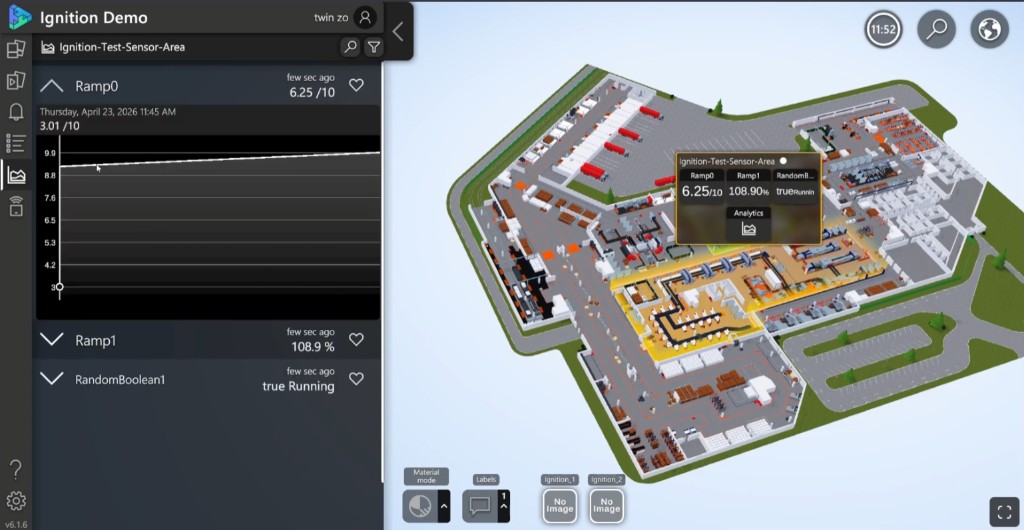
<div role="listitem" class="collection-item-3 w-dyn-item"><section class="content-section-wrapper"><div class="content-section-container"><h3 class="h4 blog-section-heading">What Ignition Is in a Plant Stack</h3><div class="paragraph-24 blog-content w-richtext"><p><a href="https://inductiveautomation.com/ignition/" target="_blank">Ignition</a> is <a href="https://inductiveautomation.com/" target="_blank">Inductive Automation</a>&#x27;s industrial application platform. Plants use it as SCADA, HMI, IIoT hub, and MES foundation on one server-centric Gateway instead of bolting separate products together for every screen. You connect PLCs and drivers, model tags, build Perspective or Vision clients, store history, alarm, report, and extend the same system with modules for MQTT, SQL Bridge, sequential function charts, and MES suites such as <a href="https://www.sepasoft.com/" target="_blank">Sepasoft</a>.</p><p>‍</p><p>That architecture is why Ignition shows up in so many digital-twin conversations. The plant already has live machine state, counts, OEE pieces, and process values in one tag namespace. The missing piece is often spatial: those tags still live in dashboards and reports while supervisors walk the hall to match a soft KPI to a bay. twinzo sits on top of that Ignition reality. It does not replace Gateway. It maps the tags you already trust onto the facility model so MES data appears where the work happens. That spatial layer is what <a href="https://www.twinzo.com/features">twinzo features</a> add on top of SCADA and MES, and it pairs with other plant feeds the same way as <a href="https://www.twinzo.com/blog-post/seamless-integration-of-opc-ua-and-location-data-from-highbyte-to-twinzo">OPC UA and location data from HighByte</a>.</p><p>‍</p></div><div class="div-block-7"><img src="/images/articles/ignition-mes-modules-gateway.png" loading="lazy" alt="Ignition Gateway Modules page with MQTT, SQL Bridge, and drivers active" class="image-10"/></div><div class="div-block-6"><div class="w-dyn-bind-empty w-video w-embed"></div></div><div class="blog-content-button w-dyn-bind-empty w-richtext"></div></div></section></div><div role="listitem" class="collection-item-3 w-dyn-item"><section class="content-section-wrapper"><div class="content-section-container"><h3 class="h4 blog-section-heading">Who Runs Ignition Today</h3><div class="paragraph-24 blog-content w-richtext"><p>Inductive Automation reports Ignition installations across more than 140 countries, a large integrator network, and use by a majority of Fortune 100 companies. Public case studies and customer lists span food and beverage, oil and gas, water and wastewater, automotive, chemicals, life sciences, packaging, power, and discrete manufacturing. Named examples that Inductive publishes include Sierra Nevada Brewing Co. running facility-wide SCADA and MES-style work on Ignition, AriZona Beverages connecting plant SCADA and MES toward SAP, Enerchem on process fractionation, and municipal utilities such as St. Lucie West Services District on full Ignition SCADA.</p><p>‍</p><p>The practical takeaway for twin projects is simple. If your OT team already standardized on Ignition for HMI and MES, you do not need a second shopfloor data platform to feed a digital twin. You need a clean path from Gateway tags to positions on the hall. That is the job of the twinzo Ignition plugin: keep Ignition as the source of truth, place selected tags on the twin, and let operations see OEE, downtime, throughput, and run state in 3D context.</p><p>‍</p></div><div class="div-block-7"><img src="/images/placeholder.60f9b1840c.svg" loading="lazy" alt="" class="image-10 w-dyn-bind-empty"/></div><div class="div-block-6"><div class="w-dyn-bind-empty w-video w-embed"></div></div><div class="blog-content-button w-dyn-bind-empty w-richtext"></div></div></section></div><div role="listitem" class="collection-item-3 w-dyn-item"><section class="content-section-wrapper"><div class="content-section-container"><h3 class="h4 blog-section-heading">How Ignition Works Under the Hood</h3><div class="paragraph-24 blog-content w-richtext"><p>Everything centers on the Ignition Gateway. Drivers and OPC connections bring in PLC and device data. Tags organize that data into folders and providers so Perspective screens, historians, alarms, and scripts all read the same values. Designer is where engineers build projects. Clients open web-deployed Perspective apps or Vision clients for operators. Modules add capability without changing that core: MQTT Distributor and Engine for IIoT payloads, SQL Bridge for database transactions, JDBC drivers for MariaDB or PostgreSQL, BACnet or vendor drivers for building and machine protocols, SFC for sequential logic, and <a href="https://www.sepasoft.com/" target="_blank">Sepasoft MES modules</a> when you need OEE, track and trace, or recipe work on the same platform.</p><p>‍</p><p>MES on Ignition is usually not a black-box monolith. It is tag-driven production logic and modules sitting on the same Gateway that already runs SCADA. Cycle counts, run or stop booleans, scrap counters, and calculated OEE live as tags or derived values. That is why integration to twinzo is tag orchestration rather than a custom MES extract. If Ignition can show the value on a Perspective page, the twinzo plugin can drag that same tag into a sensor for the digital twin.</p><p>‍</p></div><div class="div-block-7"><img src="/images/placeholder.60f9b1840c.svg" loading="lazy" alt="" class="image-10 w-dyn-bind-empty"/></div><div class="div-block-6"><div class="w-dyn-bind-empty w-video w-embed"></div></div><div class="blog-content-button w-dyn-bind-empty w-richtext"></div></div></section></div><div role="listitem" class="collection-item-3 w-dyn-item"><section class="content-section-wrapper"><div class="content-section-container"><h3 class="h4 blog-section-heading">Why Plants Pair Ignition With a Digital Twin</h3><div class="paragraph-24 blog-content w-richtext"><p>Ignition is excellent at collecting, historizing, and presenting industrial data. What it is not designed to be is a full facility digital twin with hall layout, areas, material flow, and 3D operations in one shared plant picture. Production meetings still open OEE and downtime charts. Shift leads still ask which cell on the floor matches the soft line on the chart. Material and people systems often sit elsewhere. The twin answers the spatial question Ignition dashboards were never meant to own.</p><p>‍</p><p>With twinzo connected, MES and shopfloor tags stay in Ignition. The twin becomes the live operational environment where those values sit on machines, buffers, and areas. You monitor OEE, downtime, throughput, and bottlenecks in place. You track related assets and material flow on the same model when those feeds exist. Insights stop being locked in reports because the next action points at a bay on the twin, not only a row in a Perspective table.</p><p>‍</p></div><div class="div-block-7"><img src="/images/articles/ignition-twinzo-3d-live-overlay.png" loading="lazy" alt="twinzo 3D digital twin with Ignition sensor area overlay and live MES tags" class="image-10"/></div><div class="div-block-6"><div class="w-dyn-bind-empty w-video w-embed"></div></div><div class="blog-content-button w-dyn-bind-empty w-richtext"></div></div></section></div><div role="listitem" class="collection-item-3 w-dyn-item"><section class="content-section-wrapper"><div class="content-section-container"><h3 class="h4 blog-section-heading">The twinzo Plugin Inside Ignition</h3><div class="paragraph-24 blog-content w-richtext"><p>Integration runs through the twinzoplugin on the Gateway. Under Services you open Twinzo Tag Browser, also labeled Tag Orchestrator. Pick the twinzo branch that matches your facility project and the Ignition tag provider that holds production data. Create a sensor name that will represent a machine, cell, or zone on the twin. Then drag live tags from the explorer onto that sensor.</p><p>‍</p><p>In the demo flow that path is obvious. Sample tags such as Ramp0 through Ramp9 and boolean run states update live in the explorer. You create a sensor like Ignition-Test, drag the tags you care about, and confirm values move before you leave Ignition. That is connect MES and shopfloor data instantly in the literal sense: no parallel historian for the pilot, no CSV drop, no second OPC client just to prove the twin. Gateway remains the hub. twinzo subscribes to the tags you mapped.</p><p>‍</p></div><div class="div-block-7"><img src="/images/articles/ignition-twinzo-tag-orchestrator.png" loading="lazy" alt="Ignition twinzoplugin Tag Orchestrator mapping Sample Tags to an Ignition-Test sensor" class="image-10"/></div><div class="div-block-6"><div class="w-dyn-bind-empty w-video w-embed"></div></div><div class="blog-content-button w-dyn-bind-empty w-richtext"></div></div></section></div><div role="listitem" class="collection-item-3 w-dyn-item"><section class="content-section-wrapper"><div class="content-section-container"><h3 class="h4 blog-section-heading">Place Sensors on the Facility Map</h3><div class="paragraph-24 blog-content w-richtext"><p>Tags alone are not a twin. In twinzo you open Areas / POI for the same client and branch, for example Inductive Automation / Ignition Demo, and draw a polygon on the floor plan where those Ignition tags belong. Name the area to match the sensor so operators see one label from Gateway to 3D. The map holds the physical address. Ignition keeps holding the values.</p><p>‍</p><p>That step is what turns MES data into something you can walk. A throughput tag and a Running boolean are no longer only folder paths under Sample_Tags or a production provider. They belong to a yellow area on Floor 0 next to the real machines on your layout. Layers and sectors keep multi-hall plants organized the same way you already split Perspective projects by line or site.</p><p>‍</p></div><div class="div-block-7"><img src="/images/articles/ignition-twinzo-sensor-area-map.png" loading="lazy" alt="twinzo Areas and POI with Ignition-Test-Sensor-Area drawn on the plant floor plan" class="image-10"/></div><div class="div-block-6"><div class="w-dyn-bind-empty w-video w-embed"></div></div><div class="blog-content-button w-dyn-bind-empty w-richtext"></div></div></section></div><div role="listitem" class="collection-item-3 w-dyn-item"><section class="content-section-wrapper"><div class="content-section-container"><h3 class="h4 blog-section-heading">Live MES Values in the 3D Application</h3><div class="paragraph-24 blog-content w-richtext"><p>Open the twinzo 3D application on the same client and branch. The facility model shows docks, lines, and halls. Click the Ignition sensor area and the overlay lists the mapped tags with live values, for example ramp rates, percentages, and Running state updated seconds ago. The side panel mirrors the same feed so a supervisor can stay on one plant picture while still reading Ignition truth.</p><p>‍</p><p>This is visualize production in real time without rebuilding MES screens. Operators keep Perspective at the machine for control. Plant and ops leadership use the twin when the question is where on the floor the KPI belongs, which neighboring cells still look healthy, and whether a bottleneck is the machine or the empty buffer beside it. From the same callout you can open Analytics for the tag trend without leaving the bay on the model.</p><p>‍</p></div><div class="div-block-7"><img src="/images/articles/ignition-twinzo-3d-analytics-drilldown.png" loading="lazy" alt="twinzo 3D analytics drilldown for Ignition-Test-Sensor-Area with live Ramp trend" class="image-10"/></div><div class="div-block-6"><div class="w-dyn-bind-empty w-video w-embed"></div></div><div class="blog-content-button w-dyn-bind-empty w-richtext"></div></div></section></div><div role="listitem" class="collection-item-3 w-dyn-item"><section class="content-section-wrapper"><div class="content-section-containe

### Man Down Detection With Live RTLS Position

URL: https://www.twinzo.com/blog-post/man-down-detection-with-rtls

A technician falls in a dangerous area. The phone beeps; if they do not cancel, security gets the incident and their live position on the twin - not a radio search across floors and stairs.

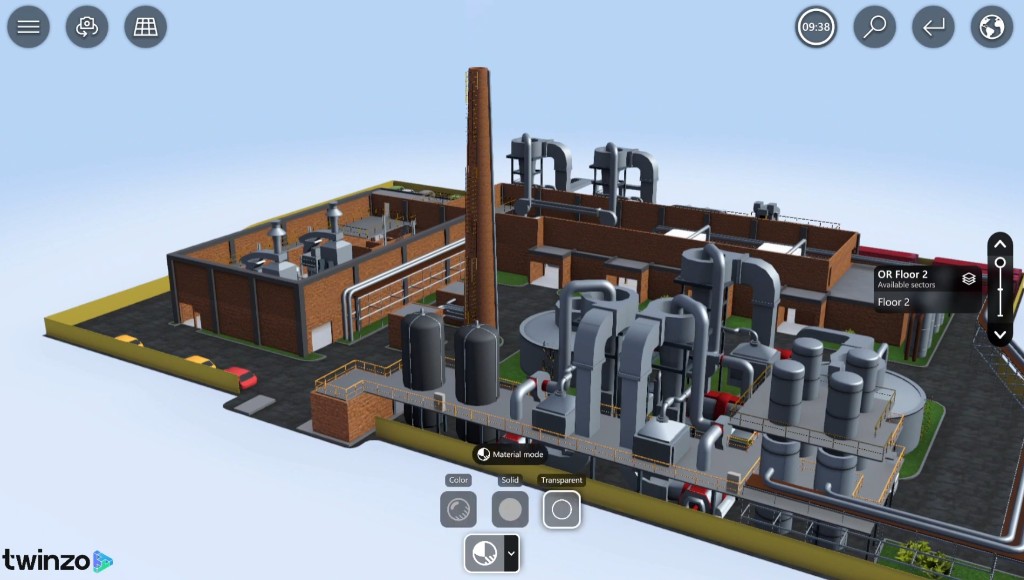
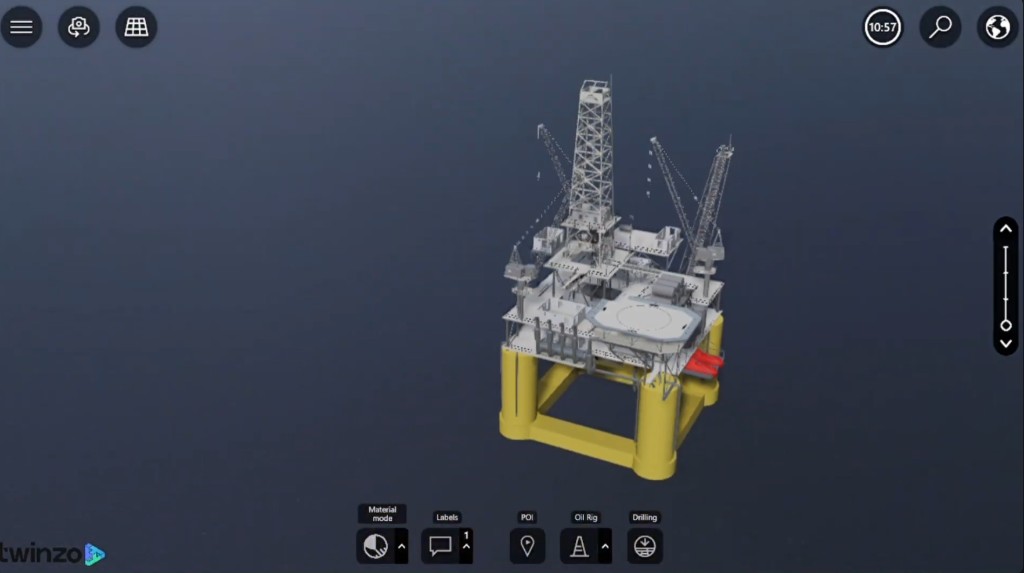
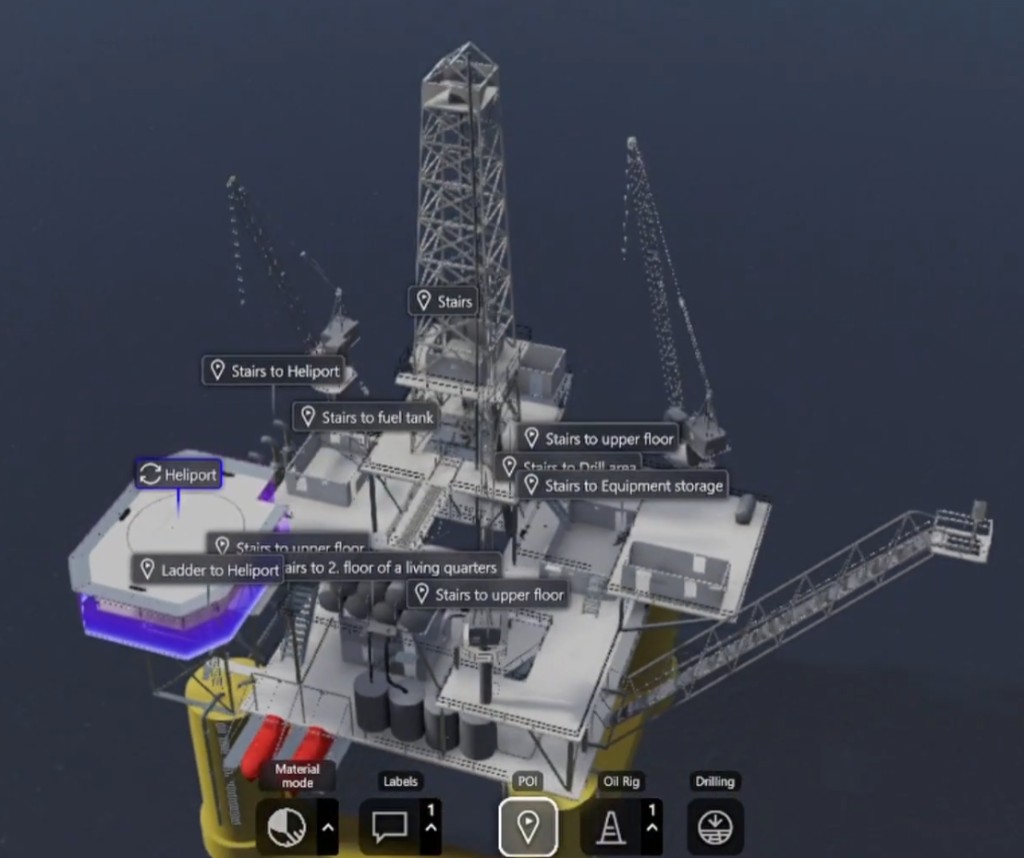
<div role="listitem" class="collection-item-3 w-dyn-item"><section class="content-section-wrapper"><div class="content-section-container"><h3 class="h4 blog-section-heading">Technician Alone Between Machines, Then Down</h3><div class="paragraph-24 blog-content w-richtext"><p>Night shift on a manufacturing line. One technician walks a maintenance route between presses and conveyors that keep running. Radio chatter is thin. If they slip on oil, hit a step, or catch a rail and go down hard, the next person past that aisle might be minutes away. Plants already treat lone work in machine halls as a known risk: you cannot rely on a coworker hearing a shout over noise, and a radio that is face-down under a body does not help the security desk find the spot.</p><p>‍</p><p>With RTLS on the phone, that technician already has a live pin on the twinzo map. Man down sits on top of that track. The accelerometer sees a fall pattern, the phone starts beeping, and the operator gets a short window to press a button and mark it as a false alarm. If they do not confirm, security gets the incident with the active real-time position - which hall, which buffer, which side of the line - instead of starting a radio search across the whole plant.</p><p>‍</p></div><div class="div-block-7"><img src="/images/articles/man-down-rtls-technicians.png" loading="lazy" alt="Live RTLS technician positions on a twinzo 3D industrial site" class="image-10"/></div><div class="div-block-6"><div class="w-dyn-bind-empty w-video w-embed"></div></div><div class="blog-content-button w-dyn-bind-empty w-richtext"></div></div></section></div><div role="listitem" class="collection-item-3 w-dyn-item"><section class="content-section-wrapper"><div class="content-section-container"><h3 class="h4 blog-section-heading">Steel Yard Stairs and Blind Corners</h3><div class="paragraph-24 blog-content w-richtext"><p>On a steel production site the problem is height and clutter, not only silence. Scaffolding, crane shadows, coil stacks, and stairs between platforms create blind corners. A fitter can fall on a mezzanine or beside a silo and disappear from line of sight. Industry practice already pushes fall protection and permit-to-work for elevated tasks; what still kills response time is not knowing which stairwell or platform to send the first aider to.</p><p>‍</p><p>Typical moment: a welder finishes a job on the upper walkway, steps wrong on grated flooring, and goes down. The phone beeps. They are conscious but cannot reach the cancel button in time, or they are out. Security opens the twin, sees the pin on Floor 2 next to the silo row, and sends the team to that stair - not to the wrong hall and not to a radio guess. Floor selectors and transparent building views matter here because the person is not on a flat 2D yard map; they are on a level.</p><p>‍</p></div><div class="div-block-7"><img src="/images/articles/man-down-industrial-floors.png" loading="lazy" alt="twinzo 3D plant view with floor sector control for multi-level tracking" class="image-10"/></div><div class="div-block-6"><div class="w-dyn-bind-empty w-video w-embed"></div></div><div class="blog-content-button w-dyn-bind-empty w-richtext"></div></div></section></div><div role="listitem" class="collection-item-3 w-dyn-item"><section class="content-section-wrapper"><div class="content-section-container"><h3 class="h4 blog-section-heading">Oil Rig Deck: Fall Between Levels</h3><div class="paragraph-24 blog-content w-richtext"><p>Offshore and onshore oil facilities stack decks, ladders, and process equipment into vertical mazes. A technician working near a fuel tank, drill floor, or heliport approach can fall one level down and be invisible from the control room camera that was covering the wrong deck. Process safety culture already assumes hazardous areas and limited muster visibility; man down only helps if the alert carries a position people can navigate to - stairs to the tank, ladder to the heliport, living-quarters floor - not a vague &#x27;someone is down on site.&#x27;</p><p>‍</p><p>When the confirmation timer expires, the security manager gets the notification and the live pin on the 3D rig model. They see which deck and which POI cluster the device sits in, then dispatch to that stair or ladder. The same RTLS track that showed normal movement minutes earlier becomes the rescue coordinate. No guessing which yellow platform, no waiting for the next radio check-in that never comes.</p><p>‍</p></div><div class="div-block-7"><img src="/images/articles/man-down-oil-rig.png" loading="lazy" alt="twinzo 3D oil rig digital twin used for technician location" class="image-10"/></div><div class="div-block-6"><div class="w-dyn-bind-empty w-video w-embed"></div></div><div class="blog-content-button w-dyn-bind-empty w-richtext"></div></div></section></div><div role="listitem" class="collection-item-3 w-dyn-item"><section class="content-section-wrapper"><div class="content-section-container"><h3 class="h4 blog-section-heading">How Man Down Runs on the Phone</h3><div class="paragraph-24 blog-content w-richtext"><p>The flow is short on purpose. False alarms happen - a phone dropped in a bag, a hard sit on a bench, a bump against a handrail - so the operator always gets a chance to cancel before security is pulled into a real response.</p><p>‍</p><p><strong>1. Fall detected</strong> - the accelerometer on the smartphone registers a fall pattern while the technician is tracked by RTLS.</p><p><strong>2. Phone beeps</strong> - the device alerts the wearer to confirm they are OK.</p><p><strong>3. Cancel or escalate</strong> - press the button to mark a false alarm. If nobody confirms in time, the incident goes out.</p><p><strong>4. Security sees it live</strong> - notification plus active real-time position on the twin: hall, floor, deck, or yard coordinate.</p><p>‍</p><p>That pairing is the point. Man down without location is a siren with no map. Location without man down is a pin that never raises its hand when the person cannot. twinzo keeps both on the same technician track security already watches for movement in dangerous areas.</p><p>‍</p></div><div class="div-block-7"><img src="/images/articles/man-down-oil-rig-pois.png" loading="lazy" alt="Oil rig twin with POI labels for stairs, decks, and heliport access" class="image-10"/></div><div class="div-block-6"><div class="w-dyn-bind-empty w-video w-embed"></div></div><div class="blog-content-button w-dyn-bind-empty w-richtext"></div></div></section></div><div role="listitem" class="collection-item-3 w-dyn-item"><section class="content-section-wrapper"><div class="content-section-container"><h3 class="h4 blog-section-heading">Live Movement First, Then the Fall Alert</h3><div class="paragraph-24 blog-content w-richtext"><p>Man down only works if you already know who is where. RTLS tracking shows technicians moving through dangerous areas in real time: machine halls, steel platforms, process decks, confined corridors between tanks. Security and supervisors use that same picture for musters, no-go checks, and &#x27;who is still in the zone&#x27; questions. When a fall fires, they do not switch tools - they open the same twin and the pin is already there.</p><p>‍</p><p>On multi-level sites that means floor or sector context, not only an XY dot. A transparent material view or a deck model with labeled stairs turns &#x27;near the heliport&#x27; into a path responders can walk. The alert is useful because the map is already the operational picture for those people.</p><p>‍</p></div><div class="div-block-7"><img src="/images/placeholder.60f9b1840c.svg" loading="lazy" alt="" class="image-10 w-dyn-bind-empty"/></div><div class="div-block-6"><div class="w-dyn-bind-empty w-video w-embed"></div></div><div class="blog-content-button w-dyn-bind-empty w-richtext"></div></div></section></div><div role="listitem" class="collection-item-3 w-dyn-item"><section class="content-section-wrapper"><div class="content-section-container"><h3 class="h4 blog-section-heading">What Security Does With the Notification</h3><div class="paragraph-24 blog-content w-richtext"><p>When the timer expires, the security manager gets the incident, not a vague alarm. They see who, that man down escalated, and the live position on the facility model. From there the job is ordinary response work: call the closest first aider, send a runner to that stair, stop nearby traffic if needed, keep the pin open until someone is on scene.</p><p>‍</p><p>False alarms that were cancelled never leave the phone. Real ones do not depend on the downed person still being able to talk on radio. That split is why plants keep a confirmation step - you do not want every dropped phone to empty the guard desk, and you also do not want a silent fall to wait for the next planned check-in.</p><p>‍</p></div><div class="div-block-7"><img src="/images/placeholder.60f9b1840c.svg" loading="lazy" alt="" class="image-10 w-dyn-bind-empty"/></div><div class="div-block-6"><div class="w-dyn-bind-empty w-video w-embed"></div></div><div class="blog-content-button w-dyn-bind-empty w-richtext"></div></div></section></div><div role="listitem" class="collection-item-3 w-dyn-item"><section class="content-section-wrapper"><div class="content-section-container"><h3 class="h4 blog-section-heading">Other Sites Where This Matters</h3><div class="paragraph-24 blog-content w-richtext"><p>Same pattern anywhere people work alone or out of sight in hazardous layout:</p><p>‍</p><p><strong>• Chemical plant pipe rack</strong> - fall between elevated walks; security needs deck and bay, not &#x27;somewhere in process.&#x27;</p><p><strong>• Warehouse high-bay</strong> - picker or technician between rack aisles where forklifts and noise hide a shout.</p><p><strong>• Power plant turbine hall</strong> - maintenance under or beside heavy equipment with long response paths.</p><p><strong>• Construction or turnaround yard</strong> - temporary scaffolding and changing layout; live pin beats a printed map from last week.</p><p><strong>• Night shift security rounds</strong> - guard falls on a remote perimeter route; cancel window, then alert with position.</p><p>‍</p></div><div class="div-block-7"><img src="/images/placeholder.60f9b1840c.svg" loading="lazy" alt="" class="image-10 w-dyn-bind-empty"/></div><div class="div-block-6"><div class="w-dyn-bind-empty w-video w-embed"></div></div><div class="blog-content-button w-dyn-bind-empty w-richtext"></div></div></section></div><div role="listitem" class="collection-item-3 w-dyn-item"><section class="content-section-wrapper"><div class="content-section-container"><h3 class="h4 blog-section-heading">Put Man Down on the People You Already Track</h3><div class="paragraph-24 blog-content w-richtext"><p>If technicians already carry RTLS in dangerous areas, man down is the next layer on that same track: fall detection, beep and cancel, then security notification with live position on the twin.</p><p>‍</p><p>Same RTLS layer as <a href="https://www.twinzo.com/optimize-internal-logistics">logistics optimization</a> and the office stack in <a href="https://www.twinzo.com/blog-post/quuppa-ble-smart-building-office-twin">Quuppa BLE on an office twin</a>. <a href="https://www.twinzo.com/contact-us">Get in touch</a> if you want to walk through this on your own facility model.</p><p>‍</p></div><div class="div-block-7"><img src="/images/placeholder.60f9b1840c.svg" loading="lazy" alt="" class="image-10 w-dyn-bind-empty"/></div><div class="div-block-6"><div class="w-dyn-bind-empty w-video w-embed"></div></div><div class="blog-content-button w-dyn-bind-empty w-richtext"></div></div></section></div>

### SLAM Localization: Sensors, Algorithms, and Industrial Providers

URL: https://www.twinzo.com/blog-post/slam-localization-technologies

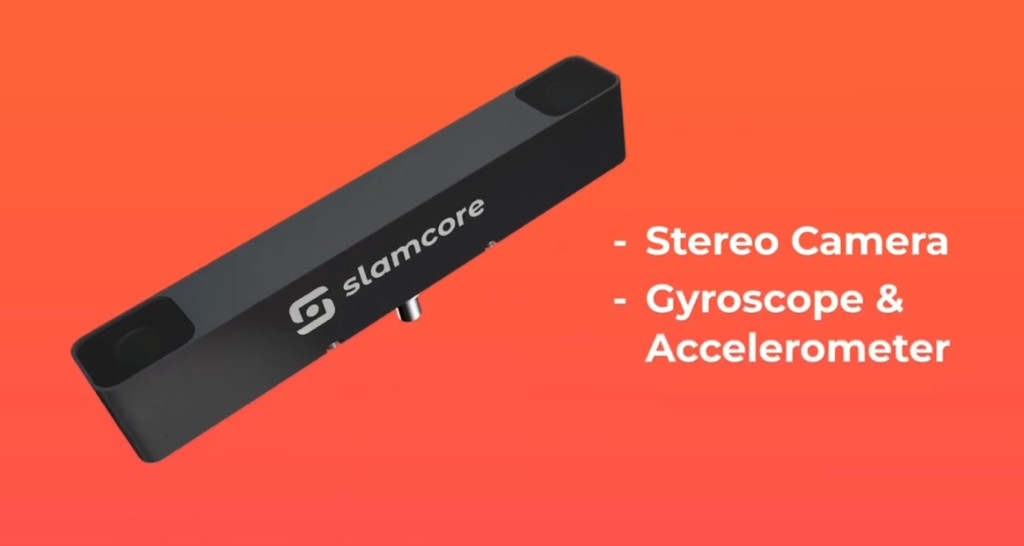
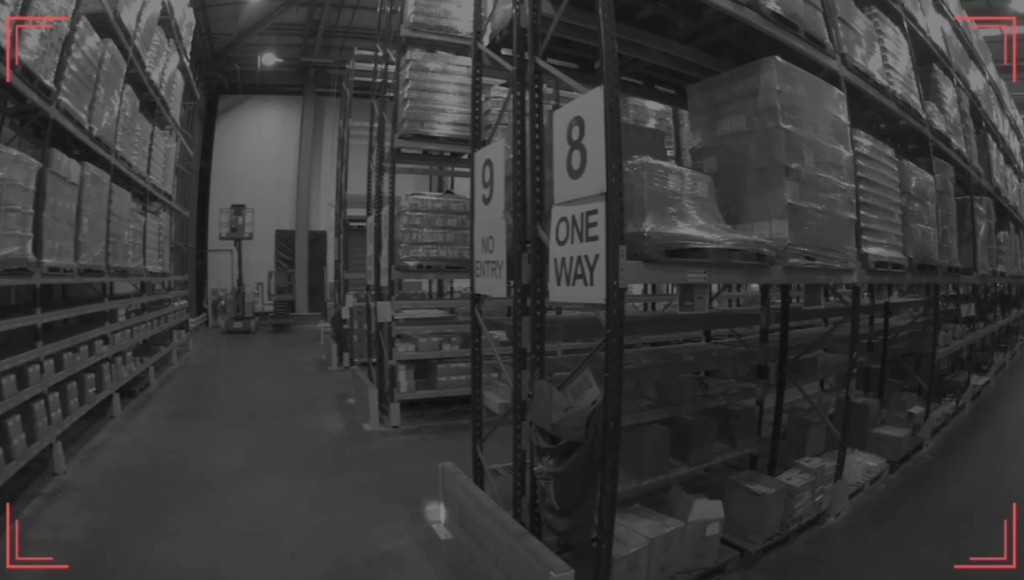
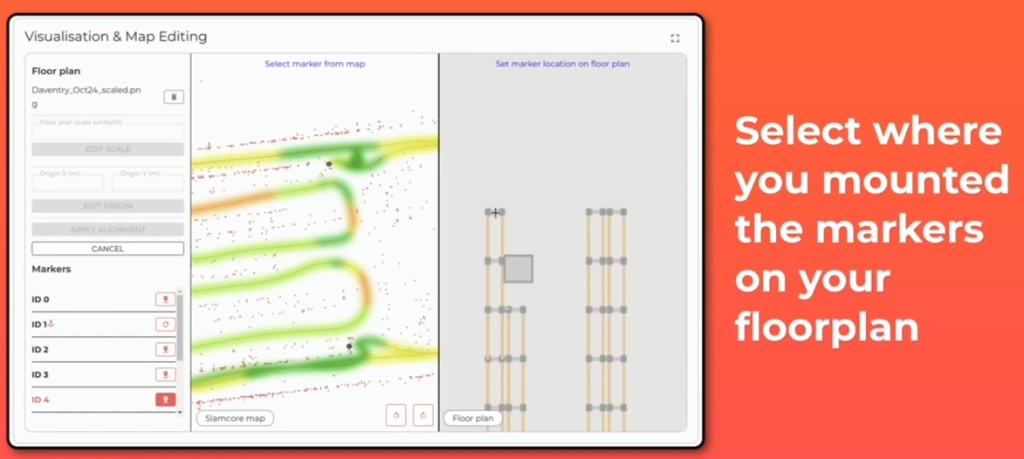
How visual, visual-inertial, and LiDAR SLAM estimate pose and map in GPS-denied halls. Front-end tracking, loop closure, map alignment, and providers including Slamcore.

<div role="listitem" class="collection-item-3 w-dyn-item"><section class="content-section-wrapper"><div class="content-section-container"><h3 class="h4 blog-section-heading">What SLAM Solves Indoors</h3><div class="paragraph-24 blog-content w-richtext"><p>Simultaneous Localization and Mapping (SLAM) estimates a device&#x27;s pose (position and orientation) while building or updating a map of an unknown environment. Indoors and in metal-heavy plants, GNSS is weak or unavailable. Beacon and UWB RTLS solve the same job with fixed infrastructure. SLAM solves it from onboard sensors only: cameras, IMU, LiDAR, or combinations of those.</p><p>‍</p><p>The output that ops systems care about is a continuous stream of poses in a map frame, typically at tens of hertz, plus a map that later sessions can localize against. Those poses become forklift tracks, AMR paths, and spaghetti overlays on a digital twin once the SLAM frame is aligned to the facility floor plan. Without that alignment, the track is metrically useful in its own coordinates and useless next to CAD walls or twinzo areas.</p><p>‍</p><p>This article stays on the technical path: sensor models, front-end tracking, back-end optimization, loop closure, alignment, failure modes, and commercial stacks including <a href="https://www.slamcore.com/products/slamcore-aware/">Slamcore</a>.</p><p>‍</p></div><div class="div-block-7"><img src="/images/articles/slamcore-stereo-imu-sensor.png" loading="lazy" alt="Slamcore spatial AI sensor bar with stereo cameras and IMU for visual-inertial SLAM" class="image-10"/></div><div class="div-block-6"><div class="w-dyn-bind-empty w-video w-embed"></div></div><div class="blog-content-button w-dyn-bind-empty w-richtext"></div></div></section></div><div role="listitem" class="collection-item-3 w-dyn-item"><section class="content-section-wrapper"><div class="content-section-container"><h3 class="h4 blog-section-heading">The Two Coupled Problems</h3><div class="paragraph-24 blog-content w-richtext"><p>Localization answers where the sensor is relative to the map. Mapping answers what the environment looks like in that frame. They are coupled because each new pose needs map landmarks (or scan matches) to constrain the estimate, and each new observation updates those landmarks. Classical formulations treat this as a joint state estimation problem over poses and map parameters.</p><p>‍</p><p>Modern systems split work into a front end and a back end. The front end runs in real time: detect features or register scans, track short-term motion (odometry), and propose relative pose constraints. The back end runs at lower rate: optimize a pose graph or factor graph, apply loop closures, and refine the map so accumulated drift does not warp the whole site.</p><p>‍</p><p>If you only keep open-loop visual or wheel odometry, error grows with distance. Loop closure is what turns a drifting path into a consistent map when the robot revisits a place it has seen before. Industrial halls with repeating rack rows make that revisit detection harder than unique outdoor scenery, which is why industrial SLAM stacks invest heavily in robust descriptors, multi-session maps, and sometimes external anchors for global correction.</p><p>‍</p></div><div class="div-block-7"><img src="/images/placeholder.60f9b1840c.svg" loading="lazy" alt="" class="image-10 w-dyn-bind-empty"/></div><div class="div-block-6"><div class="w-dyn-bind-empty w-video w-embed"></div></div><div class="blog-content-button w-dyn-bind-empty w-richtext"></div></div></section></div><div role="listitem" class="collection-item-3 w-dyn-item"><section class="content-section-wrapper"><div class="content-section-container"><h3 class="h4 blog-section-heading">Sensor Modalities: Visual, VI, LiDAR, RGB-D</h3><div class="paragraph-24 blog-content w-richtext"><p>Sensor choice sets the physics of the estimate.</p><p>‍</p><p><strong>• Monocular visual SLAM</strong> - One camera recovers structure only up to scale unless another source supplies metric scale (IMU, known object size, or a prior map). Cheap and light. Sensitive to texture, lighting, and pure rotation without translation.</p><p><strong>• Stereo visual SLAM</strong> - Fixed baseline between two cameras gives metric depth from disparity at every keyframe where matching succeeds. Scale is observable without IMU. Baseline length trades depth precision against matching difficulty at long range.</p><p><strong>• Visual-inertial SLAM (VI-SLAM)</strong> - Camera plus IMU (gyroscope and accelerometer). High-rate inertial prediction bridges blur, brief texture loss, and fast motion. Visual residuals correct IMU bias and drift. This is the dominant stack for warehouse AMRs and forklift-mounted spatial AI modules such as <a href="https://www.slamcore.com/products/slamcore-aware/">Slamcore Aware</a> stereo + IMU hardware.</p><p><strong>• RGB-D SLAM</strong> - Color camera plus active depth (structured light or ToF). Dense depth helps indoors at short range. Sunlight and long ranges hurt many active depth sensors, so plant yards often prefer stereo or LiDAR.</p><p><strong>• LiDAR SLAM</strong> - 2D or 3D ranging registers successive scans (ICP, NDT, or feature-based). Strong on geometry, weaker on visual appearance. Works in dark halls. Thin poles, glass, and highly dynamic scenes remain hard. Often fused with IMU (LIO) for smoother odometry between scans.</p><p>‍</p><p>Hybrid stacks are common: LiDAR for structure, cameras for semantics and loop descriptors, IMU for short-term continuity. The twin only needs a calibrated pose stream. The sensor mix is chosen for the failure modes of that site.</p><p>‍</p></div><div class="div-block-7"><img src="/images/articles/slam-warehouse-vision-camera.png" loading="lazy" alt="Monochrome warehouse aisle camera view with rack landmarks and computer-vision corner overlays" class="image-10"/></div><div class="div-block-6"><div class="w-dyn-bind-empty w-video w-embed"></div></div><div class="blog-content-button w-dyn-bind-empty w-richtext"></div></div></section></div><div role="listitem" class="collection-item-3 w-dyn-item"><section class="content-section-wrapper"><div class="content-section-container"><h3 class="h4 blog-section-heading">Front End: Features, Tracking, and Local Odometry</h3><div class="paragraph-24 blog-content w-richtext"><p>Visual front ends detect keypoints (corners, blobs, or learned features) and describe them so the same physical point can be matched across frames. Classic descriptors include ORB, BRIEF, SIFT-family variants. Learned descriptors trade compute for robustness under lighting change. Putative matches are filtered with geometric models (essential or fundamental matrix, or PnP with RANSAC) so repeating rack patterns do not invent false motion.</p><p>‍</p><p>Tracking maintains a local map of landmarks and estimates the current camera pose by minimizing reprojection error (how far observed pixels sit from where the 3D points should project). Keyframes store poses and observations so the system does not optimize every video frame at full cost. Between keyframes, constant-velocity or IMU integration predicts pose for the next match window.</p><p>‍</p><p>LiDAR front ends skip image features and register point clouds directly. Scan matching produces a relative transform between consecutive poses. Outlier rejection matters when forklifts and people fill the scan. Many industrial systems keep a short sliding window of poses and landmarks (or submaps) so the front end stays real-time while the back end owns global consistency.</p><p>‍</p></div><div class="div-block-7"><img src="/images/placeholder.60f9b1840c.svg" loading="lazy" alt="" class="image-10 w-dyn-bind-empty"/></div><div class="div-block-6"><div class="w-dyn-bind-empty w-video w-embed"></div></div><div class="blog-content-button w-dyn-bind-empty w-richtext"></div></div></section></div><div role="listitem" class="collection-item-3 w-dyn-item"><section class="content-section-wrapper"><div class="content-section-container"><h3 class="h4 blog-section-heading">Back End: Pose Graphs, Bundle Adjustment, Loop Closure</h3><div class="paragraph-24 blog-content w-richtext"><p>The back end represents the trajectory as nodes (poses) and edges (relative constraints from odometry, IMU preintegration, or landmark observations). Bundle adjustment jointly refines poses and 3D points by minimizing reprojection error across keyframes. Pose-graph SLAM collapses landmarks into relative pose constraints and optimizes SE(3) or SE(2) poses with tools such as g2o, Ceres, or GTSAM.</p><p>‍</p><p>Loop closure detects that the current view matches an earlier place. Detection uses bag-of-words image retrieval, learned place recognition, or scan-context style descriptors for LiDAR. A verified loop adds a strong edge that pulls the graph into consistency. Without verification, false loops destroy the map. Industrial sites with near-identical aisles need conservative thresholds, geometric checks, and sometimes multi-sensor confirmation.</p><p>‍</p><p>After a loop, the optimizer redistributes error along the path. That is why a long first pass may look smooth but slightly skewed, then snap when the vehicle returns to the start. Multi-session mapping stores a persistent map so later boots localize into the same frame instead of building a new drifting world every shift.</p><p>‍</p></div><div class="div-block-7"><img src="/images/articles/slam-map-floorplan-alignment.png" loading="lazy" alt="Slamcore visualisation tool aligning SLAM map markers to a warehouse floor plan with scale and origin controls" class="image-10"/></div><div class="div-block-6"><div class="w-dyn-bind-empty w-video w-embed"></div></div><div class="blog-content-button w-dyn-bind-empty w-richtext"></div></div></section></div><div role="listitem" class="collection-item-3 w-dyn-item"><section class="content-section-wrapper"><div class="content-section-container"><h3 class="h4 blog-section-heading">Visual-Inertial Fusion in Practice</h3><div class="paragraph-24 blog-content w-richtext"><p>An IMU measures angular rate and specific force at hundreds to thousands of hertz. Integrated alone, bias and noise make pose unusable within seconds to minutes. Cameras measure absolute appearance constraints at lower rate but with lower drift when features lock. Tightly coupled VI-SLAM puts IMU preintegrated factors and visual residuals into one estimator (filter or smoother). Loosely coupled designs run visual odometry and fuse the pose with IMU in a separate filter. Tight coupling usually wins accuracy when both sensors are well calibrated.</p><p>‍</p><p>Critical calibrations: camera intrinsics (focal length, principal point, distortion), camera-to-IMU extrinsics (lever arm and rotation), and time synchronization. Millisecond offset between image and IMU stamps looks like a moving lever arm and biases the estimate. Stereo + IMU packages ship factory calibration for a reason. Remounting a module on a forklift mast without updating extrinsics relative to the vehicle frame will misplace the reported vehicle origin even if world tracking is fine.</p><p>‍</p><p>Observable modes matter. Pure monocular vision cannot see absolute scale. With IMU, scale becomes observable after sufficient excitation (acceleration and rotation that are not degenerate). Standing still forever does not calibrate well. Mapping runs need motion that exercises the inertial axes the system will see in production.</p><p>‍</p></div><div class="div-block-7"><img src="/images/placeholder.60f9b1840c.svg" loading="lazy" alt="" class="image-10 w-dyn-bind-empty"/></div><div class="div-block-6"><div class="w-dyn-bind-empty w-video w-embed"></div></div><div class="blog-content-button w-dyn-bind-empty w-richtext"></div></div></section></div><div role="listitem" class="collection-item-3 w-dyn-item"><section class="content-section-wrapper"><div class="content-section-container"><h3 class="h4 blog-section-heading">Map Representations U

### Add Assets to Your Digital Twin Without Live Tracking

URL: https://www.twinzo.com/blog-post/add-assets-to-your-digital-twin-without-live-tracking

A supplier truck has no RTLS tag, but operators still need to see where it is. Place it in 3D, simulate the path, run area analytics, and notify on no-go zones. Same for stock positions of important goods.

<div role="listitem" class="collection-item-3 w-dyn-item"><section class="content-section-wrapper"><div class="content-section-container"><h3 class="h4 blog-section-heading">Supplier Truck Coming In, No Tag</h3><div class="paragraph-24 blog-content w-richtext"><p>External suppliers do not wear your RTLS tags. The truck is still coming, and operators still need to know where it is.</p><p>‍</p><p>Add it in twinzo, place it on the map. It appears in 3D. Dispatch, the dock, and the hall all see the same position.</p><p>‍</p><p>That is the whole point: things that are not live-tracked can still sit on the digital twin, so people stop calling around to find them. You do not wait for a tag, a gateway, or an integration from the carrier. You put the truck where it is, or where it will be, and the floor works from that picture.</p><p>‍</p><p>Typical moment: gate calls that a supplier is at the yard. Logistics drops the truck on the twin at the gate or the assigned dock. Forklift drivers open the 3D view on a phone or tablet and go there. No radio chain, no whiteboard at the office door.</p><p>‍</p></div><div class="div-block-7"><img src="/images/articles/place-assets-on-digital-twin-map.png" loading="lazy" alt="Add a device on the twinzo floor plan: choose type, place it on the map, save" class="image-10"/></div><div class="div-block-6"><div class="w-dyn-bind-empty w-video w-embed"></div></div><div class="blog-content-button w-dyn-bind-empty w-richtext"></div></div></section></div><div role="listitem" class="collection-item-3 w-dyn-item"><section class="content-section-wrapper"><div class="content-section-container"><h3 class="h4 blog-section-heading">Stock Positions of Important Goods</h3><div class="paragraph-24 blog-content w-richtext"><p>Same for materials. Critical parts, WIP, pallets in a buffer - you know where they sit, even if they have no tracker.</p><p>‍</p><p>Set the position on the floor plan. Operators and planners see stock locations on the twin instead of walking the aisle or asking warehouse.</p><p>‍</p><p>When the goods move, update the pin. The 3D model stays the shared picture of what is where.</p><p>‍</p><p>This is useful when live tracking every SKU is overkill, but a few positions actually matter: a shortage part, a blocked buffer, a pallet that must not disappear into a side aisle. Place those, leave the rest in WMS. People look at the twin for the goods that stop the line.</p><p>‍</p></div><div class="div-block-7"><img src="/images/placeholder.60f9b1840c.svg" loading="lazy" alt="" class="image-10 w-dyn-bind-empty"/></div><div class="div-block-6"><div class="w-dyn-bind-empty w-video w-embed"></div></div><div class="blog-content-button w-dyn-bind-empty w-richtext"></div></div></section></div><div role="listitem" class="collection-item-3 w-dyn-item"><section class="content-section-wrapper"><div class="content-section-container"><h3 class="h4 blog-section-heading">How to Place an Asset</h3><div class="paragraph-24 blog-content w-richtext"><p>In the positions workspace:</p><p>‍</p><p><strong>1. Create a device</strong> - name it (supplier truck, SKU, pallet, forklift).</p><p><strong>2. Choose the asset type</strong> - truck, material, or whatever fits.</p><p><strong>3. Place it on the floor plan</strong> - gate, dock, buffer, rack, staging point.</p><p><strong>4. Save</strong> - it is on the twin. No live tag attached.</p><p>‍</p><p>Placed devices stay on the map. Anything created but not positioned yet sits under Not placed anywhere until you drop it on the layout.</p><p>‍</p></div><div class="div-block-7"><img src="/images/placeholder.60f9b1840c.svg" loading="lazy" alt="" class="image-10 w-dyn-bind-empty"/></div><div class="div-block-6"><div class="w-dyn-bind-empty w-video w-embed"></div></div><div class="blog-content-button w-dyn-bind-empty w-richtext"></div></div></section></div><div role="listitem" class="collection-item-3 w-dyn-item"><section class="content-section-wrapper"><div class="content-section-container"><h3 class="h4 blog-section-heading">Same Asset on the 2D Map and in 3D</h3><div class="paragraph-24 blog-content w-richtext"><p>One placement drives both views: 2D floor plan and 3D hall. Same label, type, and location.</p><p>‍</p><p>Planners work from the layout. Operators check the model. Nobody maintains two pictures of the same truck or pallet.</p><p>‍</p></div><div class="div-block-7"><img src="/images/articles/place-assets-digital-twin-3d.png" loading="lazy" alt="Placed asset visible on the 2D map and in the twinzo 3D digital twin" class="image-10"/></div><div class="div-block-6"><div class="w-dyn-bind-empty w-video w-embed"></div></div><div class="blog-content-button w-dyn-bind-empty w-richtext"></div></div></section></div><div role="listitem" class="collection-item-3 w-dyn-item"><section class="content-section-wrapper"><div class="content-section-container"><h3 class="h4 blog-section-heading">Mix 3D Scans, CAD, and Blender Meshes</h3><div class="paragraph-24 blog-content w-richtext"><p>The truck or pallet is only useful if it sits in a facility people recognize. twinzo does not force one modeling pipeline. You can bring different 3D sources and combine them in one twin.</p><p>‍</p><p><strong>• 3D scans</strong> - LiDAR or photogrammetry of the hall as it actually looks: racks, columns, clutter.</p><p><strong>• CAD models</strong> - walls, machines, layout from engineering, with real dimensions.</p><p><strong>• <a href="https://www.blender.org/" target="_blank">Blender</a> meshes</strong> - custom assets, simplified halls, or geometry you already have from visualization work.</p><p>‍</p><p>Mix them. Scan the brownfield hall, drop a CAD line next to it, add a Blender truck or machine where the scan is messy. Operators still see one 3D scene. The placed supplier truck and the stock pin land on that combined model, not on a separate toy layout.</p><p>‍</p><p>If you already have scans, CAD, or meshes, you do not start over. Integrate what you have.</p><p>‍</p></div><div class="div-block-7"><img src="/images/placeholder.60f9b1840c.svg" loading="lazy" alt="" class="image-10 w-dyn-bind-empty"/></div><div class="div-block-6"><div class="w-dyn-bind-empty w-video w-embed"></div></div><div class="blog-content-button w-dyn-bind-empty w-richtext"></div></div></section></div><div role="listitem" class="collection-item-3 w-dyn-item"><section class="content-section-wrapper"><div class="content-section-container"><h3 class="h4 blog-section-heading">Simulate Movement, Then Run Analytics</h3><div class="paragraph-24 blog-content w-richtext"><p>Placement is the start. You can also move the asset along the path it will take - or the path it already took.</p><p>‍</p><p>Supplier truck: gate → yard → dock → wait → leave. Forklift loop. Pallet from inbound to the buffer that feeds the line. You replay or plan the motion in the same twin where live-tracked assets already run.</p><p>‍</p><p>Because the asset is a first-class position in twinzo, analytics sit on top of that simulated path the same way they sit on live tracking. You are not drawing a pretty line and stopping there.</p><p>‍</p><p>Area occurrence is the obvious one. Which areas did the truck enter? How long in the yard, at the dock, in a restricted aisle? Compare that to tagged traffic in the same zones. You see congestion, dwell, and whether an untracked visit is eating capacity you thought was free.</p><p>‍</p><p>Use it after a visit you did not tag, or before a new supplier flow goes live. Place, simulate, read the areas. Then decide if the route is acceptable.</p><p>‍</p></div><div class="div-block-7"><img src="/images/placeholder.60f9b1840c.svg" loading="lazy" alt="" class="image-10 w-dyn-bind-empty"/></div><div class="div-block-6"><div class="w-dyn-bind-empty w-video w-embed"></div></div><div class="blog-content-button w-dyn-bind-empty w-richtext"></div></div></section></div><div role="listitem" class="collection-item-3 w-dyn-item"><section class="content-section-wrapper"><div class="content-section-container"><h3 class="h4 blog-section-heading">Notify When It Enters a No-Go Area</h3><div class="paragraph-24 blog-content w-richtext"><p>You already draw areas on the twin: docks, buffers, pedestrian paths, no-go zones. The placed or simulated asset can hit those areas too.</p><p>‍</p><p>Set a no-go (pedestrian lane, production cell, fire route, visitor-only yard). If the truck, forklift, or material enters it - live or simulated - twinzo can trigger a notification. App, email, whoever owns that zone.</p><p>‍</p><p>That is the same notification path you use for tracked devices. Untracked does not mean invisible to rules. A supplier truck parked across a fire lane, or a pallet dropped in a walkway, can still raise an alert instead of waiting for someone to notice on camera.</p><p>‍</p><p>For trials, simulate the route first. If area occurrence shows time in a no-go, fix the path before the real truck arrives. For operations, keep the rule on: if someone places or moves an asset into a forbidden zone, the right people hear it.</p><p>‍</p></div><div class="div-block-7"><img src="/images/placeholder.60f9b1840c.svg" loading="lazy" alt="" class="image-10 w-dyn-bind-empty"/></div><div class="div-block-6"><div class="w-dyn-bind-empty w-video w-embed"></div></div><div class="blog-content-button w-dyn-bind-empty w-richtext"></div></div></section></div><div role="listitem" class="collection-item-3 w-dyn-item"><section class="content-section-wrapper"><div class="content-section-container"><h3 class="h4 blog-section-heading">Other Cases: Forklifts, Tuggers, Temporary Assets</h3><div class="paragraph-24 blog-content w-richtext"><p>Anything you want on the twin, without tagging it first:</p><p>‍</p><p><strong>• Borrowed forklift for one shift</strong> - put it on the map so people know which hall it is in.</p><p><strong>• Tugger on a trial route</strong> - place it, simulate the loop, check area occurrence, then decide on permanent tracking.</p><p><strong>• Visitor vehicle at the gate</strong> - visible to security and logistics without a tag. No-go rules still apply if it leaves the visitor lane.</p><p><strong>• Reconstruct yesterday&#x27;s visit</strong> - drop it where it was, move it along the path, run the same analytics as a tagged run.</p><p>‍</p></div><div class="div-block-7"><img src="/images/placeholder.60f9b1840c.svg" loading="lazy" alt="" class="image-10 w-dyn-bind-empty"/></div><div class="div-block-6"><div class="w-dyn-bind-empty w-video w-embed"></div></div><div class="blog-content-button w-dyn-bind-empty w-richtext"></div></div></section></div><div role="listitem" class="collection-item-3 w-dyn-item"><section class="content-section-wrapper"><div class="content-section-container"><h3 class="h4 blog-section-heading">Try It on the Next Untracked Asset</h3><div class="paragraph-24 blog-content w-richtext"><p>Next supplier truck, buffer of critical parts, or temporary vehicle: add it, place it on your combined 3D model, simulate the path if you need it, and let the floor see it.</p><p>‍</p><p>No live tracking required for that asset. You still get area occurrence and no-go notifications on top.</p><p>‍</p><p>Related: <a href="https://www.twinzo.com/blog-post/live-3d-stock-from-erp-without-rtls">live 3D stock from ERP without RTLS</a> and <a href="https://www.twinzo.com/features">twinzo features</a>. <a href="https://www.twinzo.com/contact-us">Get in touch</a> if you want to walk through this on your own facility model.</p><p>‍</p></div><div class="div-block-7"><img src="/images/placeholder.60f9b1840c.svg" loading="lazy" alt="" class="image-10 w-dyn-bind-empty"/></div><div class="div-block-6"><div class="w-dyn-bind-empty w-video w-embed"></div></div><div class="blog-content-button w-dyn-bind-empty w-richtext"></div></div></section></div>

### Live 3D Stock From ERP Without Installing RTLS

URL: https://www.twinzo.com/blog-post/live-3d-stock-from-erp-without-rtls

In IKEA you find stock by coordinates like 13-B. Same in industrial warehouses. Feed those locations to twinzo for real-time 3D stock positions - no RTLS infrastructure.

<div role="listitem" class="collection-item-3 w-dyn-item"><section class="content-section-wrapper"><div class="content-section-container"><h3 class="h4 blog-section-heading">Bin Coordinates, Just Like IKEA</h3><div class="paragraph-24 blog-content w-richtext"><p>In IKEA you find stock in an open warehouse by coordinates, like 13-B. Same for a lot of industrial warehouses: aisle, rack, level, bin - already in SAP, WMS, or another ERP. Feed this data to twinzo and you get real-time 3D visualisation of stock positions, without installing RTLS infrastructure.</p><p>‍</p><p>Map those bins to the twin once. When a putaway, transfer, or pick updates the location in the warehouse system, the pallet moves on the 3D model. Operators open the hall and see where goods sit - same coordinates, spatial picture.</p><p>‍</p></div><div class="div-block-7"><img src="/images/articles/ai-rtls-live-3d-digital-twin.png" loading="lazy" alt="AI camera IDs mirrored as stock blocks in a live 3D digital twin" class="image-10"/></div><div class="div-block-6"><div class="w-dyn-bind-empty w-video w-embed"></div></div><div class="blog-content-button w-dyn-bind-empty w-richtext"></div></div></section></div><div role="listitem" class="collection-item-3 w-dyn-item"><section class="content-section-wrapper"><div class="content-section-container"><h3 class="h4 blog-section-heading">Picks and Moves as Live 3D Events</h3><div class="paragraph-24 blog-content w-richtext"><p>Stock is not only a static bin. Every confirmed pick or transfer is a movement you already book in ERP or WMS. Push those events into the twin: a forklift confirms &quot;material picked up&quot; - the pallet leaves the rack in 3D and rides with the vehicle or jumps to the next buffer; putaway closes - it drops on the target location. Live stock visualisation from transactions you already capture. No extra hardware on the goods for that flow.</p><p>‍</p></div><div class="div-block-7"><img src="/images/articles/material-picked-up-digital-twin.png" loading="lazy" alt="3D warehouse twin showing Material Picked Up on a forklift with pallet" class="image-10"/></div><div class="div-block-6"><div class="w-dyn-bind-empty w-video w-embed"></div></div><div class="blog-content-button w-dyn-bind-empty w-richtext"></div></div></section></div><div role="listitem" class="collection-item-3 w-dyn-item"><section class="content-section-wrapper"><div class="content-section-container"><h3 class="h4 blog-section-heading">What You Connect From ERP, SAP, WMS</h3><div class="paragraph-24 blog-content w-richtext"><p>You do not rebuild the warehouse system. You stream the events that already matter:</p><p>‍</p><p><strong>• Goods receipt / putaway</strong> - create or move the pallet to inbound, quarantine, or rack location in the twin.</p><p><strong>• Transfer / relocation</strong> - update the 3D position when the bin changes in SAP or WMS.</p><p><strong>• Pick / issue to production</strong> - show the material leaving storage and arriving at the line-side buffer.</p><p><strong>• Inventory adjustment</strong> - keep the twin honest when a count changes the book stock.</p><p>‍</p><p>Map ERP storage bins and areas to twinzo locations and zones. Once that map exists, every transaction that updates a bin can update the 3D picture. SAP, other ERPs, WMS, MES - same idea: if the system knows the coordinate, the twin can show it.</p><p>‍</p></div><div class="div-block-7"><img src="/images/placeholder.60f9b1840c.svg" loading="lazy" alt="" class="image-10 w-dyn-bind-empty"/></div><div class="div-block-6"><div class="w-dyn-bind-empty w-video w-embed"></div></div><div class="blog-content-button w-dyn-bind-empty w-richtext"></div></div></section></div><div role="listitem" class="collection-item-3 w-dyn-item"><section class="content-section-wrapper"><div class="content-section-container"><h3 class="h4 blog-section-heading">When Book Stock Is Not Enough: Count the Buffer</h3><div class="paragraph-24 blog-content w-richtext"><p>ERP locations lag when people skip scans. Buffers fill with mixed pallets - the book says 18, the aisle looks full of something else. Cameras already hang over many buffers; AI pallet counting on that feed gives you a live count and positions without sticking a tag on each unit. Feed that count into the same twin as your ERP stock so planners see book stock and visual stock together. When they diverge, you fix the process - not start an RTLS project for every SKU.</p><p>‍</p></div><div class="div-block-7"><img src="/images/articles/ai-pallet-counting-buffer.png" loading="lazy" alt="AI pallet counting on a warehouse camera: material detections and count overlay" class="image-10"/></div><div class="div-block-6"><div class="w-dyn-bind-empty w-video w-embed"></div></div><div class="blog-content-button w-dyn-bind-empty w-richtext"></div></div></section></div><div role="listitem" class="collection-item-3 w-dyn-item"><section class="content-section-wrapper"><div class="content-section-container"><h3 class="h4 blog-section-heading">Cameras as Location Without Tags</h3><div class="paragraph-24 blog-content w-richtext"><p>For denser floors, AI on existing CCTV can assign IDs to pallets, racks, and forklifts and mirror them into the 3D twin - same IDs in the camera view and on the model. That is location awareness without rolling out BLE, UWB, or RFID on every load. Combine it with ERP identity (SKU, HU, order) and you know both what it is and where it sits. Use it where tags are expensive or impractical; keep classic RTLS for assets that must be tracked continuously at high precision. Most warehouse stock never needed that - it needed a live picture.</p><p>‍</p></div><div class="div-block-7"><img src="/images/articles/ai-rtls-live-3d-digital-twin.png" loading="lazy" alt="Overhead AI detections with matching IDs on pallets and forklift in the 3D twin" class="image-10"/></div><div class="div-block-6"><div class="w-dyn-bind-empty w-video w-embed"></div></div><div class="blog-content-button w-dyn-bind-empty w-richtext"></div></div></section></div><div role="listitem" class="collection-item-3 w-dyn-item"><section class="content-section-wrapper"><div class="content-section-container"><h3 class="h4 blog-section-heading">Areas, Alerts, and Stock That Breaks Rules</h3><div class="paragraph-24 blog-content w-richtext"><p>Once stock has a position in twinzo, the same area tools apply as for tracked devices:</p><p>‍</p><p><strong>• Area occurrence</strong> - how long critical materials sit in inbound, quarantine, or line-side buffers.</p><p><strong>• Wrong-zone alerts</strong> - pallet confirmed into a no-go or wrong production cell triggers a notification.</p><p><strong>• Empty / overflow buffers</strong> - camera count or ERP transfers that push a zone past a threshold fire before the line starves or the aisle blocks.</p><p>‍</p><p>You are not only looking at pretty 3D boxes. You act when stock is in the wrong place.</p><p>‍</p></div><div class="div-block-7"><img src="/images/placeholder.60f9b1840c.svg" loading="lazy" alt="" class="image-10 w-dyn-bind-empty"/></div><div class="div-block-6"><div class="w-dyn-bind-empty w-video w-embed"></div></div><div class="blog-content-button w-dyn-bind-empty w-richtext"></div></div></section></div><div role="listitem" class="collection-item-3 w-dyn-item"><section class="content-section-wrapper"><div class="content-section-container"><h3 class="h4 blog-section-heading">Other Cases That Fit</h3><div class="paragraph-24 blog-content w-richtext"><p><strong>• Line-side kanban</strong> - ERP issues refill; twin shows the buffer filling so logistics sees demand without a second spreadsheet.</p><p><strong>• Quarantine and quality hold</strong> - blocked stock stays visually marked in 3D until release in SAP.</p><p><strong>• Cross-dock</strong> - inbound HU never goes to rack; twin tracks dock → staging → outbound from WMS scans alone.</p><p><strong>• Multi-hall plants</strong> - same ERP company code, stock positions split across halls on one twin so planners stop guessing which building.</p><p>‍</p></div><div class="div-block-7"><img src="/images/placeholder.60f9b1840c.svg" loading="lazy" alt="" class="image-10 w-dyn-bind-empty"/></div><div class="div-block-6"><div class="w-dyn-bind-empty w-video w-embed"></div></div><div class="blog-content-button w-dyn-bind-empty w-richtext"></div></div></section></div><div role="listitem" class="collection-item-3 w-dyn-item"><section class="content-section-wrapper"><div class="content-section-container"><h3 class="h4 blog-section-heading">Start From the Data You Already Have</h3><div class="paragraph-24 blog-content w-richtext"><p>Next shortage hunt or buffer argument: map a few ERP bins to the twin, stream transfers and picks, and let the floor see stock in 3D. No RTLS install on every pallet required for that picture - add AI counting or camera location where scans are weak, and keep tags for the assets that truly need them.</p><p>‍</p><p>That warehouse picture sits next to <a href="https://www.twinzo.com/material-order-automation">material order automation</a> and <a href="https://www.twinzo.com/blog-post/add-assets-to-your-digital-twin-without-live-tracking">assets without live tracking</a>. <a href="https://www.twinzo.com/contact-us">Get in touch</a> if you want to walk through this on your own warehouse model and ERP events.</p><p>‍</p></div><div class="div-block-7"><img src="/images/placeholder.60f9b1840c.svg" loading="lazy" alt="" class="image-10 w-dyn-bind-empty"/></div><div class="div-block-6"><div class="w-dyn-bind-empty w-video w-embed"></div></div><div class="blog-content-button w-dyn-bind-empty w-richtext"></div></div></section></div>

### Quuppa BLE in a 3,000-Visitor Office Twin

URL: https://www.twinzo.com/blog-post/quuppa-ble-smart-building-office-twin

Reception knows who badge-scanned. Facilities still cannot see who is in the server room, which meeting room filled, or which parking bay is free. Quuppa BLE positions land on the twinzo 3D building so security, HVAC, and visitors work from one picture.

<div role="listitem" class="collection-item-3 w-dyn-item"><section class="content-section-wrapper"><div class="content-section-container"><h3 class="h4 blog-section-heading">3,000 People at Reception, No Shared Map</h3><div class="paragraph-24 blog-content w-richtext"><p>Reception at a campus HQ is already stacked at 8:40. Three thousand people will come through today: employees, contractors, and visitors looking for a meeting room they have never seen. The badge system knows who passed the turnstile. It does not tell facilities who is standing in the server room, which booked room actually filled, or which parking bay is free. Security still radios. Reception still sketches arrows on a paper map. HVAC still cools empty rooms because the calendar said occupied.</p><p>‍</p><p>A visitor lands at the desk with a 9:00 in room 4.12. Reception cannot see if 4.12 filled, or how to walk there from the lobby without crossing a restricted IT corridor. The parking lot is already circling. The host is in another building. That is a 3,000-person day with no shared live map of the site.</p><p>‍</p><p><a href="https://www.quuppa.com/offering/quuppa-intelligent-locating-system/" target="_blank">Quuppa</a> BLE tags give indoor positions. twinzo puts those tags on the 3D building the same way it puts tagged forklifts on a plant floor. Reception, security, and the visitor phone work from one picture.</p><p>‍</p></div><div class="div-block-7"><img src="/images/articles/quuppa-ble-office-tags-3d.png" loading="lazy" alt="Live Quuppa BLE tags on a twinzo 3D office floor with server room and selected tag details" class="image-10"/></div><div class="div-block-6"><div class="w-dyn-bind-empty w-video w-embed"></div></div><div class="blog-content-button w-dyn-bind-empty w-richtext"></div></div></section></div><div role="listitem" class="collection-item-3 w-dyn-item"><section class="content-section-wrapper"><div class="content-section-container"><h3 class="h4 blog-section-heading">Who Walked Into the Server Room</h3><div class="paragraph-24 blog-content w-richtext"><p>ISO 27001 and SOC 2 treat the server room as a restricted physical area. A badge click at the door is the usual control. It does not tell you who is still inside after the door closed, whether a contractor lingered in the rack aisle, or whether a visitor badge followed someone in. On a campus with thousands of people a day, tailgating is not rare; it is the failure mode access logs miss.</p><p>‍</p><p>Put a Quuppa tag on the badge or the person. Draw the server room as a restricted or no-go area on the twin. When a tag enters, twinzo shows the live position in 3D and can fire the same notification path you use for a forklift in a pedestrian lane on <a href="https://www.twinzo.com/optimize-internal-logistics">logistics optimization</a>. Security sees the tag on Floor 1 in the rack row, not only a timestamp on a card reader. After hours you replay who walked that aisle.</p><p>‍</p></div><div class="div-block-7"><img src="/images/placeholder.60f9b1840c.svg" loading="lazy" alt="" class="image-10 w-dyn-bind-empty"/></div><div class="div-block-6"><div class="w-dyn-bind-empty w-video w-embed"></div></div><div class="blog-content-button w-dyn-bind-empty w-richtext"></div></div></section></div><div role="listitem" class="collection-item-3 w-dyn-item"><section class="content-section-wrapper"><div class="content-section-container"><h3 class="h4 blog-section-heading">Quuppa Tags on the twinzo Map</h3><div class="paragraph-24 blog-content w-richtext"><p>Quuppa locators on the ceiling read BLE Angle of Arrival from tags. The <a href="https://www.quuppa.com/offering/software-suite/quuppa-positioning-engine/" target="_blank">Quuppa Positioning Engine</a> outputs coordinates at sub-meter accuracy, which is why this stack is used for people and assets indoors when GNSS is useless. twinzo maps those devices onto the office model - desks, corridors, parking, server rows - so a tag is a first-class position, not a spreadsheet of XY. The same live layer powers <a href="https://www.twinzo.com/features">twinzo features</a> you already use on a plant floor.</p><p>‍</p><p><strong>1. Tags and locators</strong> - badges, visitor tags, or asset tags in range of Quuppa locators.</p><p><strong>2. Stream positions</strong> - Quuppa sends live coordinates into twinzo.</p><p><strong>3. Place them on floors and areas</strong> - Floor 1, server room, meeting wing, garage.</p><p><strong>4. Turn on the jobs</strong> - restricted-area alerts, occupancy, parking layer, guide paths in the app.</p><p>‍</p><p>You are not running a separate location dashboard next to the building model. The tag is already on the twin the FM team uses.</p><p>‍</p></div><div class="div-block-7"><img src="/images/placeholder.60f9b1840c.svg" loading="lazy" alt="" class="image-10 w-dyn-bind-empty"/></div><div class="div-block-6"><div class="w-dyn-bind-empty w-video w-embed"></div></div><div class="blog-content-button w-dyn-bind-empty w-richtext"></div></div></section></div><div role="listitem" class="collection-item-3 w-dyn-item"><section class="content-section-wrapper"><div class="content-section-container"><h3 class="h4 blog-section-heading">Meeting Room Booked, Nobody Inside, AC Still On</h3><div class="paragraph-24 blog-content w-richtext"><p>Facilities still keys HVAC and AV off the calendar. ASHRAE occupancy-based HVAC exists because an empty room on Outlook still gets full cooling and a panel boot. On a 3,000-person campus the mismatch is daily: rooms booked as buffers, no-shows, people who took the call from a desk. Energy and AV run for a booking, not for a body in the chair.</p><p>‍</p><p>Presence from the BLE tag - or the phone in the twinzo app - is the occupancy signal. Room goes occupied: boot the meeting panel, set the setpoint. Room empty past a dwell threshold: drop the AC, leave the lights. Same area occurrence you already use on a plant buffer: how long was 4.12 actually used versus booked. Workplace and FM stop arguing from the calendar and look at dwell.</p><p>‍</p></div><div class="div-block-7"><img src="/images/placeholder.60f9b1840c.svg" loading="lazy" alt="" class="image-10 w-dyn-bind-empty"/></div><div class="div-block-6"><div class="w-dyn-bind-empty w-video w-embed"></div></div><div class="blog-content-button w-dyn-bind-empty w-richtext"></div></div></section></div><div role="listitem" class="collection-item-3 w-dyn-item"><section class="content-section-wrapper"><div class="content-section-container"><h3 class="h4 blog-section-heading">Visitor Needs a Path, Not a Floor Number</h3><div class="paragraph-24 blog-content w-richtext"><p>&quot;Floor 2, sector B&quot; is not a route. Indoor GNSS does not work. The visitor still walks the wrong wing and hits a locked IT door - or a server-room corridor they should never see. Reception cannot walk every guest. On a 3,000-visitor day that is hours of lost meetings and extra badges at the desk.</p><p>‍</p><p>Draw a guide path on the twin: lobby → elevator → corridor → room. Same 3D model security uses for tags. On the smartphone the visitor follows the line from the courtyard or the parking bay into the floor. Restricted sectors stay out of the route because they are already areas on the twin. You do not maintain a second wayfinding app beside the location picture.</p><p>‍</p></div><div class="div-block-7"><img src="/images/articles/quuppa-ble-indoor-navigation-path.png" loading="lazy" alt="Guide path from courtyard into a multi-floor office twin in twinzo" class="image-10"/></div><div class="div-block-6"><div class="w-dyn-bind-empty w-video w-embed"></div></div><div class="blog-content-button w-dyn-bind-empty w-richtext"></div></div></section></div><div role="listitem" class="collection-item-3 w-dyn-item"><section class="content-section-wrapper"><div class="content-section-container"><h3 class="h4 blog-section-heading">Parking Bay Before They Circle the Lot</h3><div class="paragraph-24 blog-content w-richtext"><p>Peak arrival: visitors circle the lot while the 9:00 already started. Parking search time is a known delay at large campuses; the bay state usually lives in a different system than the meeting invite, so reception still says &quot;try the south lot.&quot;</p><p>‍</p><p>The parking layer on the twin shows free versus taken bays in 3D - green open, red occupied, labels on the stall. That view is in the same smartphone app as the indoor path. The visitor picks a free bay before they leave the road, then follows the guide path from that stall to the room. Facilities sees occupancy of the garage the same way they see occupancy of Floor 2.</p><p>‍</p></div><div class="div-block-7"><img src="/images/articles/quuppa-ble-smart-parking.png" loading="lazy" alt="Smart parking layer in twinzo with free and occupied bays P1 to P20" class="image-10"/></div><div class="div-block-6"><div class="w-dyn-bind-empty w-video w-embed"></div></div><div class="blog-content-button w-dyn-bind-empty w-richtext"></div></div></section></div><div role="listitem" class="collection-item-3 w-dyn-item"><section class="content-section-wrapper"><div class="content-section-container"><h3 class="h4 blog-section-heading">Replay the Morning: Who Walked Where</h3><div class="paragraph-24 blog-content w-richtext"><p>Live tags answer now. After a congested lobby, a server-room incident, or a complaint that Floor 2 is always full, you need the path people already took. Quuppa history in twinzo replays as a spaghetti of tracks over a time window - same stack as live tracking, not a separate video wall.</p><p>‍</p><p>Area occurrence and dwell sit on those tracks. Which corridors filled between 10:53 and 11:26? How long did tags sit in meeting rooms versus walk through? Did anyone enter the server room after hours? FM uses it for cleaning routes and HVAC setbacks. Security uses it after an incident. Workplace uses it to see which floors actually filled, not which floors were booked.</p><p>‍</p></div><div class="div-block-7"><img src="/images/articles/quuppa-ble-movement-spaghetti.png" loading="lazy" alt="Movement history spaghetti of Quuppa tags replayed on the twinzo office twin" class="image-10"/></div><div class="div-block-6"><div class="w-dyn-bind-empty w-video w-embed"></div></div><div class="blog-content-button w-dyn-bind-empty w-richtext"></div></div></section></div><div role="listitem" class="collection-item-3 w-dyn-item"><section class="content-section-wrapper"><div class="content-section-container"><h3 class="h4 blog-section-heading">Other Cases on the Same Tags</h3><div class="paragraph-24 blog-content w-richtext"><p><strong>• Contractor in a no-go wing</strong> - visitor or vendor tag enters a restricted floor; notification to security, same rule as server-room entry.</p><p><strong>• Mustering on alarm</strong> - who is still inside versus already in the assembly zone, instead of a clipboard at the gate.</p><p><strong>• Cleaning and FM routes</strong> - replay which rooms actually had occupancy so crews skip empty floors.</p><p><strong>• Shared AV carts and equipment</strong> - tag the cart; find it on the twin instead of calling three floors.</p><p><strong>• Host walking to the guest</strong> - both on the map so reception stops guessing which building.</p><p>‍</p></div><div class="div-block-7"><img src="/images/placeholder.60f9b1840c.svg" loading="lazy" alt="" class="image-10 w-dyn-bind-empty"/></div><div class="div-block-6"><div class="w-dyn-bind-empty w-video w-embed"></div></div><div class="blog-content-button w-dyn-bind-empty w-richtext"></div></div></section></div><div role="listitem" class="collection-item-3 w-dyn-item"><section class="content-section-wrapper"><div class="content-section-container"><h3 class="h4 blog-section-heading">Walk It on Your Own Building</h3><div class="paragraph-24 blog-content w-richtext"><p>Next visitor peak, server-room audit, or parking complaint: stream Quuppa positions into the office twin, draw the restricted rooms and

### How telcos and police locate your SIM card

URL: https://www.twinzo.com/blog-post/how-telcos-and-police-locate-your-sim-card

If you wonder how telco operators and police departments locate your SIM card, the answer is trilateration and triangulation. Here is how it actually works in three steps - and how Wi-Fi RSSI takes it from neighborhood to the exact room.

<div role="listitem" class="collection-item-3 w-dyn-item"><section class="content-section-wrapper"><div class="content-section-container"><h3 class="h4 blog-section-heading">How they find your phone</h3><div class="paragraph-24 blog-content w-richtext"><p>If you wonder how telco operators and police departments locate your SIM card, the answer is trilateration and triangulation.</p><p>‍</p><p>It is simple geometry pin-pointing a phone using signal distance. No GPS required. The network already knows which towers can hear you, and from that it can reconstruct where you must be standing.</p></div><div class="div-block-7"><img src="/images/placeholder.60f9b1840c.svg" loading="lazy" alt="" class="image-10 w-dyn-bind-empty"/></div><div class="div-block-6"><div class="w-dyn-bind-empty w-video w-embed"></div></div><div class="blog-content-button w-dyn-bind-empty w-richtext"></div></div></section></div><div role="listitem" class="collection-item-3 w-dyn-item"><section class="content-section-wrapper"><div class="content-section-container"><h3 class="h4 blog-section-heading">Trilateration vs triangulation</h3><div class="paragraph-24 blog-content w-richtext"><p>These two words get mixed up constantly. They are related, but they are not the same.</p><p>‍</p><p><strong>•  Trilateration</strong> uses <strong>distance</strong>. Each tower estimates how far away the phone is (from timing, signal delay, or power). Draw a circle with that radius. Do it from three towers and the circles meet at one point.</p><p><strong>•  Triangulation</strong> uses <strong>angles</strong>. Towers measure the direction the signal arrived from. Two bearings are enough to cross on a map.</p><p>‍</p><p>Cell networks use both. The three-circle picture is trilateration. That is the method we break down below.</p></div><div class="div-block-7"><img src="/images/placeholder.60f9b1840c.svg" loading="lazy" alt="" class="image-10 w-dyn-bind-empty"/></div><div class="div-block-6"><div class="w-dyn-bind-empty w-video w-embed"></div></div><div class="blog-content-button w-dyn-bind-empty w-richtext"></div></div></section></div><div role="listitem" class="collection-item-3 w-dyn-item"><section class="content-section-wrapper"><div class="content-section-container"><h3 class="h4 blog-section-heading">How it actually works in 3 steps</h3><div class="paragraph-24 blog-content w-richtext"><p><strong>1 tower:</strong> Gives a distance radius. Knowing you are somewhere on a circle 10 km wide isn&#x27;t very helpful.</p><p>‍</p><p><strong>2 towers:</strong> Intersects two circles, narrowing the location down to just two possible spots.</p><p>‍</p><p><strong>3 towers:</strong> Adds the final circle. The single point where all three overlap is the exact location.</p></div><div class="div-block-7"><img src="/images/articles/trilateration.png" loading="lazy" alt="How trilateration works: one tower gives a radius, two towers leave two possible spots, three towers pin the exact location" sizes="100vw" class="image-10"/></div><div class="div-block-6"><div class="w-dyn-bind-empty w-video w-embed"></div></div><div class="blog-content-button w-dyn-bind-empty w-richtext"></div></div></section></div><div role="listitem" class="collection-item-3 w-dyn-item"><section class="content-section-wrapper"><div class="content-section-container"><h3 class="h4 blog-section-heading">Want even higher precision? That&#x27;s where Wi-Fi RSSI comes in</h3><div class="paragraph-24 blog-content w-richtext"><p>Cell towers get you to a neighborhood. Indoor walls, reflections, and sparse rural towers all limit how tight that circle can get. For room-level accuracy, phones switch to a denser set of radio beacons: Wi-Fi access points.</p><p>‍</p><p>Google maintains a massive background database of Wi-Fi IDs paired with GPS coordinates, constantly updated by Android phones passing by, even when sleeping. When a device scans nearby Wi-Fi networks and measures their signal strength (RSSI), it checks those IDs against the database.</p><p>‍</p><p>RSSI is not a perfect distance meter, but with several known access points it is another trilateration problem: stronger signal, closer AP. Combining Wi-Fi signals with cell tower trilateration narrows the location down from a general neighborhood to the exact room you are standing in.</p></div><div class="div-block-7"><img src="/images/placeholder.60f9b1840c.svg" loading="lazy" alt="" class="image-10 w-dyn-bind-empty"/></div><div class="div-block-6"><div class="w-dyn-bind-empty w-video w-embed"></div></div><div class="blog-content-button w-dyn-bind-empty w-richtext"></div></div></section></div><div role="listitem" class="collection-item-3 w-dyn-item"><section class="content-section-wrapper"><div class="content-section-container"><h3 class="h4 blog-section-heading">Same geometry, indoors</h3><div class="paragraph-24 blog-content w-richtext"><p>The math does not change when you walk into a factory. BLE beacons, UWB anchors, and Wi-Fi APs are just towers with shorter range. One anchor gives a radius. Two leave a pair of candidates. Three pin a point.</p><p>‍</p><p>That is why indoor RTLS and outdoor cell location look different in hardware, but share the same geometry. If you want the industrial version of this stack, start with our <a href="/blog-post/getting-started-with-rtls">guide to RTLS technologies</a>.</p></div><div class="div-block-7"><img src="/images/placeholder.60f9b1840c.svg" loading="lazy" alt="" class="image-10 w-dyn-bind-empty"/></div><div class="div-block-6"><div class="w-dyn-bind-empty w-video w-embed"></div></div><div class="blog-content-button w-dyn-bind-empty w-richtext"></div></div></section></div>

### Intuitive UX for Digital Twin Configuration

URL: https://www.twinzo.com/blog-post/intuitive-ux-for-digital-twin-configuration

CRUD design is a curse of developers who know the backend entity model. Here is how twinzo is rebuilding notification setup into one next→next→next workspace so you can use IoT data in digital twins and make your factory smart.

<div role="listitem" class="collection-item-3 w-dyn-item"><section class="content-section-wrapper"><div class="content-section-container"><h3 class="h4 blog-section-heading">CRUD Is a Curse of the Entity Model</h3><div class="paragraph-24 blog-content w-richtext"><p>CRUD design is a curse of developers with knowledge of the entity model in the backend of the system.</p><p>‍</p><p>A basic user does not care about isolating entities, tables, properties, and relations. They want a simple next→next→next→forget experience that just works.</p><p>‍</p><p>That sentence is not a UX manifesto written for a conference. It is the daily reality of industrial software. Operators, process engineers, and plant managers do not open an application to admire how cleanly your domain was normalized. They open it because a temperature drifted, a line stopped, or a shift needs alerts that actually fire when something goes wrong.</p><p>‍</p><p>If you want to <strong>make your factory smart</strong>, configuration cannot feel like database administration. It has to feel like finishing a job.</p><p>‍</p></div><div class="div-block-7"><img src="/images/placeholder.60f9b1840c.svg" loading="lazy" alt="" class="image-10 w-dyn-bind-empty"/></div><div class="div-block-6"><div class="w-dyn-bind-empty w-video w-embed"></div></div><div class="blog-content-button w-dyn-bind-empty w-richtext"></div></div></section></div><div role="listitem" class="collection-item-3 w-dyn-item"><section class="content-section-wrapper"><div class="content-section-container"><h3 class="h4 blog-section-heading">Why Industrial UX Still Looks Like Admin Panels</h3><div class="paragraph-24 blog-content w-richtext"><p>Most industrial platforms are built by people who understand systems deeply — and that expertise leaks into the UI. Screens become mirrors of tables. Buttons become verbs from the API. Nested modals become joins you can click through.</p><p>‍</p><p>On paper this seems responsible. Every entity is editable. Every relation is explicit. Nothing is hidden. In practice it produces a product that only the people who built it can navigate fluently.</p><p>‍</p><p>A digital twin is especially vulnerable to this trap. Under the hood you really do have sensors, checks, conditions, aliases, notification rules, users, and channels. Those are real things. But the user&#x27;s job is not &quot;CRUD NotificationType.&quot; The user&#x27;s job is: watch this signal, decide when it matters, tell the right people.</p><p>‍</p><p>When <strong>IoT data in digital twins</strong> is presented as a forest of forms, the twin stops being a living operational layer and becomes another configuration tool that only a specialist will touch after go-live.</p><p>‍</p></div><div class="div-block-7"><img src="/images/placeholder.60f9b1840c.svg" loading="lazy" alt="" class="image-10 w-dyn-bind-empty"/></div><div class="div-block-6"><div class="w-dyn-bind-empty w-video w-embed"></div></div><div class="blog-content-button w-dyn-bind-empty w-richtext"></div></div></section></div><div role="listitem" class="collection-item-3 w-dyn-item"><section class="content-section-wrapper"><div class="content-section-container"><h3 class="h4 blog-section-heading">What Was Wrong With Our Old Notification Flow</h3><div class="paragraph-24 blog-content w-richtext"><p>Our previous notification setup followed a familiar pattern. Open a list. Edit a row. Fill a form in a modal. Open another modal for conditions. Maybe one more for aliases or thresholds. Each screen was locally correct. Together they were wrong for the job.</p><p>‍</p><p>Context evaporated between windows. You configured a check in one place, a condition in another, and a notification channel somewhere else. By the time you saved the third dialog, you were no longer sure whether the first one still matched what you meant.</p><p>‍</p><p>That is not a minor annoyance. In a plant, wrong thresholds and missed recipients are not &quot;UX debt.&quot; They are missed alarms, late reactions, and trust that quietly erodes until people stop relying on the system.</p><p>‍</p><p>We still had a working notification system. What we did not have was an intuitive path from intention to result.</p><p>‍</p></div><div class="div-block-7"><img src="/images/articles/notification-system-setup.png" loading="lazy" alt="Before CRUD modals vs after: list, detail, and notify in one twinzo workspace for digital twin configuration" class="image-10"/></div><div class="div-block-6"><div class="w-dyn-bind-empty w-video w-embed"></div></div><div class="blog-content-button w-dyn-bind-empty w-richtext"></div></div></section></div><div role="listitem" class="collection-item-3 w-dyn-item"><section class="content-section-wrapper"><div class="content-section-container"><h3 class="h4 blog-section-heading">Same Product. Better Mental Model.</h3><div class="paragraph-24 blog-content w-richtext"><p>We are upgrading notification system setup in twinzo around a single workspace instead of a pile of CRUD modals.</p><p>‍</p><p>The new flow is intentionally simple: list → detail → notify. One screen. Three panes. A progressive path you can finish without hunting for the next dialog.</p><p>‍</p><p><strong>• Checks</strong> — browse monitoring checks with live status (OK, warning, critical) so you always start from reality, not from an empty form.</p><p><strong>• Detail</strong> — configure the selected check: title, description, sensors, current IoT values, and conditions in one continuous view.</p><p><strong>• Notifications</strong> — decide when to fire, who gets it, and how (app, email), with a plain-language summary of what will happen.</p><p>‍</p><p>You still create the same underlying objects. You just stop forcing users to think like your ORM.</p><p>‍</p><p>That is what we mean by <strong>intuitive UX for digital twin configuration</strong>: the product still has depth, but the path through it matches human work order instead of schema order.</p><p>‍</p></div><div class="div-block-7"><img src="/images/placeholder.60f9b1840c.svg" loading="lazy" alt="" class="image-10 w-dyn-bind-empty"/></div><div class="div-block-6"><div class="w-dyn-bind-empty w-video w-embed"></div></div><div class="blog-content-button w-dyn-bind-empty w-richtext"></div></div></section></div><div role="listitem" class="collection-item-3 w-dyn-item"><section class="content-section-wrapper"><div class="content-section-container"><h3 class="h4 blog-section-heading">Pane One: Checks as the Starting Point</h3><div class="paragraph-24 blog-content w-richtext"><p>Everything begins with the list of checks. Not because &quot;Check&quot; is a table name, but because a check is the unit people actually talk about on the floor: &quot;Is TestCheck still critical?&quot; &quot;Did Datib recover?&quot; &quot;Who owns SimruTest?&quot;</p><p>‍</p><p>Status badges turn the list into an operational surface, not an admin index. You can see OK, warning, and critical states while deciding what to edit. Configuration and monitoring stop being two different worlds.</p><p>‍</p><p>This matters for adoption. If setup lives only in a buried settings area, it gets done once during implementation and then abandoned. If setup lives next to live status, people keep the twin accurate because they live inside it.</p><p>‍</p><p>Selecting a check loads the rest of the workspace without opening a popup. That sounds small. It is not. Removing modal stacking is how you keep attention on one story from start to finish.</p><p>‍</p></div><div class="div-block-7"><img src="/images/placeholder.60f9b1840c.svg" loading="lazy" alt="" class="image-10 w-dyn-bind-empty"/></div><div class="div-block-6"><div class="w-dyn-bind-empty w-video w-embed"></div></div><div class="blog-content-button w-dyn-bind-empty w-richtext"></div></div></section></div><div role="listitem" class="collection-item-3 w-dyn-item"><section class="content-section-wrapper"><div class="content-section-container"><h3 class="h4 blog-section-heading">Pane Two: Detail Where IoT Data Meets Conditions</h3><div class="paragraph-24 blog-content w-richtext"><p>The middle pane is where digital twin configuration used to fall apart — and where it now holds together.</p><p>‍</p><p>Here you set title and description, attach sensors, and build conditions. More importantly, you see <strong>current sensor values</strong> while you do it. A reading like &quot;Sensor10 | 100.0 °C&quot; sitting next to &quot;sensor value is greater than or equal to 32&quot; is not decoration. It is validation in context.</p><p>‍</p><p>That is the practical meaning of putting <strong>IoT data in digital twins</strong>: live signals are not exported to a separate historian UI while rules live elsewhere. They sit in the same workflow as the decision you are making.</p><p>‍</p><p>Condition builders stop being abstract boolean puzzles when the numbers are right there. You can ask obvious questions immediately. Is this threshold still meaningful for this line? Are we alerting on noise? Is the unit what we think it is?</p><p>‍</p><p>For brownfield plants especially, sensors arrive from many sources — OPC UA, MQTT, gateways, custom integrations. The UX should hide that plumbing. The user should only meet the signal that matters for the check.</p><p>‍</p></div><div class="div-block-7"><img src="/images/placeholder.60f9b1840c.svg" loading="lazy" alt="" class="image-10 w-dyn-bind-empty"/></div><div class="div-block-6"><div class="w-dyn-bind-empty w-video w-embed"></div></div><div class="blog-content-button w-dyn-bind-empty w-richtext"></div></div></section></div><div role="listitem" class="collection-item-3 w-dyn-item"><section class="content-section-wrapper"><div class="content-section-container"><h3 class="h4 blog-section-heading">Pane Three: Notifications as the Last Mile</h3><div class="paragraph-24 blog-content w-richtext"><p>A smart factory is not a museum of KPIs. It is a plant where the right person learns about a status change before scrap, downtime, or a safety issue grows.</p><p>‍</p><p>The right pane is built for that last mile of the factory notification system:</p><p>‍</p><p><strong>• Status transitions</strong> — notify when a check moves from any state to warning or critical, or whatever transition you care about.</p><p><strong>• Channels</strong> — app notifications for Android and iOS, email, or both.</p><p><strong>• Recipients</strong> — search and add users without leaving the flow.</p><p><strong>• Plain-language summary</strong> — one sentence that confirms what you configured, so you can save with confidence.</p><p>‍</p><p>That summary sentence is deliberate. Industrial UIs often assume the user reconstructed the full rule in their head. We prefer the product to say it out loud: notify when TestCheck changes from Any to Warning via app notification.</p><p>‍</p><p>This is the difference between &quot;we have a notification entity&quot; and &quot;we have a working factory notification system.&quot;</p><p>‍</p></div><div class="div-block-7"><img src="/images/placeholder.60f9b1840c.svg" loading="lazy" alt="" class="image-10 w-dyn-bind-empty"/></div><div class="div-block-6"><div class="w-dyn-bind-empty w-video w-embed"></div></div><div class="blog-content-button w-dyn-bind-empty w-richtext"></div></div></section></div><div role="listitem" class="collection-item-3 w-dyn-item"><section class="content-section-wrapper"><div class="content-section-container"><h3 class="h4 blog-section-heading">What Next → Next → Next → Forget Really Means</h3><div class="paragraph-24 blog-content w-richtext"><p>People sometimes hear &quot;simple UX&quot; and assume we want to remove power features. That is not the point.</p><p>‍</p><p>Next→next→next→forget means the complexity stays available when needed, but the default path does not require understanding the whole model. You complete a coherent task, then you can stop thinking about the tool.</p><p>‍</p><p>Forget is a feature. If an engineer has to reopen five scr

### Strengthening Europe’s Defense Manufacturing

URL: https://www.twinzo.com/blog-post/strengthening-europes-defense-manufacturing-why-intralogistics-is-the-new-front-line

In an era of mounting geopolitical pressure and increasing defense budgets across Europe, the defense manufacturing sector finds itself under a new kind of scrutiny - not just for what it builds, but how efficiently it builds it. As nations accelerate rearmament programs and supply chains remain vulnerable, internal logistics has become a critical but often overlooked battlefield.

<div role="listitem" class="collection-item-3 w-dyn-item"><section class="content-section-wrapper"><div class="content-section-container"><h3 class="h4 blog-section-heading">How Smart Intralogistics Is Powering Efficiency and Resilience in Europe’s Defense Industry</h3><div class="paragraph-24 blog-content w-richtext"><p>In an era of mounting geopolitical pressure and increasing defense budgets across Europe, the defense manufacturing sector finds itself under a new kind of scrutiny - not just for what it builds, but how efficiently it builds it. As nations accelerate rearmament programs and supply chains remain vulnerable, internal logistics has become a critical but often overlooked battlefield.</p><p>‍</p></div><div class="div-block-7"><img src="/images/placeholder.60f9b1840c.svg" loading="lazy" alt="" class="image-10 w-dyn-bind-empty"/></div><div class="div-block-6"><div class="w-dyn-bind-empty w-video w-embed"></div></div><div class="blog-content-button w-dyn-bind-empty w-richtext"></div></div></section></div><div role="listitem" class="collection-item-3 w-dyn-item"><section class="content-section-wrapper"><div class="content-section-container"><h3 class="h4 blog-section-heading">The Rising Demand in European Defense</h3><div class="paragraph-24 blog-content w-richtext"><p>The war in Ukraine has reshaped European defense priorities. NATO members are ramping up production of ammunition, vehicles, and advanced systems at a pace not seen in decades. The European Defence Agency reports a record €52 billion in defense equipment spending in 2024, with a significant focus on accelerating domestic production capacities.</p><p>‍</p><p>However, this surge is straining traditional production systems. Bottlenecks in internal logistics - slow material delivery, idle forklifts, and inefficient task coordination - are directly impacting output and delivery schedules. In defense manufacturing, where every minute counts and delays ripple across entire programs, operational efficiency is no longer optional.</p><p>‍</p></div><div class="div-block-7"><img src="/images/placeholder.60f9b1840c.svg" loading="lazy" alt="" class="image-10 w-dyn-bind-empty"/></div><div class="div-block-6"><div class="w-dyn-bind-empty w-video w-embed"></div></div><div class="blog-content-button w-dyn-bind-empty w-richtext"></div></div></section></div><div role="listitem" class="collection-item-3 w-dyn-item"><section class="content-section-wrapper"><div class="content-section-container"><h3 class="h4 blog-section-heading">Why Intralogistics Matters More Than Ever</h3><div class="paragraph-24 blog-content w-richtext"><p>Internal logistics is the circulatory system of a factory. It moves materials, components, and finished goods between stations, departments, and buildings. When intralogistics breaks down, production slows or stops - a risk the defense sector simply cannot afford amid tight delivery timelines and high-volume orders.</p><p>‍</p><p>Yet many defense manufacturers still rely on outdated, manual, or semi-automated systems for internal material flow. These methods are slow to scale, prone to human error, and lack real-time visibility. That’s where Twinzo steps in.</p><p>‍</p></div><div class="div-block-7"><img src="/images/placeholder.60f9b1840c.svg" loading="lazy" alt="" class="image-10 w-dyn-bind-empty"/></div><div class="div-block-6"><div class="w-dyn-bind-empty w-video w-embed"></div></div><div class="blog-content-button w-dyn-bind-empty w-richtext"></div></div></section></div><div role="listitem" class="collection-item-3 w-dyn-item"><section class="content-section-wrapper"><div class="content-section-container"><h3 class="h4 blog-section-heading">Twinzo: Bringing Real-Time Visibility to Defense Manufacturing</h3><div class="paragraph-24 blog-content w-richtext"><p>Twinzo is a real-time 3D digital twin platform that overlays live data onto existing 3D facility models. By integrating with RTLS (Real-Time Location Systems), ERP/MES systems, and IoT sensors, Twinzo transforms complex factories into live operational dashboards - accessible from any device.</p><p>‍</p><p>In defense manufacturing, Twinzo delivers immediate benefits:</p><p>‍</p><p>‍</p></div><div class="div-block-7"><img src="/images/placeholder.60f9b1840c.svg" loading="lazy" alt="" class="image-10 w-dyn-bind-empty"/></div><div class="div-block-6"><div class="w-dyn-bind-empty w-video w-embed"></div></div><div class="blog-content-button w-dyn-bind-empty w-richtext"></div></div></section></div><div role="listitem" class="collection-item-3 w-dyn-item"><section class="content-section-wrapper"><div class="content-section-container"><h3 class="h4 blog-section-heading">🚀 Faster Internal Material Movement</h3><div class="paragraph-24 blog-content w-richtext"><p>Using RTLS-powered analytics, manufacturers can visualize and optimize forklift and tugger routes. One Tier 1 automotive supplier reduced fleet size from 36 to 20 forklifts and cut idle labor from 111 to 60 FTEs, saving nearly €1M annually - within just five months of implementation .</p><p>‍</p></div><div class="div-block-7"><img src="/images/placeholder.60f9b1840c.svg" loading="lazy" alt="" class="image-10 w-dyn-bind-empty"/></div><div class="div-block-6"><div class="w-dyn-bind-empty w-video w-embed"></div></div><div class="blog-content-button w-dyn-bind-empty w-richtext"></div></div></section></div><div role="listitem" class="collection-item-3 w-dyn-item"><section class="content-section-wrapper"><div class="content-section-container"><h3 class="h4 blog-section-heading">🧠 Autonomous Task Dispatching</h3><div class="paragraph-24 blog-content w-richtext"><p>Twinzo’s “Uber-like” material order system dynamically assigns transport tasks based on production needs and driver availability. A white goods manufacturer using this system slashed daily idle time from 20 to under 2 minutes, saving over €5 million annually and boosting production by 5% .</p><p>‍</p></div><div class="div-block-7"><img src="/images/placeholder.60f9b1840c.svg" loading="lazy" alt="" class="image-10 w-dyn-bind-empty"/></div><div class="div-block-6"><div class="w-dyn-bind-empty w-video w-embed"></div></div><div class="blog-content-button w-dyn-bind-empty w-richtext"></div></div></section></div><div role="listitem" class="collection-item-3 w-dyn-item"><section class="content-section-wrapper"><div class="content-section-container"><h3 class="h4 blog-section-heading">🔐 Secure, On-Prem Deployment for Sensitive Environments</h3><div class="paragraph-24 blog-content w-richtext"><p>Twinzo supports on-premises deployment - a crucial capability for defense contractors dealing with classified data, secure zones, or compliance-heavy environments.</p><p>‍</p></div><div class="div-block-7"><img src="/images/placeholder.60f9b1840c.svg" loading="lazy" alt="" class="image-10 w-dyn-bind-empty"/></div><div class="div-block-6"><div class="w-dyn-bind-empty w-video w-embed"></div></div><div class="blog-content-button w-dyn-bind-empty w-richtext"></div></div></section></div><div role="listitem" class="collection-item-3 w-dyn-item"><section class="content-section-wrapper"><div class="content-section-container"><h3 class="h4 blog-section-heading">📈 Real-Time Command View</h3><div class="paragraph-24 blog-content w-richtext"><p>Supervisors, plant managers, and defense program leads can access a unified, real-time 3D overview of operations, identifying bottlenecks before they escalate - ideal for complex, high-mix defense production lines.</p><p>‍</p></div><div class="div-block-7"><img src="/images/placeholder.60f9b1840c.svg" loading="lazy" alt="" class="image-10 w-dyn-bind-empty"/></div><div class="div-block-6"><div class="w-dyn-bind-empty w-video w-embed"></div></div><div class="blog-content-button w-dyn-bind-empty w-richtext"></div></div></section></div><div role="listitem" class="collection-item-3 w-dyn-item"><section class="content-section-wrapper"><div class="content-section-container"><h3 class="h4 blog-section-heading">Building Defense Agility Through Intralogistics</h3><div class="paragraph-24 blog-content w-richtext"><p>As Europe’s defense sector expands capacity under urgent timelines, success will depend not just on engineering prowess but operational agility. Twinzo equips manufacturers with a spatial, real-time layer of intelligence that enables faster decisions, optimized labor use, and resilience in a volatile supply chain landscape.</p><p>‍</p><p>In short: defense readiness starts inside the factory walls. And intralogistics - powered by Twinzo - might just be the most strategic upgrade of all.</p><p>‍</p></div><div class="div-block-7"><img src="/images/placeholder.60f9b1840c.svg" loading="lazy" alt="" class="image-10 w-dyn-bind-empty"/></div><div class="div-block-6"><div class="w-dyn-bind-empty w-video w-embed"></div></div><div class="blog-content-button w-dyn-bind-empty w-richtext"></div></div></section></div>

### Seamless Data Integration from HighByte to Twinzo

URL: https://www.twinzo.com/blog-post/seamless-integration-of-opc-ua-and-location-data-from-highbyte-to-twinzo

As manufacturing environments become more connected and data-driven, combining machine data with spatial awareness is key to unlocking true operational visibility. That’s why we’re excited to highlight a simple yet powerful integration between HighByte Intelligence Hub and Twinzo’s real-time 3D digital twin platform.

<div role="listitem" class="collection-item-3 w-dyn-item"><section class="content-section-wrapper"><div class="content-section-container"><h3 class="h4 blog-section-heading">Why this Integration Matters</h3><div class="paragraph-24 blog-content w-richtext"><p>Industrial teams often have siloed data - from <a href="https://opcfoundation.org/" target="_blank">OPC UA</a>-enabled machines, PLCs, and SCADA systems - sitting separately from location tracking or visualization tools. With this integration, you can stream both <strong>machine data</strong> and <strong>location context</strong> into Twinzo to (same spatial idea as the <a href="https://www.twinzo.com/blog-post/ignition-mes-digital-twin-integration">Ignition MES digital twin integration</a>):</p><p>‍</p><p><strong>•  Visualize </strong>operational data in a live 3D model of your facility</p><p><strong>•  Monitor </strong>assets, workstations, and mobile equipment in real time</p><p><strong>•  React </strong>faster to issues and improve coordination across teams</p><p>‍</p></div><div class="div-block-7"><img src="/images/placeholder.60f9b1840c.svg" loading="lazy" alt="" class="image-10 w-dyn-bind-empty"/></div><div class="div-block-6"><div class="w-dyn-bind-empty w-video w-embed"></div></div><div class="blog-content-button w-dyn-bind-empty w-richtext"></div></div></section></div><div role="listitem" class="collection-item-3 w-dyn-item"><section class="content-section-wrapper"><div class="content-section-container"><h3 class="h4 blog-section-heading">How It Works</h3><div class="paragraph-24 blog-content w-richtext"><p>The integration is made possible by <strong><a href="https://www.highbyte.com/intelligence-hub" target="_blank">HighByte Intelligence Hub</a></strong>, a lightweight Industrial DataOps platform designed for edge environments. It standardizes and models industrial data at the source, then securely transmits it to enterprise systems - including Twinzo.</p></div><div class="div-block-7"><img src="/images/placeholder.60f9b1840c.svg" loading="lazy" alt="" class="image-10 w-dyn-bind-empty"/></div><div class="div-block-6"><div class="w-dyn-bind-empty w-video w-embed"></div></div><div class="blog-content-button w-dyn-bind-empty w-richtext"></div></div></section></div><div role="listitem" class="collection-item-3 w-dyn-item"><section class="content-section-wrapper"><div class="content-section-container"><h3 class="h4 blog-section-heading">Key Setup Highlights:</h3><div class="paragraph-24 blog-content w-richtext"><p><strong>•  OPCUA &amp; MQTT Support:  </strong>HighByte connects to industrial equipment via OPC UA, models the data, and publishes it using MQTT.</p><p><strong>•  Payload Format:</strong>  The JSON payload includes unique asset identifiers, real-time values, timestamps, and spatial coordinates (X, Y, Z).</p><p><strong>•  Twinzo Ingestion: </strong>Data is ingested into Twinzo’s system using MQTT, mapped to visual elements in the3D environment, and displayed in real time.</p><p><strong> </strong></p><p>‍</p><p>For full configuration details, see HighByte’s official integration guide: <a href="https://support.highbyte.com/kb/sending-opc-ua-and-location-data-to-twinzo">Sending OPC UA and Location Data to Twinzo</a></p></div><div class="div-block-7"><img src="/images/682b1fd71833a5bda50c8d89_high_byte2.png" loading="lazy" alt="HighByte Intelligence Hub connected to twinzo" sizes="100vw" srcset="/images/682b1fd71833a5bda50c8d89_high_byte2-p-500.png 500w, /images/682b1fd71833a5bda50c8d89_high_byte2-p-800.png 800w, /images/682b1fd71833a5bda50c8d89_high_byte2-p-1080.png 1080w, /images/682b1fd71833a5bda50c8d89_high_byte2.png 1371w" class="image-10"/></div><div class="div-block-6"><div class="w-dyn-bind-empty w-video w-embed"></div></div><div class="blog-content-button w-dyn-bind-empty w-richtext"></div></div></section></div><div role="listitem" class="collection-item-3 w-dyn-item"><section class="content-section-wrapper"><div class="content-section-container"><h3 class="h4 blog-section-heading">Real-World Benefits</h3><div class="paragraph-24 blog-content w-richtext"><p>This integration enables customers to:</p><p>‍</p><p><strong>•  Monitor equipment health and performance </strong>right where it is in the plant</p><p><strong>• Track mobile assets (like forklifts or carts)</strong> along with their current operational state</p><p><strong>• Create context-rich dashboards</strong> where every value is tied to a spatial location</p><p><strong>• Reduce downtime and boost responsiveness</strong> by seeing issues unfold in real time</p><p>‍</p></div><div class="div-block-7"><img src="/images/placeholder.60f9b1840c.svg" loading="lazy" alt="" class="image-10 w-dyn-bind-empty"/></div><div class="div-block-6"><div class="w-dyn-bind-empty w-video w-embed"></div></div><div class="blog-content-button w-dyn-bind-empty w-richtext"></div></div></section></div><div role="listitem" class="collection-item-3 w-dyn-item"><section class="content-section-wrapper"><div class="content-section-container"><h3 class="h4 blog-section-heading">No Heavy Lifting Required</h3><div class="paragraph-24 blog-content w-richtext"><p>You don’t need to build custom integrations or new infrastructure. This setup uses:</p><p>‍</p><p><strong>• </strong>Your <strong>existing OPC UA-enabled devices</strong></p><p><strong>• </strong>Your <strong>existing 3D model</strong> of the facility (Twinzo doesn’t create models, it visualizes yours)</p><p><strong>• </strong>Off-the-shelfedge software (HighByte) and <strong>MQTT connectivity</strong></p><p>‍</p><p>This means low friction, fast deployment, and ROI in weeks - not months.</p></div><div class="div-block-7"><img src="/images/placeholder.60f9b1840c.svg" loading="lazy" alt="" class="image-10 w-dyn-bind-empty"/></div><div class="div-block-6"><div class="w-dyn-bind-empty w-video w-embed"></div></div><div class="blog-content-button w-dyn-bind-empty w-richtext"></div></div></section></div><div role="listitem" class="collection-item-3 w-dyn-item"><section class="content-section-wrapper"><div class="content-section-container"><h3 class="h4 blog-section-heading">Who Should Care</h3><div class="paragraph-24 blog-content w-richtext"><p>This integration is ideal for:</p><p>‍</p><p><strong>• Manufacturing operations </strong>looking to combine machine telemetry with spatial analytics</p><p><strong>• Maintenanceand reliability teams</strong> wanting to monitor machines visually and contextually</p><p><strong>• Digital transformation leaders </strong>aiming to bridge OT and IT systems in a scalable way</p></div><div class="div-block-7"><img src="/images/placeholder.60f9b1840c.svg" loading="lazy" alt="" class="image-10 w-dyn-bind-empty"/></div><div class="div-block-6"><div class="w-dyn-bind-empty w-video w-embed"></div></div><div class="blog-content-button w-dyn-bind-empty w-richtext"></div></div></section></div><div role="listitem" class="collection-item-3 w-dyn-item"><section class="content-section-wrapper"><div class="content-section-container"><h3 class="h4 blog-section-heading">Ready to Bring Your Data to Life?</h3><div class="paragraph-24 blog-content w-richtext"><p>Whether you’re visualizing a bottling line, tracking AGVs, or monitoring CNC status in real time - Twinzo and HighBytetogether make it easy to build your <strong>live digital twin</strong> with data you already have.</p><p>‍</p><p>👉 The result lands in the same 3D ops picture as other <a href="https://www.twinzo.com/features">twinzo features</a>. Want to see it in action? <a href="https://www.twinzo.com/contact-us">Contact us</a> to schedule a live demo or start your free trial today.</p></div><div class="div-block-7"><img src="/images/placeholder.60f9b1840c.svg" loading="lazy" alt="" class="image-10 w-dyn-bind-empty"/></div><div class="div-block-6"><div style="padding-top:75%" class="w-video w-embed"><iframe class="embedly-embed" src="//cdn.embedly.com/widgets/media.html?src=https%3A%2F%2Fwww.youtube.com%2Fembed%2FYxnHq8kVbA4%3Ffeature%3Doembed&display_name=YouTube&url=https%3A%2F%2Fwww.youtube.com%2Fwatch%3Fv%3DYxnHq8kVbA4&image=https%3A%2F%2Fi.ytimg.com%2Fvi%2FYxnHq8kVbA4%2Fhqdefault.jpg&type=text%2Fhtml&schema=youtube" width="640" height="480" scrolling="no" title="YouTube embed" frameborder="0" allow="autoplay; fullscreen; encrypted-media; picture-in-picture;" allowfullscreen="true"></iframe></div></div><div class="blog-content-button w-dyn-bind-empty w-richtext"></div></div></section></div>

### Tutorial: Automate your orderings with Digital Twin

URL: https://www.twinzo.com/blog-post/tutorial-automate-your-orderings

Idle time is one of the biggest areas for optimization in factory operations. It occurs when production stops due to material shortages, equipment breakdowns, or other disruptions that require maintenance. Reducing idle time is critical for improving efficiency and minimizing downtime.

<div role="listitem" class="collection-item-3 w-dyn-item"><section class="content-section-wrapper"><div class="content-section-container"><h3 class="h4 blog-section-heading">The Impact of Idle Time in Smart Manufacturing</h3><div class="paragraph-24 blog-content w-richtext"><p>Idle time is one of the biggest areas for optimization in smart manufacturing and logistics operations. It occurs when <strong>production stops</strong> due to material shortages, equipment breakdowns, or other disruptions that require maintenance. Reducing idle time is critical for improving efficiency and minimizing downtime.</p><p>‍</p><p>The key to solving idle time issues is implementing a <strong>fully automated material ordering solution</strong> connected through a Digital Twin. This ensures smoother operations and provides real-time analysis to detect and address discrepancies before they impact production.</p><p>‍</p></div><div class="div-block-7"><img src="/images/placeholder.60f9b1840c.svg" loading="lazy" alt="" class="image-10 w-dyn-bind-empty"/></div><div class="div-block-6"><div class="w-dyn-bind-empty w-video w-embed"></div></div><div class="blog-content-button w-dyn-bind-empty w-richtext"></div></div></section></div><div role="listitem" class="collection-item-3 w-dyn-item"><section class="content-section-wrapper"><div class="content-section-container"><h3 class="h4 blog-section-heading">Automating Workflows for Industry 4.0 Efficiency</h3><div class="paragraph-24 blog-content w-richtext"><p>A Digital Twin-enabled system allows for two major optimizations:</p><p>‍</p><p>‍<strong>•  Material Ordering:</strong> Production teams can request materials via tablets, buttons, or direct integration with the production line, ensuring logistics teams forklifts deliver supplies at the right time.</p><p>‍<strong>•  Connected Maintenance:</strong> Instead of a forklift, maintenance operators receive work orders directly on a mobile device, ensuring quick response to breakdowns.</p><p>‍</p><p>The system is highly configurable, supporting<strong> </strong>rule-based routing and chained work orders, allowing multiple processes and departments to operate in sync.</p><p>‍</p></div><div class="div-block-7"><img src="/images/placeholder.60f9b1840c.svg" loading="lazy" alt="" class="image-10 w-dyn-bind-empty"/></div><div class="div-block-6"><div class="w-dyn-bind-empty w-video w-embed"></div></div><div class="blog-content-button w-dyn-bind-empty w-richtext"></div></div></section></div><div role="listitem" class="collection-item-3 w-dyn-item"><section class="content-section-wrapper"><div class="content-section-container"><h3 class="h4 blog-section-heading">How to start with Digital Twin-Based Automation</h3><div class="paragraph-24 blog-content w-richtext"><p>To start using the Automated Ordering System as an integrated module of the twinzo digital twin platform, you need to follow a few simple steps in configuration and installation.</p><p>‍</p><p>You will need 2 Android devices - one for making the order and a second for order acceptance. You can also use dedicated buttons or other IoT hardware, but for that, you’ll need higher technical knowledge and we recommend finding a partner that can help you with the setup.</p><p>‍</p></div><div class="div-block-7"><img src="/images/placeholder.60f9b1840c.svg" loading="lazy" alt="" class="image-10 w-dyn-bind-empty"/></div><div class="div-block-6"><div class="w-dyn-bind-empty w-video w-embed"></div></div><div class="blog-content-button w-dyn-bind-empty w-richtext"></div></div></section></div><div role="listitem" class="collection-item-3 w-dyn-item"><section class="content-section-wrapper"><div class="content-section-container"><h3 class="h4 blog-section-heading">Install the twinzo Connect app</h3><div class="paragraph-24 blog-content w-richtext"><p>Once you have your Android devices available, you’ll need to install our application twinzo Connect (tConnect) to those devices. The application is not available on the Google Store and you can find the application and installation instructions <a href="https://twinzo.atlassian.net/wiki/spaces/PUBD/pages/113967105/tConnect+Installer" target="_blank">HERE</a>.<br/></p><p>‍</p></div><div class="div-block-7"><img src="/images/placeholder.60f9b1840c.svg" loading="lazy" alt="" class="image-10 w-dyn-bind-empty"/></div><div class="div-block-6"><div class="w-dyn-bind-empty w-video w-embed"></div></div><div class="blog-content-button w-dyn-bind-empty w-richtext"></div></div></section></div><div role="listitem" class="collection-item-3 w-dyn-item"><section class="content-section-wrapper"><div class="content-section-container"><h3 class="h4 blog-section-heading">System configuration for Smart Logistics</h3><div class="paragraph-24 blog-content w-richtext"><p>You will need to configure the ordering system properly based on your use case. It does not matter if you want to order a coffee or manage real-time logistics with multi-stage delivery of in-sequence-picked goods, all can be managed through the system.</p><p>‍</p><p>Read through our configuration documentation so you can understand different concepts and adapt the flows to your needs. The documentation is available <a target="_blank" href="https://twinzo.atlassian.net/wiki/spaces/PUBD/pages/42205310/AOS+-+Automated+Order+System">HERE</a>.</p><p>‍</p></div><div class="div-block-7"><img src="/images/placeholder.60f9b1840c.svg" loading="lazy" alt="" class="image-10 w-dyn-bind-empty"/></div><div class="div-block-6"><div class="w-dyn-bind-empty w-video w-embed"></div></div><div class="blog-content-button w-dyn-bind-empty w-richtext"></div></div></section></div><div role="listitem" class="collection-item-3 w-dyn-item"><section class="content-section-wrapper"><div class="content-section-container"><h3 class="h4 blog-section-heading">What to expect from RTLS &amp; Digital Twin Optimization</h3><div class="paragraph-24 blog-content w-richtext"><p>Ordering systems especially if connected with RTLS systems (read how to install one yourself <a target="_blank" href="https://partner.twinzo.eu/blog/blog-1/tutorial-forklift-optimization-do-it-yourself-57">HERE</a> ) will change the flows from a push system (constant planning) to an autonomous pull system managing itself. The impacts are profound and our customers are completely able to cut idle times from the process, increasing production and decreasing maintenance time significantly.</p><p>‍</p><p>If you have any issues while configuring the system, feel free to contact us.</p><p>‍</p></div><div class="div-block-7"><img src="/images/placeholder.60f9b1840c.svg" loading="lazy" alt="" class="image-10 w-dyn-bind-empty"/></div><div class="div-block-6"><div class="w-dyn-bind-empty w-video w-embed"></div></div><div class="blog-content-button w-dyn-bind-empty w-richtext"></div></div></section></div>

### Tutorial: Scan your model with iPhone

URL: https://www.twinzo.com/blog-post/tutorial-scan-your-model-with-iphone

With the latest iPhones and iPads, you can quickly create LiDAR scans of your surroundings or objects. From our experience, for optimal results, it is best to limit scans to around 300 square meters, as this ensures better manageability and accuracy.

<div role="listitem" class="collection-item-3 w-dyn-item"><section class="content-section-wrapper"><div class="content-section-container"><h3 class="h4 blog-section-heading">Scanning with LiDAR on iPhone and iPad</h3><div class="paragraph-24 blog-content w-richtext"><p>With the latest iPhones and iPads, you can quickly create LiDAR scans of your surroundings or objects. <strong>Digital Twin software</strong> and <strong>smart manufacturing</strong> applications increasingly rely on accurate 3D scans to optimize workflows and enhance <strong>real-time logistics</strong>. </p><p>‍</p><p>From our experience, for optimal results, it is best to limit scans to around 300 square meters, as this ensures better manageability and accuracy. If you need to scan a larger area, we recommend using professional LiDAR equipment or consulting a specialized company in your area that focuses on LiDAR and photogrammetry scans.</p></div><div class="div-block-7"><img src="/images/placeholder.60f9b1840c.svg" loading="lazy" alt="" class="image-10 w-dyn-bind-empty"/></div><div class="div-block-6"><div class="w-dyn-bind-empty w-video w-embed"></div></div><div class="blog-content-button w-dyn-bind-empty w-richtext"></div></div></section></div><div role="listitem" class="collection-item-3 w-dyn-item"><section class="content-section-wrapper"><div class="content-section-container"><h3 class="h4 blog-section-heading">Supported Devices and Recommended Apps for Digital Twin Integration</h3><div class="paragraph-24 blog-content w-richtext"><p>LiDAR scanning is supported on the following Apple devices:</p><p>‍</p><p>•  iPhone 12 Pro &amp; Pro Max</p><p>•  iPhone 13 Pro &amp; Pro Max</p><p>•  iPhone 14 Pro &amp; Pro Max</p><p>•  iPhone 15 Pro &amp; Pro Max</p><p>•  iPad Pro</p><p>‍</p><p>If you own one of these devices, you can download the 3D Scanner App for free. This app allows you to easily scan environments and objects, while also offering settings to refine the scanning processfor <strong>digital twin software.</strong></p><p>‍</p></div><div class="div-block-7"><img src="/images/67ac5014d8d5a184b77f94a3_scan.png" loading="lazy" alt="iPhone LiDAR scan of a facility" class="image-10"/></div><div class="div-block-6"><div class="w-dyn-bind-empty w-video w-embed"></div></div><div class="blog-content-button w-dyn-bind-empty w-richtext"></div></div></section></div><div role="listitem" class="collection-item-3 w-dyn-item"><section class="content-section-wrapper"><div class="content-section-container"><h3 class="h4 blog-section-heading">Saving and Exporting Your Scan</h3><div class="paragraph-24 blog-content w-richtext"><p>Once you are satisfied with your LiDAR scan, tap on the <em>Share </em>button within the app and select the <em>FBX </em>format for export. After selecting FBX, save the file to<strong> </strong>local storage, making sure to remember its location so you can access it later during the Digital Twin software onboarding process.</p></div><div class="div-block-7"><img src="/images/67ac63ff65ec477c920be0f1_scans.png" loading="lazy" alt="iPhone LiDAR facility scans" sizes="100vw" srcset="/images/67ac63ff65ec477c920be0f1_scans-p-500.png 500w, /images/67ac63ff65ec477c920be0f1_scans.png 768w" class="image-10"/></div><div class="div-block-6"><div class="w-dyn-bind-empty w-video w-embed"></div></div><div class="blog-content-button w-dyn-bind-empty w-richtext"></div></div></section></div>

### Tutorial: DIY Forklift Optimization with twinzo

URL: https://www.twinzo.com/blog-post/tutorial-forklift-optimization-do-it-yourself

We made it easy for you to do the first pilot on your own. We are confident that you will be able to install this technology on roughly 1000 square meters yourself following this tutorial. What will you need: Approximately 20 BLE beacons (you can buy them from our recommended vendors HERE)

<div role="listitem" class="collection-item-3 w-dyn-item"><section class="content-section-wrapper"><div class="content-section-container"><h3 class="h4 blog-section-heading">How to start with Forklift Management in Smart Manufacturing</h3><div class="paragraph-24 blog-content w-richtext"><p>We made it easy for you to do the first forklift tracking and optimization pilot on your own. We are confident that managing forklifts efficiently can drastically improve <strong>logistics</strong> and <strong>material ordering</strong> processes. By following this tutorial, you will be able to install this technology on roughly 1000 square meters yourself following this tutorial.<br/><br/>What will you need:</p><p>‍</p><p><strong>• Approximately 20 BLE beacons</strong> (you can buy them from our recommended vendors <a target="_blank" href="https://blueup.myshopify.com/collections/frontpage/products/twinzo-beacon-pack">HERE</a>)</p><p><strong>• Tablet or mobile</strong> <strong>phone </strong>with Android operating system</p><p><strong>• 3 hours</strong> of your time</p><p><strong>• Ladder</strong> (depending on your environment, you may not need it)</p><p>‍</p></div><div class="div-block-7"><img src="/images/placeholder.60f9b1840c.svg" loading="lazy" alt="" class="image-10 w-dyn-bind-empty"/></div><div class="div-block-6"><div class="w-dyn-bind-empty w-video w-embed"></div></div><div class="blog-content-button w-dyn-bind-empty w-richtext"></div></div></section></div><div role="listitem" class="collection-item-3 w-dyn-item"><section class="content-section-wrapper"><div class="content-section-container"><h3 class="h4 blog-section-heading">1. Getting your free twinzo digital twin license</h3><div class="paragraph-24 blog-content w-richtext"><p>If you don&#x27;t have your free trial for digital twin software activated, click on the button below to activate your trial. Don&#x27;t forget you&#x27;ll need at least a basic 3D model of your space to upload. The layout needed for the next steps will be automatically generated for you.</p></div><div class="div-block-7"><img src="/images/placeholder.60f9b1840c.svg" loading="lazy" alt="" class="image-10 w-dyn-bind-empty"/></div><div class="div-block-6"><div class="w-dyn-bind-empty w-video w-embed"></div></div><div class="blog-content-button w-richtext"><p><a href="https://signup.platform.twinzo.eu/" target="_blank">REGISTER FOR FREE TRIAL</a></p></div></div></section></div><div role="listitem" class="collection-item-3 w-dyn-item"><section class="content-section-wrapper"><div class="content-section-container"><h3 class="h4 blog-section-heading">2. Installing beacons for RTLS-Based Forklift Tracking</h3><div class="paragraph-24 blog-content w-richtext"><p>Depending on the vendor you&#x27;ve chosen for the beacons, you might need to activate the beacons or place the battery in them before use.</p><p>‍</p><p>Beacons need to be installed around the monitored area in a roughly 15m x 15m grid pattern. It&#x27;s not mandatory to always follow this rule, but different lengths will influence the accuracy of the system. Be always mindful of the obstacles, walls, and heavy machinery to avoid heavy obstructions of the signal.</p><p>‍</p><p>We recommend an installation height of 4 meters in industrial applications and 2.5 meters in office spaces. The height is not as important as its consistency, so if you choose the installation height, stick with it throughout the installation.</p><p>‍</p><p>Install beacons in a way, that you will be able to easily access them in the future for battery replacement. Ideal are either magnetes or double-sided tape.</p><p>‍</p><p>Detailed installation manual can be found <a target="_blank" href="https://twinzo.atlassian.net/wiki/spaces/PUBD/pages/53805057/RTLS+Beacons">HERE</a>.</p><p>‍</p></div><div class="div-block-7"><img src="/images/placeholder.60f9b1840c.svg" loading="lazy" alt="" class="image-10 w-dyn-bind-empty"/></div><div class="div-block-6"><div class="w-dyn-bind-empty w-video w-embed"></div></div><div class="blog-content-button w-dyn-bind-empty w-richtext"></div></div></section></div><div role="listitem" class="collection-item-3 w-dyn-item"><section class="content-section-wrapper"><div class="content-section-container"><h3 class="h4 blog-section-heading">3. Installing android app</h3><div class="paragraph-24 blog-content w-richtext"><p>You can use any Android device if it complies with the minimum requirements that are described here.</p><p>‍</p><p>The application for position monitoring is called tConnect and it can be downloaded from our documentation website <a target="_blank" href="https://twinzo.atlassian.net/wiki/spaces/PUBD/pages/113967105/tConnect+Installer">HERE</a>.</p><p>‍</p><p>The app is not available on the app store, and you will need to enable developer settings to install this app. Detailed instructions can be found <a target="_blank" href="https://twinzo.atlassian.net/wiki/spaces/PUBD/pages/113967105/tConnect+Installer">HERE</a>.</p><p>‍</p><p>We also prepared an installer that can be used to install several devices at once through USB. The installer with instructions can be found <a href="https://twinzo.atlassian.net/wiki/spaces/PUBD/pages/113967105/tConnect+Installer" target="_blank">HERE</a>.</p><p>‍</p><p>The application can run in two modes:</p><p>‍</p><p><strong>• Standard mode:</strong> the app is installed similarly to your other apps, and can work in the background. Be aware, that some manufacturers are killing applications in the background and it can affect position detection if left unattended as a background process</p><p><strong>• Admin mode:</strong> The app will be installed as the only app that will be available on the device. This process will also erase all other applications and the app can&#x27;t be minimized to the background. We are using this mode in production settings, where forklift drivers are prohibited ti using other apps. If you are installing on a personal device or device you are using daily, do not use this mode.</p><p>‍</p><p>The same app can be used for our <strong>Automated ordering system</strong> <strong>(AOS)</strong>, if you want to learn more go <a target="_blank" href="https://twinzo.atlassian.net/wiki/spaces/PUBD/pages/114065425/AOS">HERE</a>.</p><p>‍</p></div><div class="div-block-7"><img src="/images/placeholder.60f9b1840c.svg" loading="lazy" alt="" class="image-10 w-dyn-bind-empty"/></div><div class="div-block-6"><div class="w-dyn-bind-empty w-video w-embed"></div></div><div class="blog-content-button w-dyn-bind-empty w-richtext"></div></div></section></div><div role="listitem" class="collection-item-3 w-dyn-item"><section class="content-section-wrapper"><div class="content-section-container"><h3 class="h4 blog-section-heading">4. Configuring barriers</h3><div class="paragraph-24 blog-content w-richtext"><p>Barriers are special software restrictions we are using to create corridors where the forklift can be. Depending on your layout, barriers usually overlap with all walls but can also represent corridors and places where forklifts can&#x27;t go.</p><p>‍</p><p>Proper configuration of the barriers is essential for correct analytical outcomes, especially when using low-precision technology.</p><p>‍</p><p>Be aware that you always have to leave corridors between the rooms, so the system will enable correct device travel across the layout.</p><p>‍</p><p>Detailed instructions for barrier configuration can be found <a href="https://twinzo.atlassian.net/wiki/spaces/PUBD/pages/53248101/Barriers" target="_blank">HERE</a>.</p><p>‍</p></div><div class="div-block-7"><img src="/images/placeholder.60f9b1840c.svg" loading="lazy" alt="" class="image-10 w-dyn-bind-empty"/></div><div class="div-block-6"><div class="w-dyn-bind-empty w-video w-embed"></div></div><div class="blog-content-button w-dyn-bind-empty w-richtext"></div></div></section></div><div role="listitem" class="collection-item-3 w-dyn-item"><section class="content-section-wrapper"><div class="content-section-container"><h3 class="h4 blog-section-heading">Testing Your Digital Twin System</h3><div class="paragraph-24 blog-content w-richtext"><p>Before you end the installation, you should test everything properly. Take your twinzo digital twin app with you and watch where the tracked device is. Move it around to see if everything is working smoothly.</p><p>‍</p><p>If you are experiencing difficulties, check the settings again or try to change the position of the beacons or configure barriers differently. </p><p>‍</p><p>In obstructed spaces, you&#x27;ll need to place beacons closer together but in open areas they have to be further apart. Don&#x27;t be afraid of some experimentation or you can contact a local expert.</p><p>‍</p></div><div class="div-block-7"><img src="/images/placeholder.60f9b1840c.svg" loading="lazy" alt="" class="image-10 w-dyn-bind-empty"/></div><div class="div-block-6"><div class="w-dyn-bind-empty w-video w-embed"></div></div><div class="blog-content-button w-dyn-bind-empty w-richtext"></div></div></section></div>

### How to scan your facility

URL: https://www.twinzo.com/blog-post/how-to-scan-your-facility

Photogrammetry and LiDAR (Light Detection and Ranging) scanning are powerful technologies that have revolutionized the way we capture and create 3D models of the real world. These techniques find applications in fields ranging from architecture and construction to archaeology and gaming.

<div role="listitem" class="collection-item-3 w-dyn-item"><section class="content-section-wrapper"><div class="content-section-container"><h3 class="h4 blog-section-heading">A Comprehensive Guide for New Users</h3><div class="paragraph-24 blog-content w-richtext"><p>Photogrammetry and LiDAR (Light Detection and Ranging) scanning are powerful technologies that have revolutionized the way we capture and create 3D models of the real world. These techniques find applications in fields ranging from architecture and construction to archaeology and gaming. They also now play a critical role in Industry 4.0, enabling smart manufacturing, logistics, and digital twin applications.</p><p>‍</p><p>In this educative blog post, we will explore different ways to create photogrammetry or LiDAR scans using technologies from Navvis, Leica, Matterport, and others. We&#x27;ll also touch upon the process of optimizing and preparing your 3D models for use in applications like Twinzo, which consumes mesh models in .fbx or .obj format, each under 100 MB in size.</p></div><div class="div-block-7"><img src="/images/placeholder.60f9b1840c.svg" loading="lazy" alt="" class="image-10 w-dyn-bind-empty"/></div><div class="div-block-6"><div class="w-dyn-bind-empty w-video w-embed"></div></div><div class="blog-content-button w-dyn-bind-empty w-richtext"></div></div></section></div><div role="listitem" class="collection-item-3 w-dyn-item"><section class="content-section-wrapper"><div class="content-section-container"><h3 class="h4 blog-section-heading">1. Understanding Photogrammetry and LiDAR Scanning</h3><div class="paragraph-24 blog-content w-richtext"><p>Before we delve into the specifics of different technologies, it&#x27;s essential to understand the fundamentals of photogrammetry and LiDAR scanning.</p><p>‍</p><p><strong>• Photogrammetry:</strong> This technique involves capturing 3D data from 2D images taken from various angles. The software processes these images to create a 3D model. Popular tools for photogrammetry include Autodesk ReCap, Agisoft Metashape, and RealityCapture.</p><p><strong>• LiDAR Scanning:</strong> LiDAR technology uses laser beams to measure distances and create a detailed 3D point cloud of the environment. LiDAR scanners like those from Leica Geosystems are widely used for real-time logistics, facility mapping and surveying.</p><p>‍</p></div><div class="div-block-7"><img src="/images/placeholder.60f9b1840c.svg" loading="lazy" alt="" class="image-10 w-dyn-bind-empty"/></div><div class="div-block-6"><div class="w-dyn-bind-empty w-video w-embed"></div></div><div class="blog-content-button w-dyn-bind-empty w-richtext"></div></div></section></div><div role="listitem" class="collection-item-3 w-dyn-item"><section class="content-section-wrapper"><div class="content-section-container"><h3 class="h4 blog-section-heading">2. Choosing the Right Scanning Technology</h3><div class="paragraph-24 blog-content w-richtext"><p>When deciding which technology to use for your project, consider factors like the level of detail required, budget, and the type of environment you&#x27;re scanning. Here are some options to explore:</p><p>‍<strong>‍</strong></p><p><strong>• <a href="https://www.navvis.com/" target="_blank">NavVis</a>:</strong> NavVis offers high-end indoor mapping and visualization solutions. Their M6 trolley system combines LiDAR and image data for precise indoor mapping.<strong><br/>• <a href="https://leica-geosystems.com/" target="_blank">Leica Geosystems</a>:</strong> Leica&#x27;s LiDAR scanners are known for their accuracy and reliability. Products like the <a href="https://leica-geosystems.com/products/laser-scanners/scanners/blk360" target="_blank">Leica BLK360</a> are user-friendly and suitable for various applications.<strong><br/>• <a href="https://matterport.com/" target="_blank">Matterport</a>:</strong> Matterport specializes in 3D scanning for real estate and property management. Their Pro2 camera simplifies the scanning process and is popular in the real estate industry.</p><p>‍</p></div><div class="div-block-7"><img src="/images/placeholder.60f9b1840c.svg" loading="lazy" alt="" class="image-10 w-dyn-bind-empty"/></div><div class="div-block-6"><div class="w-dyn-bind-empty w-video w-embed"></div></div><div class="blog-content-button w-dyn-bind-empty w-richtext"></div></div></section></div><div role="listitem" class="collection-item-3 w-dyn-item"><section class="content-section-wrapper"><div class="content-section-container"><h3 class="h4 blog-section-heading">3. Scanning Process for Digital Twin &amp; RTLS Integration</h3><div class="paragraph-24 blog-content w-richtext"><p>Each technology has its own scanning process. Generally, for photogrammetry, you&#x27;ll capture a series of images, while LiDAR scanning involves setting up the scanner and collecting data. Follow the manufacturer&#x27;s guidelines for your chosen technology to ensure the best results.</p></div><div class="div-block-7"><img src="/images/placeholder.60f9b1840c.svg" loading="lazy" alt="" class="image-10 w-dyn-bind-empty"/></div><div class="div-block-6"><div class="w-dyn-bind-empty w-video w-embed"></div></div><div class="blog-content-button w-dyn-bind-empty w-richtext"></div></div></section></div><div role="listitem" class="collection-item-3 w-dyn-item"><section class="content-section-wrapper"><div class="content-section-container"><h3 class="h4 blog-section-heading">4. Optimizing 3D Models</h3><div class="paragraph-24 blog-content w-richtext"><p>Once you have your scans, it&#x27;s crucial to optimize your 3D models, especially if you plan to use them with digital twin platforms like Twinzo, which have file size limitations. Manufacturers often provide software for cleaning and simplifying models. For example:</p><p>‍<strong><br/>• Leica Cyclone</strong>: Leica&#x27;s software suite includes tools for cleaning and decimating point clouds to reduce file size.<br/>• <strong>Matterport Workshop:</strong> Matterport offers a web-based platform for processing and optimizing 3D scans.</p><p>‍</p></div><div class="div-block-7"><img src="/images/placeholder.60f9b1840c.svg" loading="lazy" alt="" class="image-10 w-dyn-bind-empty"/></div><div class="div-block-6"><div class="w-dyn-bind-empty w-video w-embed"></div></div><div class="blog-content-button w-dyn-bind-empty w-richtext"></div></div></section></div><div role="listitem" class="collection-item-3 w-dyn-item"><section class="content-section-wrapper"><div class="content-section-container"><h3 class="h4 blog-section-heading">5. Consulting and Model Processing Services</h3><div class="paragraph-24 blog-content w-richtext"><p>If you&#x27;re not confident in optimizing your models or need assistance, consider reaching out to professional consulting and model processing services like Overhead. These experts can help you streamline your 3D models for your specific application. <br/>‍<a target="_blank" href="https://overhead4d.com/">Learn more...</a></p></div><div class="div-block-7"><img src="/images/placeholder.60f9b1840c.svg" loading="lazy" alt="" class="image-10 w-dyn-bind-empty"/></div><div class="div-block-6"><div class="w-dyn-bind-empty w-video w-embed"></div></div><div class="blog-content-button w-dyn-bind-empty w-richtext"></div></div></section></div><div role="listitem" class="collection-item-3 w-dyn-item"><section class="content-section-wrapper"><div class="content-section-container"><h3 class="h4 blog-section-heading">Conclusion: Digital Twin Scanning</h3><div class="paragraph-24 blog-content w-richtext"><p>Photogrammetry and LiDAR scanning are remarkable technologies that have transformed the way we capture and interact with the real world in 3D. With options like NavVis, Leica, and Matterport, you can choose the technology that suits your project best. Remember to optimize your 3D models for your intended use, whether it&#x27;s for <a href="https://www.twinzo.com/features">twinzo</a> or other applications. For a plant use-case path, see <a href="https://www.twinzo.com/blog-post/photogrammetry-for-plant-3d-models">photogrammetry for plant 3D models</a>. <a href="https://www.twinzo.com/contact-us">Get in touch</a> if you want help preparing a scan for your facility twin.</p></div><div class="div-block-7"><img src="/images/placeholder.60f9b1840c.svg" loading="lazy" alt="" class="image-10 w-dyn-bind-empty"/></div><div class="div-block-6"><div class="w-dyn-bind-empty w-video w-embed"></div></div><div class="blog-content-button w-dyn-bind-empty w-richtext"></div></div></section></div>

### twinzo Excel

URL: https://www.twinzo.com/blog-post/twinzo-excel

In today's digital age, companies are constantly seeking ways to enhance their business processes, and one of the most promising technological advancements in this regard is the development of digital twins. A digital twin is a virtual replica of a real-life entity, be it a product, a process, or an entire system.

<div role="listitem" class="collection-item-3 w-dyn-item"><section class="content-section-wrapper"><div class="content-section-container"><h3 class="h4 blog-section-heading">How to Use Twinzo’s Excel Sheet Feature</h3><div class="paragraph-24 blog-content w-richtext"><p>In today&#x27;s digital age, companies are constantly seeking ways to enhance their business processes, and one of the most promising technological advancements in this regard is the development of digital twins. A digital twin is a virtual replica of a real-life entity, be it a product, a process, or an entire logistics network. It enables organizations to simulate and monitor real-life situations, allowing them to identify issues, optimize operations and reduce idle time.</p><p>‍</p><p>Twinzo is one such digital twin solution that has taken the market by storm. With its innovative features and user-friendly interface, Twinzo has become a go-to tool for companies looking to improve their business processes. However, one question that often arises is whether you can use Twinzo even if you don&#x27;t have live data or can&#x27;t connect to it. The answer is a resounding yes!</p><p>‍</p><p>Thanks to Twinzo&#x27;s new Excel sheet feature, you can input data directly into your digital twin, including historical data. This feature allows you to recreate any situation and see how your recreated reality performs. This means that even if you don&#x27;t have access to live data, you can still benefit from the power of Twinzo.</p><p>‍</p><p>Using the Excel sheet feature is straightforward. Simply input your data into the Excel sheet, and then upload the sheet into your Twinzo digital twin. You can then monitor and analyze the performance of your virtual entity and make adjustments as needed.</p><p>‍</p><p>The Excel sheet feature of Twinzo is incredibly versatile and has a wide range of applications. One such use case is the ability to compare historical data with live data to gain insights into performance trends. By inputting historical data into your digital twin, you can compare it to the live situation and see how it performs in real time. This feature is especially useful for businesses looking to identify areas for improvement, as it allows them to compare current performance with past performance and make data-driven decisions. Whether you&#x27;re monitoring sales trends or optimizing a production process, the Excel sheet feature is an invaluable tool to help you make the most of your digital twin.</p><p>‍</p><p>In conclusion, the Excel sheet feature is a game-changer for anyone looking to use Twinzo&#x27;s digital twin solution, even without live data or connectivity. It&#x27;s an innovative and practical solution that allows organizations to harness the full potential of digital twin technology. To learn more about the Excel sheet feature, be sure to check out Twinzo&#x27;s latest blog post.</p></div><div class="div-block-7"><img src="/images/placeholder.60f9b1840c.svg" loading="lazy" alt="" class="image-10 w-dyn-bind-empty"/></div><div class="div-block-6"><div class="w-dyn-bind-empty w-video w-embed"></div></div><div class="blog-content-button w-dyn-bind-empty w-richtext"></div></div></section></div>

### AOS as an integral part of Digital twin

URL: https://www.twinzo.com/blog-post/automatic-ordering-system-as-an-integral-part-of-digital-twin

As supply chains get more complex and global, they become more volatile in times of disruption. Global pandemic disrupted the market both on the supply side and on delivery. This strain is exposing neglected shortcomings of external and internal logistics.

<div role="listitem" class="collection-item-3 w-dyn-item"><section class="content-section-wrapper"><div class="content-section-container"><h3 class="h4 blog-section-heading">The Challenges of Internal Logistics in Smart Manufacturing</h3><div class="paragraph-24 blog-content w-richtext"><p>As supply chains get more complex and global, they become more volatile in times of disruption. Global pandemic disrupted the market both on the supply side and on delivery.</p><p>‍</p><p>This strain is exposing neglected shortcomings of external and internal logistics. As most of my experience lies within manufacturing, in this blog I’ll focus primarily on the internal logistic flow and how digital twin software can optimize workflows, reduce idle times, and increase efficiency in smart manufacturing.</p><p>‍</p><p>One of the advantages I have is that I was fortunate enough to see manufacturing and logistics in many forms at many sites, and discussed it with many professionals. </p><p>‍</p><p>I’d like to summarize what I’ve learned, where are in my opinion, the biggest challenges in traditional logistics flows:<br/><br/></p><p><strong>   1.   No data </strong> – One of the biggest issues under monitored logistics. This means, that 99% of the companies don’t have data to conclude from. In the best cases, some companies can see the utilization of the forklift, but that does not translate to efficiency at all. Only that they are burning fuel. Everything else is just guesswork. Performed by professional, but guesswork, nevertheless. This statement got me to heated discussion many times, but in the end, every time we agreed that it is simply true, especially when you compare it with how much data you have about production and every part that was produced.</p><p><strong> 2.   Push system</strong> – almost all flows I saw so far, were the same as in 1970. Logistics was set up for optimum performance regardless of the reality. There are two main ways how companies manage their logistics:</p><p>   •  People are walking around or driving around looking for empty boxes to be replaced with new material. Resulting in the strict designation of people to areas.</p><p>   •  Milk runs have been established, delivering material usually with trolleys in predefined periods, regardless of real-time demand.</p><p>‍</p><p>Both approaches are better than chaos but struggle in a dynamic environment.</p><p>‍</p><p>They don’t react well to any changes:</p><p>‍</p><p> 1.  Do you want to change product references? Require special changeover procedure, planning, and special execution.</p><p> 2.  Did your production line break down? Someone just prepared and drove material that is not needed. Wasting time and effort.</p><p> 3.  Are you producing less than peak performance? Someone needs to change milk run frequency, but what if one line is working fully and another on 75%. Good luck trying to match the cycles…</p><p> 4.  Did your drivers get sick and someone needs to cover their shift? Again re-planing, chaos, and if you don’t have over employment, then through luck. This was especially true last two years during the pandemic.</p><p>‍</p></div><div class="div-block-7"><img src="/images/placeholder.60f9b1840c.svg" loading="lazy" alt="" class="image-10 w-dyn-bind-empty"/></div><div class="div-block-6"><div class="w-dyn-bind-empty w-video w-embed"></div></div><div class="blog-content-button w-dyn-bind-empty w-richtext"></div></div></section></div><div role="listitem" class="collection-item-3 w-dyn-item"><section class="content-section-wrapper"><div class="content-section-container"><h3 class="h4 blog-section-heading">Where to go from here? Change Push to Pull!</h3><div class="paragraph-24 blog-content w-richtext"><p>For all problems, there is a simple solution - reactive logistics. React dynamically to the changing environment.</p><p>‍</p><p>Connect everything to the production and real consumption. This is possible a lot easier than expected. For every situation, there is a solution that can be used.<br/>Many times very simple and cheap.</p><p>‍</p><p>1.  The first is to implement Kanban stock everywhere and set up sensor reading of the stock. Either by the scanning of bar codes, sensors, AI camera vision, or production output.</p><p>2.  Based on those inputs, work orders can be created completely autonomously, feeding them directly to the drivers, or other lines.<br/>Based on work orders that are available on a tablet on the forklift, drivers can accept the one they can fulfill next.</p><p>‍</p><p>This setup allows you:</p><p>‍</p><p>1.  To share the drivers between areas, increasing flexibility if not everybody is at work. </p><p>2.  React to actual demand and bring only what is needed at the correct time.<br/>Stop driving pointlessly, looking for work to do.</p><p>3.  Gather historical data for statistical analytics of order and delivery times, workloads, etc. The result is an Automatic ordering system, one of the modules of the twinzo platform.</p><p>‍</p><p>The result is an<strong> Automatic ordering system</strong>, one of the modules of the twinzo platform.</p><p>‍</p><p>‍</p></div><div class="div-block-7"><img src="/images/placeholder.60f9b1840c.svg" loading="lazy" alt="" class="image-10 w-dyn-bind-empty"/></div><div class="div-block-6"><div style="padding-top:56.20608899297424%" class="w-video w-embed"><iframe class="embedly-embed" src="//cdn.embedly.com/widgets/media.html?src=https%3A%2F%2Fwww.youtube.com%2Fembed%2FbYYQS8Ep6kk%3Ffeature%3Doembed&display_name=YouTube&url=https%3A%2F%2Fwww.youtube.com%2Fwatch%3Fv%3DbYYQS8Ep6kk&image=https%3A%2F%2Fi.ytimg.com%2Fvi%2FbYYQS8Ep6kk%2Fhqdefault.jpg&type=text%2Fhtml&schema=youtube" width="854" height="480" scrolling="no" title="YouTube embed" frameborder="0" allow="autoplay; fullscreen; encrypted-media; picture-in-picture;" allowfullscreen="true"></iframe></div></div><div class="blog-content-button w-dyn-bind-empty w-richtext"></div></div></section></div><div role="listitem" class="collection-item-3 w-dyn-item"><section class="content-section-wrapper"><div class="content-section-container"><h3 class="h4 blog-section-heading">The Big picture</h3><div class="paragraph-24 blog-content w-richtext"><p>We at twinzo are looking at everything from a higher perspective of digital twins. We do not provide only a fix for a problem, but also a higher value by connecting it to other relevant data easily.</p><p>‍</p><p>When we connect an Automated ordering system, with for instance position data, you can start to understand how efficiently is your fleet working. Is the correct path taken, are there any empty rides.</p><p>‍</p><p>When connected to an HR system with a skill matrix you can start answering what is the correlation between skill and delivery of the product, idle times, and so on.</p><p>‍</p><p>And with all those information easily ready on your phone, your people can react faster and better to changing environment and your production will be more resilient to changes.</p><p>‍</p></div><div class="div-block-7"><img src="/images/placeholder.60f9b1840c.svg" loading="lazy" alt="" class="image-10 w-dyn-bind-empty"/></div><div class="div-block-6"><div class="w-dyn-bind-empty w-video w-embed"></div></div><div class="blog-content-button w-dyn-bind-empty w-richtext"></div></div></section></div>

### Getting started with RTLS

URL: https://www.twinzo.com/blog-post/getting-started-with-rtls

Location technologies can be a very complex topic, but we can help you with understanding basic concepts, that can help you to make the correct decision. It's important to know, that twinzo can combine several technologies in a single building, enabling our customers cost-optimized ways how to implement RTLS.

<div role="listitem" class="collection-item-3 w-dyn-item"><section class="content-section-wrapper"><div class="content-section-container"><h3 class="h4 blog-section-heading">Introduction to RTLS Technologies</h3><div class="paragraph-24 blog-content w-richtext"><p>Location technologies can be a very complex topic, but we can help you with understanding basic concepts, that can help you to make the correct decision. It&#x27;s important to know, that twinzo can combine several technologies in a single building, enabling our customers cost-optimized ways how to implement RTLS.</p><p>‍</p></div><div class="div-block-7"><img src="/images/placeholder.60f9b1840c.svg" loading="lazy" alt="" class="image-10 w-dyn-bind-empty"/></div><div class="div-block-6"><div class="w-dyn-bind-empty w-video w-embed"></div></div><div class="blog-content-button w-dyn-bind-empty w-richtext"></div></div></section></div><div role="listitem" class="collection-item-3 w-dyn-item"><section class="content-section-wrapper"><div class="content-section-container"><h3 class="h4 blog-section-heading">RTLS Topology – Passive vs. Active</h3><div class="paragraph-24 blog-content w-richtext"><p>One of the most important distinctions in RTLS is how objects are tracked and how the infrastructure is installed. We can categorize it into passive and active topologies.</p><p>‍</p></div><div class="div-block-7"><img src="/images/placeholder.60f9b1840c.svg" loading="lazy" alt="" class="image-10 w-dyn-bind-empty"/></div><div class="div-block-6"><div class="w-dyn-bind-empty w-video w-embed"></div></div><div class="blog-content-button w-dyn-bind-empty w-richtext"></div></div></section></div><div role="listitem" class="collection-item-3 w-dyn-item"><section class="content-section-wrapper"><div class="content-section-container"><h3 class="h4 blog-section-heading">Passive RTLS – BLE-Based Tracking</h3><div class="paragraph-24 blog-content w-richtext"><p>This topology is used solely by BLE (Bluetooth Low Energy) technology.</p><p>‍</p><p><strong>•  How it works:</strong> Battery-powered BLE beacons are placed in stationary positions to serve as anchors for active devices like mobile phones or tablets.</p><p><strong>•  Precision:</strong> 3 - 5 meters.</p><p><strong>•  Best for:</strong> Forklift tracking, maintenance personnel, or tracking a limited number of objects.</p><p>‍<strong>•  Downside:</strong> Mobile devices require frequent charging (every 8-12 hours).</p><p>‍</p></div><div class="div-block-7"><img src="/images/placeholder.60f9b1840c.svg" loading="lazy" alt="" class="image-10 w-dyn-bind-empty"/></div><div class="div-block-6"><div class="w-dyn-bind-empty w-video w-embed"></div></div><div class="blog-content-button w-dyn-bind-empty w-richtext"></div></div></section></div><div role="listitem" class="collection-item-3 w-dyn-item"><section class="content-section-wrapper"><div class="content-section-container"><h3 class="h4 blog-section-heading">Active RTLS – High Precision &amp; Scalability</h3><div class="paragraph-24 blog-content w-richtext"><p>Active topology is similar to WiFi, where antennas are installed to scan premises for tracking tags.</p><p>‍</p><p><strong>•  Common technologies:</strong> BLE, UWB, RFID.</p><p><strong>•  Precision:</strong> Under 1 meter (as low as 20 cm for some technologies).</p><p><strong>•  Best for:</strong> High-volume tracking (people, materials, safety-related use cases).</p><p><strong>•  Downside:</strong> Installation can be complex due to power requirements.</p><p>‍</p></div><div class="div-block-7"><img src="/images/placeholder.60f9b1840c.svg" loading="lazy" alt="" class="image-10 w-dyn-bind-empty"/></div><div class="div-block-6"><div class="w-dyn-bind-empty w-video w-embed"></div></div><div class="blog-content-button w-dyn-bind-empty w-richtext"></div></div></section></div><div role="listitem" class="collection-item-3 w-dyn-item"><section class="content-section-wrapper"><div class="content-section-container"><h3 class="h4 blog-section-heading">Choosing the Right RTLS Technology</h3><div class="paragraph-24 blog-content w-richtext"><p>The most common RTLS technologies are <strong>RFID, BLE, UWB, </strong>and <strong>Camera Recognition</strong>. Each has unique advantages, and the best choice depends on your use case.</p></div><div class="div-block-7"><img src="/images/placeholder.60f9b1840c.svg" loading="lazy" alt="" class="image-10 w-dyn-bind-empty"/></div><div class="div-block-6"><div class="w-dyn-bind-empty w-video w-embed"></div></div><div class="blog-content-button w-dyn-bind-empty w-richtext"></div></div></section></div><div role="listitem" class="collection-item-3 w-dyn-item"><section class="content-section-wrapper"><div class="content-section-container"><h3 class="h4 blog-section-heading">BLE – A Flexible RTLS Technology</h3><div class="paragraph-24 blog-content w-richtext"><p>BLE (Bluetooth Low Energy) is a highly flexible RTLS solution that can be deployed using different infrastructure models and localization techniques.<strong> </strong></p><p>‍</p><p><strong>•  Passive BLE</strong>, which offers a precision range of 3 to 10 meters, requires a mobile device as the trackable component, making it particularly useful for forklift optimization. <strong>‍</strong></p><p>‍</p><p><strong>•  Active BLE</strong> operates with basic BLE tags as trackables, maintaining the same precision while being better suited for tracking people, machinery, and materials. For higher accuracy,<strong> </strong></p><p>‍</p><p><strong>•  AoA BLE (Angle of Arrival)</strong> technology enables precision below 1 meter, making it ideal for optimizing people and material flow within a facility. To support deployment, Twinzo and its partners provide starter kits and step-by-step installation guides for Passive BLE setups.</p></div><div class="div-block-7"><img src="/images/placeholder.60f9b1840c.svg" loading="lazy" alt="" class="image-10 w-dyn-bind-empty"/></div><div class="div-block-6"><div class="w-dyn-bind-empty w-video w-embed"></div></div><div class="blog-content-button w-dyn-bind-empty w-richtext"></div></div></section></div><div role="listitem" class="collection-item-3 w-dyn-item"><section class="content-section-wrapper"><div class="content-section-container"><h3 class="h4 blog-section-heading">UWB – High Precision Tracking</h3><div class="paragraph-24 blog-content w-richtext"><p>Ultra-Wideband (UWB) is a high-precision indoor localization technology.<strong><br/><br/>•  Accuracy</strong>: Up to 10 cm.</p><p><strong>•  Best for</strong>: People &amp; material tracking, process optimization, and collision avoidance. </p><p><strong>•  Tag options</strong>: Badges, industrial tags, smartwatches, and more.</p><p>‍</p></div><div class="div-block-7"><img src="/images/placeholder.60f9b1840c.svg" loading="lazy" alt="" class="image-10 w-dyn-bind-empty"/></div><div class="div-block-6"><div class="w-dyn-bind-empty w-video w-embed"></div></div><div class="blog-content-button w-dyn-bind-empty w-richtext"></div></div></section></div><div role="listitem" class="collection-item-3 w-dyn-item"><section class="content-section-wrapper"><div class="content-section-container"><h3 class="h4 blog-section-heading">RFID – Cost-Effective Asset Tracking</h3><div class="paragraph-24 blog-content w-richtext"><p>RFID (Radio Frequency Identification) is a traditional and cost-effective asset tracking technology.<strong>‍</strong></p><p>‍</p><p><strong>•  Best for:</strong> Large-scale tracking (hundreds or thousands of objects). </p><p><strong>•  Advantages:</strong> No battery required (passive tags). Can be printed and used in low-cost applications. </p><p><strong>•  Limitations:</strong> Limited range. Higher antenna costs.</p><p>‍</p></div><div class="div-block-7"><img src="/images/placeholder.60f9b1840c.svg" loading="lazy" alt="" class="image-10 w-dyn-bind-empty"/></div><div class="div-block-6"><div class="w-dyn-bind-empty w-video w-embed"></div></div><div class="blog-content-button w-dyn-bind-empty w-richtext"></div></div></section></div>

### Logistics Analysis with Digital Twin

URL: https://www.twinzo.com/blog-post/logistics-analysis-with-digital-twin

Where to start with digital twins in manufacturing? Well, we usually start with internal logistics. Why? Because there are enormous losses = the highest ROI! How is that? Logistics is often the last one in optimization! People think "they are just delivery boys"... 🙄 If logistics were so easy, armies wouldn't fail because of missing stuff - not just nowadays.

<div role="listitem" class="collection-item-3 w-dyn-item"><section class="content-section-wrapper"><div class="content-section-container"><h3 class="h4 blog-section-heading">Why Internal Logistics Matters</h3><div class="paragraph-24 blog-content w-richtext"><p>Where to start with digital twins in manufacturing? Well, we usually start with internal logistics. Why? Because there are enormous losses = the highest ROI!  How is that? Logistics is often the last one in optimization! People think &quot;they are just delivery boys&quot;... 🙄</p><p>‍</p><p>If logistics were so easy, armies wouldn&#x27;t fail because of missing stuff - not just nowadays. And, measuring production is much easier than measuring internal logistics. In production, you know what the input was and (hopefully) also output. But, how do we measure logistics? What are the proper criteria? And how to do it?</p><p>‍</p><p>There are two main things, at least at the very beginning:</p><p>‍</p><p>👉 The experience says that spaghetti charts provide essential information on where the operations are running and help find operations the management doesn&#x27;t know (imagine 50 vehicles during three shifts).</p><p>👉 Saturation allows us identifying inefficiencies and uneven work distribution (some guys are overloaded while the other ones are smoking)</p><p>‍</p><p>In the following weeks, more about how to think about the saturation, routes, ordering (Uber for plants), and how and when to &quot;cut&quot; the fleet, ... </p><p>‍</p><p>And now, go, download twinzo to your smartphone and play 😉</p><p>‍</p><p>‍</p></div><div class="div-block-7"><img src="/images/placeholder.60f9b1840c.svg" loading="lazy" alt="" class="image-10 w-dyn-bind-empty"/></div><div class="div-block-6"><div style="padding-top:56.20608899297424%" class="w-video w-embed"><iframe class="embedly-embed" src="//cdn.embedly.com/widgets/media.html?src=https%3A%2F%2Fwww.youtube.com%2Fembed%2FKGmhyK2xGQk%3Ffeature%3Doembed&display_name=YouTube&url=https%3A%2F%2Fwww.youtube.com%2Fwatch%3Fv%3DKGmhyK2xGQk&image=https%3A%2F%2Fi.ytimg.com%2Fvi%2FKGmhyK2xGQk%2Fhqdefault.jpg&type=text%2Fhtml&schema=youtube" width="854" height="480" scrolling="no" title="YouTube embed" frameborder="0" allow="autoplay; fullscreen; encrypted-media; picture-in-picture;" allowfullscreen="true"></iframe></div></div><div class="blog-content-button w-dyn-bind-empty w-richtext"></div></div></section></div>

### Digital twins - future trend

URL: https://www.twinzo.com/blog-post/digital-twins---future-trend

The digital twin concept originated in the early 1990s, so it is not new at all. In the nearly 30 years of its existence, several definitions of what digital can be were created. ‍ While for some it is purely data stored somewhere in a database or in a file system, for others it is a BIM model (Building Information Management), for another, it is a simulation software of production processes, for us, it is live data collection and 3D visualization.

<div role="listitem" class="collection-item-3 w-dyn-item"><section class="content-section-wrapper"><div class="content-section-container"><h3 class="h4 blog-section-heading">Understanding Digital Twins</h3><div class="paragraph-24 blog-content w-richtext"><p>The digital twin concept originated in the early 1990s, so it is not new at all. In the nearly 30 years of its existence, several definitions of what digital can be were created.</p><p>‍</p><p>While for some it is purely data stored somewhere in a database or in a file system, for others it is a BIM model (Building Information Management), for another, it is a simulation software of production processes, for us, it is live data collection and 3D visualization. Which concept is &quot;correct&quot; is difficult to say because it depends a lot on purpose and uses - one concept makes better sense than another.</p><p>‍</p><p>In any case, everyone agrees that it is a digital copy of any object, whatever it is - a city, a building, a machine, or the human heart.</p></div><div class="div-block-7"><img src="/images/placeholder.60f9b1840c.svg" loading="lazy" alt="" class="image-10 w-dyn-bind-empty"/></div><div class="div-block-6"><div class="w-dyn-bind-empty w-video w-embed"></div></div><div class="blog-content-button w-dyn-bind-empty w-richtext"></div></div></section></div><div role="listitem" class="collection-item-3 w-dyn-item"><section class="content-section-wrapper"><div class="content-section-container"><h3 class="h4 blog-section-heading">Is it data?</h3><div class="paragraph-24 blog-content w-richtext"><p>The idea that digital twins are data about a given object is tempting by its simplification, but in that case, the digital twins would be any ERP system database, cash register system, or JSON file that would describe this object.</p><p>‍</p><p>So this is a possible interpretation, but the world is already further than to be limited to just data. This data can contain all the important information about a given object, but the human brain is not a machine, and our ability to interpret the data is given, among other things, by their visualization.</p><p>‍</p><p>So if we give someone Excel with all the data, which is 20 MB, they got a &quot;digital twin&quot;, but we didn&#x27;t help them much - the data needs to be visualized in a usable way.</p></div><div class="div-block-7"><img src="/images/placeholder.60f9b1840c.svg" loading="lazy" alt="" class="image-10 w-dyn-bind-empty"/></div><div class="div-block-6"><div class="w-dyn-bind-empty w-video w-embed"></div></div><div class="blog-content-button w-dyn-bind-empty w-richtext"></div></div></section></div><div role="listitem" class="collection-item-3 w-dyn-item"><section class="content-section-wrapper"><div class="content-section-container"><h3 class="h4 blog-section-heading">Is it a BIM model?</h3><div class="paragraph-24 blog-content w-richtext"><p>Construction companies are slowly but surely moving from 2D building planning to various BIM systems, in which it is possible to plan a building in 3D with all the details. From the walls, water, gas, heating, air conditioning, cabling, to the last socket or sprinkler of the fire protection system.</p><p>‍</p><p>Architects and engineers, therefore, have tools at their disposal, in which they will prepare a complete set of documentation for the building, which is used during the entire construction to control, plan, etc. However, as is the case in life, the changes that occur on the construction site are often no longer applied to the BIM model, and then it cannot be relied on. Of course, this is not a fault of the system, but it must be borne in mind that at some point the model will begin to differ from reality.</p></div><div class="div-block-7"><img src="/images/placeholder.60f9b1840c.svg" loading="lazy" alt="" class="image-10 w-dyn-bind-empty"/></div><div class="div-block-6"><div class="w-dyn-bind-empty w-video w-embed"></div></div><div class="blog-content-button w-dyn-bind-empty w-richtext"></div></div></section></div><div role="listitem" class="collection-item-3 w-dyn-item"><section class="content-section-wrapper"><div class="content-section-container"><h3 class="h4 blog-section-heading">How about a simulation?</h3><div class="paragraph-24 blog-content w-richtext"><p>For a long time, the industry was built on the premise that engineers plan the process and it will go according to plan.There is hardly anything further from the truth. The process, even the best one, doesn&#x27;t go according to plan - and it doesn&#x27;t matter if it&#x27;s done by machines or by people.While machines have problems with the variation of the material or the calibration of parameters, people are not better off - fatigue, attendance, illness, discipline, or overall low motivation. So the simulation will help in the preparation, but the twin of reality is not.</p></div><div class="div-block-7"><img src="/images/placeholder.60f9b1840c.svg" loading="lazy" alt="" class="image-10 w-dyn-bind-empty"/></div><div class="div-block-6"><div class="w-dyn-bind-empty w-video w-embed"></div></div><div class="blog-content-button w-dyn-bind-empty w-richtext"></div></div></section></div><div role="listitem" class="collection-item-3 w-dyn-item"><section class="content-section-wrapper"><div class="content-section-container"><h3 class="h4 blog-section-heading">How integration can help</h3><div class="paragraph-24 blog-content w-richtext"><p>It is common for companies to have data in different information systems, as until recently no one thought it would be reasonable to have them all under one roof - but what does accounting have in common with logistics costs, waste management, and the quality of the press, right?Even if they thought about it, the cost of such solutions and their complex implementation could be a problem. Buying a single system that solves everything from the purchase of materials, through production, wages, warehouse, trade to shipping is not easy.Today, however, the situation is different and for real-time management decisions, it is necessary to really get the data into one system and adequately visualize it.</p><p>‍</p><p>To talk about a real digital twin, it is necessary to display all the data in real-time. The possibilities of integration today and a few years ago cannot be compared - data can be obtained not only from existing process information systems (stocks, OEE of machines and equipment, orders, or deliveries), but also directly from PLC (OK / NOK pieces, various alerts ), or various IoT devices - sensors monitoring the environment, temperature, humidity, noise, air quality, etc.A significant part consists of location data from various RTLS (real-time location services) solutions based on Bluetooth, artificial intelligence, RFID, or UWB.</p><p>‍</p><p>A separate chapter is the use of artificial intelligence as a data source for the digital twin. Artificial intelligence is not only an analysis of numerical data and an estimate of future development but also e.g. image analysis. It is possible to read data about various processes from the image - about quality, volume, quantity, etc. This data is no different from data produced by other systems.</p></div><div class="div-block-7"><img src="/images/placeholder.60f9b1840c.svg" loading="lazy" alt="" class="image-10 w-dyn-bind-empty"/></div><div class="div-block-6"><div class="w-dyn-bind-empty w-video w-embed"></div></div><div class="blog-content-button w-dyn-bind-empty w-richtext"></div></div></section></div><div role="listitem" class="collection-item-3 w-dyn-item"><section class="content-section-wrapper"><div class="content-section-container"><h3 class="h4 blog-section-heading">3D live data anywhere in the world</h3><div class="paragraph-24 blog-content w-richtext"><p>Most of the digital twins mentioned at the beginning offer real-time visualization on desktop computers - mobile devices have not been thought of much, with the exception of some BIM systems. However, a smartphone today is a device that offers a large enough workspace and fast internet, so the manager should not be limited to sitting at a computer.</p><p>‍</p><p>The digital twin definitely belongs to the mobile, so that the user has data available no matter where he is. What people think exists only in a movie, can be used today - the technologies for that are available. If a company has several operations, all of them can be digitized and the manager just switches which operation he wants to see. And it doesn&#x27;t matter if it&#x27;s in Austria or in China.Efforts to standardize the collection and visualization of such data can be seen in many global companies, as they struggle with the fragmentation of systems and need to unify the data.</p><p>‍</p></div><div class="div-block-7"><img src="/images/placeholder.60f9b1840c.svg" loading="lazy" alt="" class="image-10 w-dyn-bind-empty"/></div><div class="div-block-6"><div class="w-dyn-bind-empty w-video w-embed"></div></div><div class="blog-content-button w-dyn-bind-empty w-richtext"></div></div></section></div><div role="listitem" class="collection-item-3 w-dyn-item"><section class="content-section-wrapper"><div class="content-section-container"><h3 class="h4 blog-section-heading">After all, not just a factory</h3><div class="paragraph-24 blog-content w-richtext"><p>Although I focus a bit more on the manufacturing sector in this article, digital twins will also find use in facility management - manufacturing companies also have offices.The collection and visualization of environmental data is a topic that is of growing importance today. Returning to the offices is problematic for many companies - they need to measure their use or the quality of the environment, and without a digital twin, data collection is complex and often handled only manually.</p><p>‍</p><p>The evaluation of environmental data helps the building manager and owner with energy management, heating or cooling, as well as companies using the premises to ensure the best possible working environment for their employees. Thanks to such data, companies are able to use their space efficiently - they know how many people are actually in the space and according to that they can assess how much space they really need and do not rent space, which is then unused.</p><p>‍</p></div><div class="div-block-7"><img src="/images/placeholder.60f9b1840c.svg" loading="lazy" alt="" class="image-10 w-dyn-bind-empty"/></div><div class="div-block-6"><div class="w-dyn-bind-empty w-video w-embed"></div></div><div class="blog-content-button w-dyn-bind-empty w-richtext"></div></div></section></div><div role="listitem" class="collection-item-3 w-dyn-item"><section class="content-section-wrapper"><div class="content-section-container"><h3 class="h4 blog-section-heading">Benefits, especially in current time</h3><div class="paragraph-24 blog-content w-richtext"><p>Live data on remote locations have become even more important today than they were a few months ago. Whereas a year ago various audits were held regularly around the world, today there is a problem with that. And not only because of the closed borders but also because of the time and travel costs.</p><p>‍</p><p>If the company has dozens of plants, it is of immense benefit to it when it sees the production, logistics, or warehouse running in real-time on a mobile device. Suddenly, it is not necessary to travel thousands of kilometers to find out what is happening in a given factory right now. It is no longer necessary to look at 2D layouts, which the management does not have to know but sees a realistic 3D model with all the data from the factory anywhere in the world.</p><p>‍</p></div><div class="div-block-7"><img src="/images/placeholder.60f9b1840c.svg" loading="lazy" alt="" class="image-10 w-dyn-bind-empty"/></div><div class="div-block-6"><div class="w-dyn-bind-empty w-video w-embed"></div></div><div class="blog-content-button w-dyn-bind-empty w-richtext"></div></div></section></

### What is industrial metaverse?

URL: https://www.twinzo.com/blog-post/what-is-industrial-metaverse

There are many complicated explanations of what is the metaverse and that it is the future that will come in 10 years. Truth is, that metaverse is already here, at least in parts. Because #metaverse is just interconnected, real-time digital twins, exactly like we do in @twinzo. ‍ So building blocks of metaverse are available and already affordable, which is proved by companies in CEE that already operate such digital twins.

<div role="listitem" class="collection-item-3 w-dyn-item"><section class="content-section-wrapper"><div class="content-section-container"><h3 class="h4 blog-section-heading">The Metaverse Is Already Here</h3><div class="paragraph-24 blog-content w-richtext"><p>There are many complicated explanations of what is the metaverse and that it is the future that will come in 10 years. </p><p>‍</p><p>Truth is, that metaverse is already here, at least in parts. Because #metaverse is just interconnected, real-time digital twins, exactly like we do in @twinzo.</p><p>‍</p><p>So building blocks of metaverse are available and already affordable, which is proved by companies in CEE that already operate such digital twins.</p><p>‍</p><p>Unfortunately, there are still 2 key aspects that are missing to have a metaverse available like in sci-fi:</p><p>‍</p><p><strong>•  Scale:  </strong>There is still only a handful of corporations that are spending money on building real-time digital twins. And even they are doing it way too slow.</p><p><strong>•  Hardware:</strong>  For immersive experience is hardware still too early-stage and too expensive. Even though we have mobile devices that can run metaverse and live digital twins, Sci-fi is pushing our experience to Jarvis like Augmented reality with smart contact lenses and brain-connected virtual reality for this immersive experience.</p><p>‍</p><p>I think, that people and companies like to connect those two points and are stuck in the waiting game, no hardware can do these Sci-fi things from Iron Man, so they just sit and wait. That reduces the possible scale we can achieve today, and that reduces the investment into the development of hardware…</p><p>‍</p><p>Until we break this cycle and look at metaverse as what it really is, start interacting and using it for advancement today through our mobile devices now. We won’t fuel further advancements and especially we in the industrial sector leave the development of metaverse to companies whose only goal is to sell you a blue virtual T-shirt for your avatar, for the price of a real one.</p><p>‍</p><p>Digital twins and metaverse are here, there are technologies available today for every company and at prices that return on investment will work in most countries.</p><p>‍</p><p>The only thing that is required is to have the balls and start exploring this opportunity.</p><p>‍</p><p>‍</p></div><div class="div-block-7"><img src="/images/placeholder.60f9b1840c.svg" loading="lazy" alt="" class="image-10 w-dyn-bind-empty"/></div><div class="div-block-6"><div class="w-dyn-bind-empty w-video w-embed"></div></div><div class="blog-content-button w-dyn-bind-empty w-richtext"></div></div></section></div>

### Industrial metaverse - from vision to reality

URL: https://www.twinzo.com/blog-post/industrial-metaverse---from-vision-to-reality

You may be wondering why the term “metaverse” is being used to describe a virtual environment. The reason is simple: it's a term that has been used by science fiction writers and other people interested in VR, AR, and MR for decades.

<div role="listitem" class="collection-item-3 w-dyn-item"><section class="content-section-wrapper"><div class="content-section-container"><h3 class="h4 blog-section-heading">Why the term “metaverse”?</h3><div class="paragraph-24 blog-content w-richtext"><p>You may be wondering why the term “metaverse” is being used to describe a virtual environment. The reason is simple: it&#x27;s a term that has been used by science fiction writers and other people interested in <strong>VR</strong>, <strong>AR</strong>, and <strong>MR </strong>for decades. Metaverse was coined by Neal Stephenson in his 1992 novel Snow Crash as an alternative name for what he called a “consensual hallucination”—a collective virtual space that all users could access from anywhere in the world. Later on, James Cameron&#x27;s 1997 film Titanic popularized this word even more when Rose DeWitt Bukater uses it to refer to her beloved ship: &quot;You&#x27;re going to build me a palace on top of the Titanic!&quot; she tells Jack Dawson (Leonardo DiCaprio), but he replies &quot;The Titanic sank.&quot; To which she replies: &quot;The Metaphor ain&#x27;t sunk yet!&quot;</p><p>‍</p><p>In 2008&#x27;s WALL-E movie we see our first glimpse of what this kind of experience might look like with EVE (EXTREME VERSION) hologram appearing before WALL-E (ROBOTIC VERSION). Finally three years later Jaron Lanier released his book You Are Not A Gadget which proposed new ways for humans interacting with technology through our senses and emotions rather than just through thought or ideas alone; thus introducing us once again into many possibilities! This has led us right here today where there are many different kinds like augmented reality apps such as Pokémon GO!, mixed or expanding reality games like No Mans Sky, Roblox &amp; Magic Leap One creator edition goggles etc..</p><p>‍</p></div><div class="div-block-7"><img src="/images/placeholder.60f9b1840c.svg" loading="lazy" alt="" class="image-10 w-dyn-bind-empty"/></div><div class="div-block-6"><div class="w-dyn-bind-empty w-video w-embed"></div></div><div class="blog-content-button w-dyn-bind-empty w-richtext"></div></div></section></div><div role="listitem" class="collection-item-3 w-dyn-item"><section class="content-section-wrapper"><div class="content-section-container"><h3 class="h4 blog-section-heading">How does the industrial metaverse work?</h3><div class="paragraph-24 blog-content w-richtext"><p>The Industrial Metaverse, as a concept, connects the physical and digital worlds. It does this by using augmented reality, 3D models, machine learning, artificial intelligence and virtual reality. The Industrial Metaverse allows you to see your factory through an augmented reality headset or glasses that shows you a 3D model of what&#x27;s happening in real time inside your factory. By combining all these technologies together into one system it enables you to do things like monitor equipment performance remotely and make changes based on data collected from sensors throughout your facility. </p><p>‍</p><p>The Industrial Metaverse is useful because it allows factories to become completely connected with the world around them through advanced devices such as artificially intelligent robots that can perform tasks autonomously while being monitored by human operators who sit somewhere far away from where they&#x27;re working; this type of setup is known as tele-operations (or telepresence). In addition to connecting people with their machines via video conferencing software running on computers connected over vast distances using wireless networks like Wi-Fi or cellular signals sent through satellites orbiting Earth&#x27;s atmosphere up above us right now.</p><p>‍</p></div><div class="div-block-7"><img src="/images/placeholder.60f9b1840c.svg" loading="lazy" alt="" class="image-10 w-dyn-bind-empty"/></div><div class="div-block-6"><div style="padding-top:56.20608899297424%" class="w-video w-embed"><iframe class="embedly-embed" src="//cdn.embedly.com/widgets/media.html?src=https%3A%2F%2Fwww.youtube.com%2Fembed%2FRcY7dBBkx8g%3Ffeature%3Doembed&display_name=YouTube&url=https%3A%2F%2Fwww.youtube.com%2Fwatch%3Fv%3DRcY7dBBkx8g&image=https%3A%2F%2Fi.ytimg.com%2Fvi%2FRcY7dBBkx8g%2Fhqdefault.jpg&type=text%2Fhtml&schema=youtube" width="854" height="480" scrolling="no" title="YouTube embed" frameborder="0" allow="autoplay; fullscreen; encrypted-media; picture-in-picture;" allowfullscreen="true"></iframe></div></div><div class="blog-content-button w-dyn-bind-empty w-richtext"></div></div></section></div><div role="listitem" class="collection-item-3 w-dyn-item"><section class="content-section-wrapper"><div class="content-section-container"><h3 class="h4 blog-section-heading">The broader benefits of the industrial metaverse.</h3><div class="paragraph-24 blog-content w-richtext"><p>The industrial metaverse has the potential to deliver many benefits. These include:</p><p>‍</p><p><strong>•  Improved efficiency</strong> - with a shared, real-time operating model, companies can operate more efficiently by making better decisions and sharing information across the enterprise. This could be used in any industry where there is a need for collaboration among different groups. For example, if you have five contractors working on your next building project, it would be easier for them all to work together if they had access to one central operating platform instead of each having their own data in silos (or even worse—not using any technology at all).</p><p><strong>•  Improved safety</strong> - making it easy for everyone on site at an industrial facility (from management down through line workers) to know what they need to do and when they need to do it will reduce risk of accidents and increase productivity overall. For example, if someone needs help moving equipment around because they’re stuck behind something else that won&#x27;t move out of their way (like another vehicle), this could cause delays or even injuries due to improper planning ahead of time which would not happen if everyone involved knew exactly what was happening at any given moment during production time frames.&quot;</p><p>‍</p></div><div class="div-block-7"><img src="/images/placeholder.60f9b1840c.svg" loading="lazy" alt="" class="image-10 w-dyn-bind-empty"/></div><div class="div-block-6"><div class="w-dyn-bind-empty w-video w-embed"></div></div><div class="blog-content-button w-dyn-bind-empty w-richtext"></div></div></section></div><div role="listitem" class="collection-item-3 w-dyn-item"><section class="content-section-wrapper"><div class="content-section-container"><h3 class="h4 blog-section-heading">What’s next for the industrial metaverse?</h3><div class="paragraph-24 blog-content w-richtext"><p>But what’s next for the industrial metaverse? We expect to see more companies adopting this approach over time. As we move toward a “smart factory” and “Factory-as-a-Service” (FaaS), the industrial metaverse will play an increasingly important role in connecting people and processes within industries.</p><p>‍</p><p>As with any new technology, there are challenges to overcome when deploying it at scale. For example, there are issues around security, privacy and data sovereignty—both at an enterprise level as well as at an individual level when employees use wearables or mobile devices in their work environment. There are also concerns around how much access employees should have to information on their colleagues or bosses; how this information can be used by employers; or whether it&#x27;s appropriate for them to know who is working where at all times during their shift?</p><p>‍</p></div><div class="div-block-7"><img src="/images/placeholder.60f9b1840c.svg" loading="lazy" alt="" class="image-10 w-dyn-bind-empty"/></div><div class="div-block-6"><div class="w-dyn-bind-empty w-video w-embed"></div></div><div class="blog-content-button w-dyn-bind-empty w-richtext"></div></div></section></div><div role="listitem" class="collection-item-3 w-dyn-item"><section class="content-section-wrapper"><div class="content-section-container"><h3 class="h4 blog-section-heading">The industrial metaverse is a new way of seeing and working with the manufacturing plant floor.</h3><div class="paragraph-24 blog-content w-richtext"><p>The industrial metaverse is a new way of seeing and working with the manufacturing plant floor. It&#x27;s a virtual environment that combines real-time data, graphics and animation to create a virtual representation of your plant floor. The goal is to give you better insight into your production process by giving you better access to information. This can be used in any industry where there are physical processes taking place on a factory floor. The benefits of this technology include improved communication between teams, more efficient use of resources and reduced time spent searching for information.</p></div><div class="div-block-7"><img src="/images/placeholder.60f9b1840c.svg" loading="lazy" alt="" class="image-10 w-dyn-bind-empty"/></div><div class="div-block-6"><div class="w-dyn-bind-empty w-video w-embed"></div></div><div class="blog-content-button w-dyn-bind-empty w-richtext"></div></div></section></div><div role="listitem" class="collection-item-3 w-dyn-item"><section class="content-section-wrapper"><div class="content-section-container"><h3 class="h4 blog-section-heading">Conclusion</h3><div class="paragraph-24 blog-content w-richtext"><p>It’s time to think outside our usual boxes and start imagining what a future powered by virtual reality could look like. The possibilities are endless and could make all the difference to how we live our lives in the future. I hope this article has given you some food for thought — make sure you subscribe so that you know when I publish my next post!</p></div><div class="div-block-7"><img src="/images/placeholder.60f9b1840c.svg" loading="lazy" alt="" class="image-10 w-dyn-bind-empty"/></div><div class="div-block-6"><div class="w-dyn-bind-empty w-video w-embed"></div></div><div class="blog-content-button w-dyn-bind-empty w-richtext"></div></div></section></div>

### Digital Twin sources

URL: https://www.twinzo.com/blog-post/digital-twin-sources

The first step towards a digital twin is the creation of a digital model of the object or environment. This step can be difficult, but there are multiple options for creating an accurate representation. ‍ One way towards creating a digital twin is to accurately represent the digital model of the physical object or environment.

<div role="listitem" class="collection-item-3 w-dyn-item"><section class="content-section-wrapper"><div class="content-section-container"><h3 class="h4 blog-section-heading">The first step toward creating a digital twin is to accurately represent the digital model of the physical object or environment.</h3><div class="paragraph-24 blog-content w-richtext"><p>The first step towards a digital twin is the creation of a digital model of the object or environment. This step can be difficult, but there are multiple options for creating an accurate representation.</p><p>‍</p><p> One way towards creating a digital twin is to accurately represent the digital model of the physical object or environment. To do this, you can use a number of different techniques such as digitizing with 3D scanners, manually constructing models from CAD layout files or in <a href="https://www.blender.org/" target="_blank">Blender</a>, converting point clouds into mesh geometry using point cloud tools like <a href="https://www.meshlab.net/" target="_blank">MeshLab</a> or <a href="https://reconstructme.net/" target="_blank">ReconstructMe</a>, and photogrammetry. For a plant-floor capture path, see <a href="https://www.twinzo.com/blog-post/photogrammetry-for-plant-3d-models">photogrammetry for plant 3D models</a>.<br/></p><p>‍</p><p>The best method for capturing your object will depend on what type of data you have available and how long you want to spend collecting it. For example:</p><p>‍</p><p>•  Digitizing an object with a LIDAR scanner takes less time than manually constructing its geometry in CAD software but isn&#x27;t ideal if you don&#x27;t have access to one.</p><p>•  Photogrammetry requires more time than scanning but may be easier if there are multiple subjects to capture (such as rooms).</p><p>•  Custom models created in a 3D modeling tool can provide great detail without hardware consumption. The best option for smartphones and large-scale sites like cities.</p><p>‍</p></div><div class="div-block-7"><img src="/images/placeholder.60f9b1840c.svg" loading="lazy" alt="" class="image-10 w-dyn-bind-empty"/></div><div class="div-block-6"><div class="w-dyn-bind-empty w-video w-embed"></div></div><div class="blog-content-button w-dyn-bind-empty w-richtext"></div></div></section></div><div role="listitem" class="collection-item-3 w-dyn-item"><section class="content-section-wrapper"><div class="content-section-container"><h3 class="h4 blog-section-heading">Digitally scan and input object or space</h3><div class="paragraph-24 blog-content w-richtext"><p>You&#x27;ll need a scanner if you&#x27;re capturing an object that doesn&#x27;t have any flat surfaces: for example, organic material like soil or wood. The scanner would scan the object by rotating around it while capturing data from multiple angles at once (this is called scanning with 360-degree coverage). If you&#x27;ve got a CAD layout of your space before you start digitizing it (for instance as part of a renovation project or renovation proposal), then this makes it easier for you because all the walls are now visible - simply import them into your design software and they become part of the model!</p></div><div class="div-block-7"><img src="/images/placeholder.60f9b1840c.svg" loading="lazy" alt="" class="image-10 w-dyn-bind-empty"/></div><div class="div-block-6"><div class="w-dyn-bind-empty w-video w-embed"></div></div><div class="blog-content-button w-dyn-bind-empty w-richtext"></div></div></section></div><div role="listitem" class="collection-item-3 w-dyn-item"><section class="content-section-wrapper"><div class="content-section-container"><h3 class="h4 blog-section-heading">CAD layout</h3><div class="paragraph-24 blog-content w-richtext"><p>You can import CAD layout data into your twinzo instance and we use it to raise walls and obstacles according to the real-world dimensions of your building. This is an effective way to map out an accurate representation of your facility.</p></div><div class="div-block-7"><img src="/images/placeholder.60f9b1840c.svg" loading="lazy" alt="" class="image-10 w-dyn-bind-empty"/></div><div class="div-block-6"><div class="w-dyn-bind-empty w-video w-embed"></div></div><div class="blog-content-button w-dyn-bind-empty w-richtext"></div></div></section></div><div role="listitem" class="collection-item-3 w-dyn-item"><section class="content-section-wrapper"><div class="content-section-container"><h3 class="h4 blog-section-heading">Point cloud conversion</h3><div class="paragraph-24 blog-content w-richtext"><p>To begin, you must use point cloud conversion software to import the point cloud data into Blender. You can then convert the point cloud data to a mesh or polygonal primitive and apply modifiers to it (such as Smooth).</p></div><div class="div-block-7"><img src="/images/placeholder.60f9b1840c.svg" loading="lazy" alt="" class="image-10 w-dyn-bind-empty"/></div><div class="div-block-6"><div class="w-dyn-bind-empty w-video w-embed"></div></div><div class="blog-content-button w-dyn-bind-empty w-richtext"></div></div></section></div><div role="listitem" class="collection-item-3 w-dyn-item"><section class="content-section-wrapper"><div class="content-section-container"><h3 class="h4 blog-section-heading">Blender</h3><div class="paragraph-24 blog-content w-richtext"><p>It&#x27;s free.</p><p>‍</p><p>It&#x27;s open-source, which means that the source code is available for anyone to download and modify as they please (which can be a double-edged sword).</p><p>‍</p><p>It&#x27;s cross-platform, so it works on Windows, OSX, and Linux (and even has an Android version).</p><p>‍</p><p>In addition to all its other great features, Blender has some really neat digital doubles capabilities. This was one of the reasons we chose Blender over Cinema 4D when I started learning 3D modeling back in the early days of twinzo. With a little bit of practice using this toolset, you&#x27;ll be able to make some pretty realistic-looking digital doubles!</p><p>‍</p></div><div class="div-block-7"><img src="/images/placeholder.60f9b1840c.svg" loading="lazy" alt="" class="image-10 w-dyn-bind-empty"/></div><div class="div-block-6"><div class="w-dyn-bind-empty w-video w-embed"></div></div><div class="blog-content-button w-dyn-bind-empty w-richtext"></div></div></section></div><div role="listitem" class="collection-item-3 w-dyn-item"><section class="content-section-wrapper"><div class="content-section-container"><h3 class="h4 blog-section-heading">LIDAR</h3><div class="paragraph-24 blog-content w-richtext"><p>LIDAR is a remote sensing technology that measures distance by illuminating a target with a laser and analyzing the reflected light. It can be used to create digital twins of physical environments as well as objects, such as cars or building facades.</p><p>‍</p><p>LIDAR systems are often used for mapping and surveying, but they have also been used for creating digital models of buildings before renovation or construction. In this way, LIDAR technologies can help with planning for any kind of building project—from large-scale construction projects to smaller renovations or additions on single buildings.</p><p>‍</p></div><div class="div-block-7"><img src="/images/placeholder.60f9b1840c.svg" loading="lazy" alt="" class="image-10 w-dyn-bind-empty"/></div><div class="div-block-6"><div style="padding-top:56.20608899297424%" class="w-video w-embed"><iframe class="embedly-embed" src="//cdn.embedly.com/widgets/media.html?src=https%3A%2F%2Fwww.youtube.com%2Fembed%2FwZG0CclGytA%3Ffeature%3Doembed&display_name=YouTube&url=https%3A%2F%2Fwww.youtube.com%2Fwatch%3Fv%3DwZG0CclGytA&image=https%3A%2F%2Fi.ytimg.com%2Fvi%2FwZG0CclGytA%2Fhqdefault.jpg&type=text%2Fhtml&schema=youtube" width="854" height="480" scrolling="no" title="YouTube embed" frameborder="0" allow="autoplay; fullscreen; encrypted-media; picture-in-picture;" allowfullscreen="true"></iframe></div></div><div class="blog-content-button w-dyn-bind-empty w-richtext"></div></div></section></div><div role="listitem" class="collection-item-3 w-dyn-item"><section class="content-section-wrapper"><div class="content-section-container"><h3 class="h4 blog-section-heading">Photogrammetry</h3><div class="paragraph-24 blog-content w-richtext"><p>Photogrammetry is the process of obtaining measurements from photographs. Photogrammetry is useful for creating 3D models of objects and environments, and it has been used in surveying and mapping, movie and video game industries, scientific research - even the construction of large buildings!</p><p>‍</p><p><strong>• Surveying</strong><strong>:</strong>  The most common use case for photogrammetry is surveying land. Surveyors can use aerial photos or satellite imagery to create a detailed map that shows both the natural features of an area (such as mountainsides) as well as man-made structures like roads or buildings.</p><p><strong>•  Mapping</strong><strong>:</strong>  Another popular application for photogrammetry is mapping out areas with uncharted territory such as jungles where humans have never set foot on before! A team will take thousands upon thousands of pictures from all different angles so they can stitch together a complete picture using specialized software programs like Agisoft PhotoScan which allow them to not only see what&#x27;s around them but also edit any errors away without having anyone go back into dangerous situations again! Once everything has been added to their maps then it becomes possible to navigate through paths like &quot;dead zones&quot; where radiation levels are too high due to nuclear fallout zones -so these maps are extremely helpful when trying to avoid certain areas altogether!&quot;</p><p>‍</p></div><div class="div-block-7"><img src="/images/placeholder.60f9b1840c.svg" loading="lazy" alt="" class="image-10 w-dyn-bind-empty"/></div><div class="div-block-6"><div class="w-dyn-bind-empty w-video w-embed"></div></div><div class="blog-content-button w-dyn-bind-empty w-richtext"></div></div></section></div><div role="listitem" class="collection-item-3 w-dyn-item"><section class="content-section-wrapper"><div class="content-section-container"><h3 class="h4 blog-section-heading">A digital twin can be created through a variety of means.</h3><div class="paragraph-24 blog-content w-richtext"><p>A digital twin can be created through a variety of means. Digital twins are typically created using 3D scanning, CAD layout, LIDAR, photogrammetry, and custom modeling. Each method has its own advantages and disadvantages depending on the type of model you want to create. There are also various 3D formats like STL for 3D printers, which can be easily imported to twinzo via Blender tool.</p><p>‍</p><p>We think the key takeaway from all this should be that a digital twin can be recreated through many means. The first step will always be to input data into the process. After that, it is a matter of researching which method best suits your needs and budget. In this article, we have discussed what types of sources these twins come from and how you can use them to improve your business.</p><p>‍</p></div><div class="div-block-7"><img src="/images/placeholder.60f9b1840c.svg" loading="lazy" alt="" class="image-10 w-dyn-bind-empty"/></div><div class="div-block-6"><div class="w-dyn-bind-empty w-video w-embed"></div></div><div class="blog-content-button w-dyn-bind-empty w-richtext"></div></div></section></div>

### 3D Visualization benefits

URL: https://www.twinzo.com/blog-post/3d-visualization-benefits

3D visualization can be used in a wide range of industries, from construction and government to healthcare and sports. Some common benefits include cost savings, safety and security, efficiency, and environmental sustainability. But what are the specifics?

<div role="listitem" class="collection-item-3 w-dyn-item"><section class="content-section-wrapper"><div class="content-section-container"><h3 class="h4 blog-section-heading">The Power of 3D Visualization</h3><div class="paragraph-24 blog-content w-richtext"><p>3D visualization can be used in a wide range of industries, from construction and government to healthcare and sports. Some common benefits include cost savings, safety and security, efficiency, and environmental sustainability. But what are the specifics? Let&#x27;s take a closer look at some examples of how 3D visualization has been used to improve operations across industries. After reading this post, you&#x27;ll see that 3D visualization has many tangible uses that can help generate significant ROI for your organization.</p></div><div class="div-block-7"><img src="/images/placeholder.60f9b1840c.svg" loading="lazy" alt="" class="image-10 w-dyn-bind-empty"/></div><div class="div-block-6"><div class="w-dyn-bind-empty w-video w-embed"></div></div><div class="blog-content-button w-dyn-bind-empty w-richtext"></div></div></section></div><div role="listitem" class="collection-item-3 w-dyn-item"><section class="content-section-wrapper"><div class="content-section-container"><h3 class="h4 blog-section-heading">Floors &amp; Undergrounds</h3><div class="paragraph-24 blog-content w-richtext"><p>The best way to understand what a floor or underground will look like is by visualizing it in 3D. This is the only way to see how the space will actually be used, and whether it will accommodate the needs of your business.</p><p>‍</p><p>If you think about it, a building is just a box on the ground. How are you supposed to know how much space there is inside of that box unless someone takes the time to show you?</p><p>‍</p><p>3D visualizations give us a better understanding of how space will be used, which allows us to make informed decisions about how best to utilize our resources and minimize costs.</p><p>‍</p><p>Imagine you have a parking lot. It&#x27;s underground, and it&#x27;s really dark. You have to walk down the stairs with a flashlight and you can&#x27;t see anything. So when you get down there, you have no idea where your car is! And more importantly, you don&#x27;t know if there are any other cars parked nearby that might damage yours.</p><p>‍</p><p>But what if I told you there was a better way? What if instead of having to walk around with a flashlight in the dark looking for your car, we could use 3D visualization technology to see your car on the screen and even tell you how much room there is around it? That way, even if someone else parks their car next to yours, we can show them exactly which spot they belong in!</p><p>‍</p></div><div class="div-block-7"><img src="/images/placeholder.60f9b1840c.svg" loading="lazy" alt="" class="image-10 w-dyn-bind-empty"/></div><div class="div-block-6"><div class="w-dyn-bind-empty w-video w-embed"></div></div><div class="blog-content-button w-dyn-bind-empty w-richtext"></div></div></section></div><div role="listitem" class="collection-item-3 w-dyn-item"><section class="content-section-wrapper"><div class="content-section-container"><h3 class="h4 blog-section-heading">Cost Savings</h3><div class="paragraph-24 blog-content w-richtext"><p>3D visualization is the best way to reduce costs by:</p><p>‍</p><p><strong>•  Reducing Time</strong>:  You can save time by creating the 3D model first. Then you can analyze it and fine-tune it before you build anything. This will give you a clear idea of what to expect during construction and when it&#x27;s done, which means that there won&#x27;t be any surprises.</p><p><strong> •  Reducing Costs</strong>:  If your project has a tight budget, then using 3D visualization software like twinzo could help cut down expenses on materials and labor. By carefully planning each stage of production and making sure that everything fits together properly before starting building, architects and engineers can avoid wasting material or having to do unnecessary repairs later on down the line (which would end up costing more money). This method also reduces risk because there are fewer mistakes made during construction because everyone knows exactly what needs to be done beforehand!</p><p>‍</p></div><div class="div-block-7"><img src="/images/placeholder.60f9b1840c.svg" loading="lazy" alt="" class="image-10 w-dyn-bind-empty"/></div><div class="div-block-6"><div class="w-dyn-bind-empty w-video w-embed"></div></div><div class="blog-content-button w-dyn-bind-empty w-richtext"></div></div></section></div><div role="listitem" class="collection-item-3 w-dyn-item"><section class="content-section-wrapper"><div class="content-section-container"><h3 class="h4 blog-section-heading">Safety &amp; Security</h3><div class="paragraph-24 blog-content w-richtext"><p>Safety and security are top priorities for many organizations. It’s important to ensure that your employees are safe, but it’s also imperative that your facility is secure from outside threats. 3D visualization can help with both parts of this equation.</p><p>‍</p><p>3D visualizations allow you to see if there are any flaws in the construction of your building or improvements that could be made for safety purposes. For instance, if an employee reports a tripping hazard on the floor due to an uneven tread pattern in their area, they may need to wear steel-toed boots while working in that area until it&#x27;s fixed by a professional contractor (and not just by them).</p><p>‍</p><p>3D visualizations can also help with security because they show you exactly where intruders might try entering through windows or doors—and even what kind of tools they might use! This will give you more time before someone trying to break into your office building gets there so you can call police officers or even evacuate employees who might be inside at night when no one else is present at work over weekends during peak hours when most people go out shopping during lunch break times between noon-2 pm; just remember: don&#x27;t forget about those early risers who get up 5 am every day because they&#x27;ve been working late nights/early mornings/midday shifts; make sure all staff members know how much longer hours means fewer paychecks too (depending on how much overtime ended up costing us).</p><p>‍</p></div><div class="div-block-7"><img src="/images/placeholder.60f9b1840c.svg" loading="lazy" alt="" class="image-10 w-dyn-bind-empty"/></div><div class="div-block-6"><div class="w-dyn-bind-empty w-video w-embed"></div></div><div class="blog-content-button w-dyn-bind-empty w-richtext"></div></div></section></div><div role="listitem" class="collection-item-3 w-dyn-item"><section class="content-section-wrapper"><div class="content-section-container"><h3 class="h4 blog-section-heading">Efficiency</h3><div class="paragraph-24 blog-content w-richtext"><p>If you&#x27;re an engineer, 3D Visualization can help make your job easier by letting you see exactly what&#x27;s going on inside complex machinery with just a click of a button. For instance, if there&#x27;s an error in your system that could cause problems later down the line (like having too many gears), then this technology will allow for quick fixes so that everything runs smoothly as intended from start to finish.</p><p>‍</p><p>Plus: no more lost shipments because someone forgot where they put something—3D Visualization allows everyone involved in creating something (from design through production) access at once which means no one has their head stuck up their butt somewhere else while working on something important!</p><p>‍</p></div><div class="div-block-7"><img src="/images/placeholder.60f9b1840c.svg" loading="lazy" alt="" class="image-10 w-dyn-bind-empty"/></div><div class="div-block-6"><div class="w-dyn-bind-empty w-video w-embed"></div></div><div class="blog-content-button w-dyn-bind-empty w-richtext"></div></div></section></div><div role="listitem" class="collection-item-3 w-dyn-item"><section class="content-section-wrapper"><div class="content-section-container"><h3 class="h4 blog-section-heading">Environment &amp; Sustainability</h3><div class="paragraph-24 blog-content w-richtext"><p>3D Visualization can help you to better understand your environment. It can help you to plan for future needs, predict the impact of changes, find better ways to use resources, and protect the environment.</p><p>‍</p><p>For example, let’s say that you want to build a new house. 3D Visualization tools will allow you to see where the house should be built so that it doesn’t block natural light from coming into your neighbor’s home. You could also use those same tools when deciding which trees or plants should be planted around the house so that they don&#x27;t interfere with power lines or other infrastructure that may already exist in your neighborhood. These types of things would not be possible without 3D Visualization technology because it allows people like architects and engineers who are designing buildings or landscapes (or even just someone who wants an idea before they buy something) access to all kinds of information about where objects are placed relative one another and how they interact within their surroundings.</p><p>‍</p></div><div class="div-block-7"><img src="/images/placeholder.60f9b1840c.svg" loading="lazy" alt="" class="image-10 w-dyn-bind-empty"/></div><div class="div-block-6"><div class="w-dyn-bind-empty w-video w-embed"></div></div><div class="blog-content-button w-dyn-bind-empty w-richtext"></div></div></section></div><div role="listitem" class="collection-item-3 w-dyn-item"><section class="content-section-wrapper"><div class="content-section-container"><h3 class="h4 blog-section-heading">3D Visualization can enhance a wide range of operations and generate significant ROI.</h3><div class="paragraph-24 blog-content w-richtext"><p>You get the picture. In short, 3D Visualization can enhance a wide range of operations and generate significant ROI.</p><p>•  3D Visualization can enhance the effectiveness of a wide range of operations by providing a more detailed picture of what is happening on the ground.</p><p>•  3D Visualization can provide more accurate information about what needs to be done and where it needs to be done. This can help reduce costs by eliminating unnecessary work and making sure that the right resources are allocated to the right projects at the right time.</p><p>•  Improve employee morale by giving them access to better information about what is happening in their workplace, which helps them feel more connected with their work environment.</p><p>‍</p><p>3D Visualization can be a powerful tool for any industry that is looking to benefit from increased efficiency, cost savings, and safety.  It is the future of any industry, and it&#x27;s here to stay.</p><p>‍</p><p>Not only does it have the power to enhance our operations across the board, but it can also generate significant ROI by bringing our products to life in a way that has never been possible before.</p><p>‍</p></div><div class="div-block-7"><img src="/images/placeholder.60f9b1840c.svg" loading="lazy" alt="" class="image-10 w-dyn-bind-empty"/></div><div class="div-block-6"><div style="padding-top:56.20608899297424%" class="w-video w-embed"><iframe class="embedly-embed" src="//cdn.embedly.com/widgets/media.html?src=https%3A%2F%2Fwww.youtube.com%2Fembed%2FKGmhyK2xGQk%3Ffeature%3Doembed&display_name=YouTube&url=https%3A%2F%2Fwww.youtube.com%2Fwatch%3Fv%3DKGmhyK2xGQk&image=https%3A%2F%2Fi.ytimg.com%2Fvi%2FKGmhyK2xGQk%2Fhqdefault.jpg&type=text%2Fhtml&schema=youtube" width="854" height="480" scrolling="no" title="YouTube embed" frameborder="0" allow="autoplay; fullscreen; encrypted-media; picture-in-picture;" allowfullscreen="true"></iframe></div></div><div class="blog-content-button w-dyn-bind-empty w-richtext"></div></div></section></div>

### Importance of Digital Twin accessibility

URL: https://www.twinzo.com/blog-post/importance-of-digital-twin-accessibility

I remember when I first got my smartphone. It was exciting to have this powerful little device that could keep me connected 24/7, but it also presented a new challenge: How do I efficiently use the available technology? Having a phone in your pocket is great, but how do you make sure it's more than just a distraction?

<div role="listitem" class="collection-item-3 w-dyn-item"><section class="content-section-wrapper"><div class="content-section-container"><h3 class="h4 blog-section-heading">Making Digital Twins More Accessible</h3><div class="paragraph-24 blog-content w-richtext"><p>I remember when I first got my smartphone. It was exciting to have this powerful little device that could keep me connected 24/7, but it also presented a new challenge: How do I efficiently use the available technology? Having a phone in your pocket is great, but how do you make sure it&#x27;s more than just a distraction? In the same way that using smartphones has changed how we interact with our devices, we need to change how we use digital twins as well. The world of manufacturing and manufacturing operations management (MOM) has been transformed by the introduction of digital twins - and there is still so much potential left untapped. Digital twin data isn&#x27;t just there for us engineers anymore; it&#x27;s used by CEOs and delivery drivers alike. And since anyone can access digital twin data now - not just engineers who understand where all those buttons are on their computers - it&#x27;s important that everyone understands why accessibility matters in an increasingly interconnected world economy where being able to communicate quickly and effectively can mean success or failure for your business</p></div><div class="div-block-7"><img src="/images/placeholder.60f9b1840c.svg" loading="lazy" alt="" class="image-10 w-dyn-bind-empty"/></div><div class="div-block-6"><div class="w-dyn-bind-empty w-video w-embed"></div></div><div class="blog-content-button w-dyn-bind-empty w-richtext"></div></div></section></div><div role="listitem" class="collection-item-3 w-dyn-item"><section class="content-section-wrapper"><div class="content-section-container"><h3 class="h4 blog-section-heading">The way we use smartphones has changed drastically in the last few years.</h3><div class="paragraph-24 blog-content w-richtext"><p>You may not have noticed, but the way we use smartphones has changed drastically in the last few years. While they were originally used primarily for phone calls and texting, today they are used for email, social media, games, and more. The average person checks their phone 150 times per day and spends 2 hours per day on it - more than a full-time job!</p><p>‍</p><p>The last time I checked my phone was just after 8 am as I sat down at my desk to work on this article about digital twin accessibility. When I looked up from my computer screen there was an alert that my “phone” had received an email (it is actually an iPad). It was from a coworker asking me if I would like to go out for lunch with him at noon. That’s when I realized something: he didn’t know that it wasn’t actually me sitting at my desk and working!</p><p>‍</p></div><div class="div-block-7"><img src="/images/placeholder.60f9b1840c.svg" loading="lazy" alt="" class="image-10 w-dyn-bind-empty"/></div><div class="div-block-6"><div class="w-dyn-bind-empty w-video w-embed"></div></div><div class="blog-content-button w-dyn-bind-empty w-richtext"></div></div></section></div><div role="listitem" class="collection-item-3 w-dyn-item"><section class="content-section-wrapper"><div class="content-section-container"><h3 class="h4 blog-section-heading">Making digital twin data accessible to everyone is a challenge, but also an opportunity to make it more efficient.</h3><div class="paragraph-24 blog-content w-richtext"><p>Making digital twin data accessible to everyone is a challenge, but also an opportunity to make it more efficient.</p><p>‍</p><p>Digital twins are a new way of looking at data. They&#x27;re not just a fancy name for 3D models like you might have seen in architecture school - they&#x27;re a way of making your data more accessible and useful. It isn&#x27;t just about making your company&#x27;s building look pretty; with the right technology and analytics in place, you can use your digital twin as an information hub that will help people work together better, increase productivity and improve decision-making processes throughout the organization. By giving employees access to this information when they need it most (and not when they don&#x27;t), companies can save time and money while improving customer satisfaction across multiple channels.</p><p>‍</p></div><div class="div-block-7"><img src="/images/placeholder.60f9b1840c.svg" loading="lazy" alt="" class="image-10 w-dyn-bind-empty"/></div><div class="div-block-6"><div class="w-dyn-bind-empty w-video w-embed"></div></div><div class="blog-content-button w-dyn-bind-empty w-richtext"></div></div></section></div><div role="listitem" class="collection-item-3 w-dyn-item"><section class="content-section-wrapper"><div class="content-section-container"><h3 class="h4 blog-section-heading">Your data needs to be available to the right people at the right time and place.</h3><div class="paragraph-24 blog-content w-richtext"><p>Great. Now that you have a digital twin, it&#x27;s time to start making sure your data is available for the right people at the right time and place. Accessibility is critical for all kinds of data but especially for digital twins because they&#x27;re supposed to be so much more than just static images or PDFs on a server somewhere: they&#x27;re supposed to represent a live system, with all its moving parts and changing states. That means it&#x27;s important that everyone who needs access can get it quickly and easily - and at no additional cost!</p></div><div class="div-block-7"><img src="/images/placeholder.60f9b1840c.svg" loading="lazy" alt="" class="image-10 w-dyn-bind-empty"/></div><div class="div-block-6"><div class="w-dyn-bind-empty w-video w-embed"></div></div><div class="blog-content-button w-dyn-bind-empty w-richtext"></div></div></section></div><div role="listitem" class="collection-item-3 w-dyn-item"><section class="content-section-wrapper"><div class="content-section-container"><h3 class="h4 blog-section-heading">Digital twins are used by a variety of professionals, from CEOs and engineers to maintenance workers and delivery drivers.</h3><div class="paragraph-24 blog-content w-richtext"><p>Digital twins are used by a variety of professionals, from CEOs and engineers to maintenance workers and delivery drivers. However, the majority of these people do not have access to their digital twin because it is located in a remote data center that requires special security clearance. This means that users must be physically present at this location to use their digital twin.</p><p>‍</p><p>The problem with this arrangement is that you may need to access your digital twin at any given moment of the day or night - but how can you if you cannot get there? When someone needs access to their digital twin while they are away on vacation or business trip, they should not have to worry about missing out on important information or making crucial decisions because they cannot get into their system when needed most!</p></div><div class="div-block-7"><img src="/images/placeholder.60f9b1840c.svg" loading="lazy" alt="" class="image-10 w-dyn-bind-empty"/></div><div class="div-block-6"><div style="padding-top:56.20608899297424%" class="w-video w-embed"><iframe class="embedly-embed" src="//cdn.embedly.com/widgets/media.html?src=https%3A%2F%2Fwww.youtube.com%2Fembed%2FpZUFOHfM-T0%3Ffeature%3Doembed&display_name=YouTube&url=https%3A%2F%2Fwww.youtube.com%2Fwatch%3Fv%3DpZUFOHfM-T0&image=https%3A%2F%2Fi.ytimg.com%2Fvi%2FpZUFOHfM-T0%2Fhqdefault.jpg&type=text%2Fhtml&schema=youtube" width="854" height="480" scrolling="no" title="YouTube embed" frameborder="0" allow="autoplay; fullscreen; encrypted-media; picture-in-picture;" allowfullscreen="true"></iframe></div></div><div class="blog-content-button w-dyn-bind-empty w-richtext"></div></div></section></div><div role="listitem" class="collection-item-3 w-dyn-item"><section class="content-section-wrapper"><div class="content-section-container"><h3 class="h4 blog-section-heading">Easy access to relevant data and notifications increases efficiency.</h3><div class="paragraph-24 blog-content w-richtext"><p>Your data might not be where you need it when you need it.</p><p>‍</p><p>When was the last time you had to wait for someone from IT to get back to you with a report? When was the last time your team worked on a project without access to critical information about their processes? These situations can lead to lost productivity and frustration for employees, but they don’t have to happen anymore. Digital twins allow users in every department across an organization easy access to relevant data, helping them stay on top of their work and increasing overall efficiency.</p><p>‍</p><p>You probably already use notifications in your everyday life - for example, when someone sends you an email or texts asking if they can meet up after work. Just like those notifications are helpful reminders that make sure nothing slips through the cracks during normal life, digital twin notifications enable companies (and individuals) alike keep track of important events happening in industrial settings as well as ones involving health care facilities or banking services.</p><p>‍</p></div><div class="div-block-7"><img src="/images/placeholder.60f9b1840c.svg" loading="lazy" alt="" class="image-10 w-dyn-bind-empty"/></div><div class="div-block-6"><div class="w-dyn-bind-empty w-video w-embed"></div></div><div class="blog-content-button w-dyn-bind-empty w-richtext"></div></div></section></div><div role="listitem" class="collection-item-3 w-dyn-item"><section class="content-section-wrapper"><div class="content-section-container"><h3 class="h4 blog-section-heading">Accessing information before it&#x27;s needed can help prevent missed opportunities and errors.</h3><div class="paragraph-24 blog-content w-richtext"><p>Notifications can help you avoid problems.</p><p>‍</p><p>You might think that notifications are just a way to get in the way of your productivity, but they can actually be used to prevent mistakes and missed opportunities. For example, if a shipment is delayed or held up in customs, it&#x27;s good practice to notify clients so they can prepare for the delay themselves. Notifications can also be used as an automated alert system that tells you when something needs attention immediately.&quot;</p><p>‍</p><p>For example: <em>&quot;Our digital twin is able to identify any potential issues before they become actual issues,&quot;</em> says Smith Manager of Information Technology (IT), <em>&quot;so we&#x27;re able to react just-in-time instead of waiting until there&#x27;s an issue.&quot;</em></p><p>‍</p></div><div class="div-block-7"><img src="/images/placeholder.60f9b1840c.svg" loading="lazy" alt="" class="image-10 w-dyn-bind-empty"/></div><div class="div-block-6"><div class="w-dyn-bind-empty w-video w-embed"></div></div><div class="blog-content-button w-dyn-bind-empty w-richtext"></div></div></section></div><div role="listitem" class="collection-item-3 w-dyn-item"><section class="content-section-wrapper"><div class="content-section-container"><h3 class="h4 blog-section-heading">Physical location data can be combined with information about roles within your organization To make the most of all of your resources.</h3><div class="paragraph-24 blog-content w-richtext"><p>Digital twins are used in a variety of ways, from the development and implementation of new products to the design and optimization of existing products. They also allow organizations to better understand their supply chain, operations and maintenance processes.</p><p>‍</p><p>Digital twins can be combined with other data sources (such as physical location data) or used alone to provide you with insights that will supercharge your business&#x27; efficiency. It&#x27;s worth noting that digital twin data is used by a variety of professionals, from CEOs and engineers to maintenance workers and delivery drivers.</p><p>‍</

### Managing ports with digital twin

URL: https://www.twinzo.com/blog-post/managing-ports-with-digital-twin

As you might know, ports are facilities that are essential to trade and the economy. They are also very complex and use a lot of different equipment. It’s important to have a good understanding of what is happening in these facilities if we want them to operate safely and efficiently.

<div role="listitem" class="collection-item-3 w-dyn-item"><section class="content-section-wrapper"><div class="content-section-container"><h3 class="h4 blog-section-heading">Understanding Port Operations for Safety and Efficiency</h3><div class="paragraph-24 blog-content w-richtext"><p>As you might know, ports are facilities that are essential to trade and the economy. They are also very complex and use a lot of different equipment. It’s important to have a good understanding of what is happening in these facilities if we want them to operate safely and efficiently.</p></div><div class="div-block-7"><img src="/images/placeholder.60f9b1840c.svg" loading="lazy" alt="" class="image-10 w-dyn-bind-empty"/></div><div class="div-block-6"><div class="w-dyn-bind-empty w-video w-embed"></div></div><div class="blog-content-button w-dyn-bind-empty w-richtext"></div></div></section></div><div role="listitem" class="collection-item-3 w-dyn-item"><section class="content-section-wrapper"><div class="content-section-container"><h3 class="h4 blog-section-heading">Creating a digital twin of a port is useful for monitoring and controlling the facility from any location at any time.</h3><div class="paragraph-24 blog-content w-richtext"><p>By creating a digital twin of your port facility, you can get a clearer picture of how it&#x27;s performing and make changes to improve it. This will help you:</p><p>‍</p><p>•  Monitor and control the performance of the facility from any location at any time.</p><p>•  Mitigate environmental impact and reduce waste.</p><p>•  Improve efficiency, safety and security by reducing accidents, theft and pollution in landside facilities such as warehouses, factories or terminals that are near water bodies (e.g., harbors).</p><p>‍</p></div><div class="div-block-7"><img src="/images/placeholder.60f9b1840c.svg" loading="lazy" alt="" class="image-10 w-dyn-bind-empty"/></div><div class="div-block-6"><div class="w-dyn-bind-empty w-video w-embed"></div></div><div class="blog-content-button w-dyn-bind-empty w-richtext"></div></div></section></div><div role="listitem" class="collection-item-3 w-dyn-item"><section class="content-section-wrapper"><div class="content-section-container"><h3 class="h4 blog-section-heading">It can be used for coordination in emergency situations such as accidents and disasters, improving safety, and reducing risks.</h3><div class="paragraph-24 blog-content w-richtext"><p>A digital twin can help you to manage risk by providing you with information about the condition of your systems in real time. If one of your ports is experiencing problems, a digital twin can help you to detect this problem and make an informed decision on how to address it. For example, if a port is going down due to a malfunctioning pump motor, a digital twin could provide information about this malfunctioning motor so that maintenance can be scheduled or repairs made as soon as possible.</p><p>‍</p><p>Digital twins also provide value by helping companies reduce costs through predictive maintenance and failure detection. By using predictive analytics and machine learning algorithms, data from sensors on smart devices within the system are analyzed to identify potential issues before they occur. This allows for prediction-based maintenance (PBM) activities such as changing parts or performing preventative maintenance tasks at the appropriate time rather than waiting for an actual breakdown before taking action - something that saves both time and money!</p><p>‍</p></div><div class="div-block-7"><img src="/images/placeholder.60f9b1840c.svg" loading="lazy" alt="" class="image-10 w-dyn-bind-empty"/></div><div class="div-block-6"><div class="w-dyn-bind-empty w-video w-embed"></div></div><div class="blog-content-button w-dyn-bind-empty w-richtext"></div></div></section></div><div role="listitem" class="collection-item-3 w-dyn-item"><section class="content-section-wrapper"><div class="content-section-container"><h3 class="h4 blog-section-heading">For ports, this helps improve efficiency and make operations more sustainable.</h3><div class="paragraph-24 blog-content w-richtext"><p>For ports, this helps improve efficiency and make operations more sustainable. It also improves safety, reduces risks, improves productivity and performance and many more.</p><p>‍</p><p>For example:</p><p>‍</p><p>•  Improving customer satisfaction by improving customer loyalty and retention</p><p>•  Improving employee satisfaction by improving employee morale</p><p>‍</p></div><div class="div-block-7"><img src="/images/placeholder.60f9b1840c.svg" loading="lazy" alt="" class="image-10 w-dyn-bind-empty"/></div><div class="div-block-6"><div class="w-dyn-bind-empty w-video w-embed"></div></div><div class="blog-content-button w-dyn-bind-empty w-richtext"></div></div></section></div><div role="listitem" class="collection-item-3 w-dyn-item"><section class="content-section-wrapper"><div class="content-section-container"><h3 class="h4 blog-section-heading">With a digital twin, you can visualize your facility in 3D from any angle, with all equipment represented digitally in the exact position it is physically.</h3><div class="paragraph-24 blog-content w-richtext"><p>So, you want to see what your facility looks like? With a digital twin of your infrastructure, you can visualize your facility in 3D from any angle with all equipment represented digitally in the exact position it is physically. This allows for easy identification of any changes that may have happened over time - and if you’re like me, seeing something big move from one side of a room to another is enough to make your head spin.</p><p>‍</p><p>Being able to do so will help accelerate decision making processes and empower operators to take action on changes more quickly than ever before - all while reducing risk by allowing them greater access than ever before.</p><p>‍</p></div><div class="div-block-7"><img src="/images/placeholder.60f9b1840c.svg" loading="lazy" alt="" class="image-10 w-dyn-bind-empty"/></div><div class="div-block-6"><div class="w-dyn-bind-empty w-video w-embed"></div></div><div class="blog-content-button w-dyn-bind-empty w-richtext"></div></div></section></div><div role="listitem" class="collection-item-3 w-dyn-item"><section class="content-section-wrapper"><div class="content-section-container"><h3 class="h4 blog-section-heading">You can view live data about your facility in real time through your digital twin, so that you have immediate access to information about the condition of your systems.</h3><div class="paragraph-24 blog-content w-richtext"><p>You can also use this data to improve your operations and maintenance, which is important for managing ports as well. A digital twin can help you better understand how a certain process works and why it&#x27;s effective at what it does. With this knowledge, you&#x27;ll be able to make improvements that make sure everything runs smoothly and efficiently - and ultimately save money on infrastructure updates.</p></div><div class="div-block-7"><img src="/images/placeholder.60f9b1840c.svg" loading="lazy" alt="" class="image-10 w-dyn-bind-empty"/></div><div class="div-block-6"><div class="w-dyn-bind-empty w-video w-embed"></div></div><div class="blog-content-button w-dyn-bind-empty w-richtext"></div></div></section></div><div role="listitem" class="collection-item-3 w-dyn-item"><section class="content-section-wrapper"><div class="content-section-container"><h3 class="h4 blog-section-heading">Port management becomes easier with a digital twin because of its accurate and visual representation of what is actually happening in the facility.</h3><div class="paragraph-24 blog-content w-richtext"><p>A digital twin of a port can be used to monitor and manage its operations. This helps in a variety of ways, including:</p><p>‍</p><p>•  Seeing what is happening in real time. A digital twin can provide an accurate representation of the current state of a port’s facilities and equipment. This allows for managers to know what is happening at all times so that they can make informed decisions about how best to proceed with their operations.</p><p>•  Seeing from any location or device. The digital twin allows users to view data from anywhere, whether they are on site or off site and whether they are using a laptop computer or smartphone app - this means no more having to race over just because something has gone wrong!</p><p>‍</p></div><div class="div-block-7"><img src="/images/placeholder.60f9b1840c.svg" loading="lazy" alt="" class="image-10 w-dyn-bind-empty"/></div><div class="div-block-6"><div style="padding-top:56.20608899297424%" class="w-video w-embed"><iframe class="embedly-embed" src="//cdn.embedly.com/widgets/media.html?src=https%3A%2F%2Fwww.youtube.com%2Fembed%2FOtSwCjqE4NE%3Ffeature%3Doembed&display_name=YouTube&url=https%3A%2F%2Fwww.youtube.com%2Fwatch%3Fv%3DOtSwCjqE4NE&image=https%3A%2F%2Fi.ytimg.com%2Fvi%2FOtSwCjqE4NE%2Fhqdefault.jpg&type=text%2Fhtml&schema=youtube" width="854" height="480" scrolling="no" title="YouTube embed" frameborder="0" allow="autoplay; fullscreen; encrypted-media; picture-in-picture;" allowfullscreen="true"></iframe></div></div><div class="blog-content-button w-dyn-bind-empty w-richtext"></div></div></section></div><div role="listitem" class="collection-item-3 w-dyn-item"><section class="content-section-wrapper"><div class="content-section-container"><h3 class="h4 blog-section-heading">This could also help not only managers, but also other stakeholders such as investors and business partners.</h3><div class="paragraph-24 blog-content w-richtext"><p>So, what exactly is a stakeholder? A stakeholder can be anyone who has a vested interested in your business. This can include investors, customers, employees and even competitors! They can help with the business by providing information, feedback, and financial support. They can also help by providing a competitive advantage.</p></div><div class="div-block-7"><img src="/images/placeholder.60f9b1840c.svg" loading="lazy" alt="" class="image-10 w-dyn-bind-empty"/></div><div class="div-block-6"><div class="w-dyn-bind-empty w-video w-embed"></div></div><div class="blog-content-button w-dyn-bind-empty w-richtext"></div></div></section></div><div role="listitem" class="collection-item-3 w-dyn-item"><section class="content-section-wrapper"><div class="content-section-container"><h3 class="h4 blog-section-heading">Digital twins are an important tool for making facilities like ports safer while improving their efficiency and sustainability.</h3><div class="paragraph-24 blog-content w-richtext"><p>A digital twin is a virtual representation of a physical facility, created using data from sensors and other sources. The digital twin can then be used to monitor and control the physical facility from any location at any time, allowing you to coordinate in emergency situations or improve efficiency by optimizing processes as they happen.</p><p>‍</p><p>One example of how this technology we can see demo video at Amsterdam - the port on the North Holland. With over 100,000 square feet of refrigerated storage space, it is possible to integrate provides easy access to cold-chain logistics services like dry bulk shipping, temperature-controlled containers, railed container service, liquid storage tanks and dockside cranes.</p><p>‍</p></div><div class="div-block-7"><img src="/images/placeholder.60f9b1840c.svg" loading="lazy" alt="" class="image-10 w-dyn-bind-empty"/></div><div class="div-block-6"><div class="w-dyn-bind-empty w-video w-embed"></div></div><div class="blog-content-button w-dyn-bind-empty w-richtext"></div></div></section></div><div role="listitem" class="collection-item-3 w-dyn-item"><section class="content-section-wrapper"><div class="content-section-container"><h3 class="h4 blog-section-heading">Conclusion</h3><div class="paragraph-24 blog-content w-richtext"><p>Digital twins are an important tool for making facilities like ports safer while

### Natural disasters and twinzo

URL: https://www.twinzo.com/blog-post/natural-disasters-and-twinzo

In Lužice, where our colleague Jiří Žíla lives, he experienced a tornado a year ago! A digital twin for the emergency services would be a great help, so we are providing examples of use. We will summarize the idea we came to based on our personal experience: - Within 24 hours, it is necessary to create a digital twin of the affected area from the standard cadastral map.

<div role="listitem" class="collection-item-3 w-dyn-item"><section class="content-section-wrapper"><div class="content-section-container"><h3 class="h4 blog-section-heading">Do you want to know how we see solving natural disasters in the future?</h3><div class="paragraph-24 blog-content w-richtext"><p>In Lužice, where our colleague Jiří Žíla lives, he experienced a tornado a year ago! A digital twin for the emergency services would be a great help, so we are providing examples of use.</p><p>‍</p><p>We will summarize the idea we came to based on our personal experience:</p><p>‍</p><p>•  Within 24 hours, it is necessary to create a digital twin of the affected area from the standard cadastral map - an active map where we will work with GPS coordinates.</p><p>•  Assemble a team of coordinators, each with a tablet in which the digital twin of the given territory will be recorded. Everyone divides the area into sectors of about 10 houses and they become communication links with the main coordinator.</p><p>•  Technically, it is only necessary to have access to the Internet, i.e. secure a data signal from mobile stations from mobile operators and have enough cars/power stations where tablets or phones can be charged. In case the power goes out for several days.</p><p>‍</p></div><div class="div-block-7"><img src="/images/placeholder.60f9b1840c.svg" loading="lazy" alt="" class="image-10 w-dyn-bind-empty"/></div><div class="div-block-6"><div class="w-dyn-bind-empty w-video w-embed"></div></div><div class="blog-content-button w-dyn-bind-empty w-richtext"></div></div></section></div>

### AI camera vision for smart buffer management

URL: https://www.twinzo.com/blog-post/using-ai-camera-vision-for-smart-buffer-management

A lot of our customers are looking into increasing their automation footprint, especially in logistics, where this area was neglected for far too long. Quite often, when looking for a solution, they come to us, to see how we can help. Unfortunately, we do not manufacture AGVs or AMR.

<div role="listitem" class="collection-item-3 w-dyn-item"><section class="content-section-wrapper"><div class="content-section-container"><h3 class="h4 blog-section-heading">Increasing Automation in Logistics</h3><div class="paragraph-24 blog-content w-richtext"><p>A lot of our customers are looking into increasing their automation footprint, especially in logistics, where this area was neglected for far too long. </p><p>‍</p><p>Quite often, when looking for a solution, they come to us, to see how we can help. Unfortunately, we do not manufacture AGVs or AMR. This interaction, on the other hand, provides us with a unique view of the factory and its problems when trying to implement this advanced technology.</p><p>‍</p><p>Especially in the CEE region, the biggest decision point is ROI. We see that the required ROI for AGVs/AMRs is getting shorter to 12 - 18 months, max 24. Before the covid crisis, it was not unusual to have ROI 36 months and still go with the project.</p><p>‍</p><p>The only way to get an ROI like that is by completely replacing existing human drivers and forklifts or tuggers with the AGV/AMR. If the driver has to remain in the factory, there is no chance to hit the ROI target.</p><p>‍</p></div><div class="div-block-7"><img src="/images/placeholder.60f9b1840c.svg" loading="lazy" alt="" class="image-10 w-dyn-bind-empty"/></div><div class="div-block-6"><div class="w-dyn-bind-empty w-video w-embed"></div></div><div class="blog-content-button w-dyn-bind-empty w-richtext"></div></div></section></div><div role="listitem" class="collection-item-3 w-dyn-item"><section class="content-section-wrapper"><div class="content-section-container"><h3 class="h4 blog-section-heading">Challenges of Implementing AGVs and AMRs in Brownfield Factories</h3><div class="paragraph-24 blog-content w-richtext"><p>And this fact is where the problem lies. Most of our customers work in brownfield plants, built decades ago and filled with many different production technologies. They are unable to completely change their production and logistic processes to fit the requirements of AGV and AMRs. This is true, especially in Warehouses and production buffers. </p><p>‍</p><p>They are expecting to utilize available space to its maximum possible capacity, and that is only available through a very dynamic setup. Dynamic positions, that are used by many processes. </p><p>‍</p><p>Through this experience, we&#x27;ve found the biggest downside of any AGV/AMR, and that is work within a hybrid warehouse with dynamic spaces, wherein one place both people and machines have to pick and drop off material. Seamlessly. AGV/AMR has no idea of reality ahead, and are not able to react on their own to changing environment. If a machine is going to pick a material, it expects that the material will be at exact position A. Same is expected with the drop-off location. The machine has predefined drop-off and pick-up locations and can move materials between those.</p><p>‍</p></div><div class="div-block-7"><img src="/images/placeholder.60f9b1840c.svg" loading="lazy" alt="" class="image-10 w-dyn-bind-empty"/></div><div class="div-block-6"><div class="w-dyn-bind-empty w-video w-embed"></div></div><div class="blog-content-button w-dyn-bind-empty w-richtext"></div></div></section></div><div role="listitem" class="collection-item-3 w-dyn-item"><section class="content-section-wrapper"><div class="content-section-container"><h3 class="h4 blog-section-heading">The Problem with Rigid AGV/AMR Systems</h3><div class="paragraph-24 blog-content w-richtext"><p>What happens if during the mission some human will put a box to position B? Or take material from position A ahead of the machine? The machine will not be able to handle this situation.</p><p>‍</p><p>So the biggest problem of direct AGV/AMR implementation is, that you need to have a human at the begging of the route, to prepare the stock to be picked or to have a human driver at the warehouse to take the delivered material and stock it properly into dynamic position system. And this will destroy any ROI the customer was hoping for because they did not reduce the workforce at all.</p><p>‍</p></div><div class="div-block-7"><img src="/images/placeholder.60f9b1840c.svg" loading="lazy" alt="" class="image-10 w-dyn-bind-empty"/></div><div class="div-block-6"><div class="w-dyn-bind-empty w-video w-embed"></div></div><div class="blog-content-button w-dyn-bind-empty w-richtext"></div></div></section></div><div role="listitem" class="collection-item-3 w-dyn-item"><section class="content-section-wrapper"><div class="content-section-container"><h3 class="h4 blog-section-heading">How Twinzo Solves This Problem</h3><div class="paragraph-24 blog-content w-richtext"><p>Fortunately, we have come with a solution to this problem. One of the biggest strengths of twinzo - digital twin is the ability to recreate the reality of the space in digital based on multiple available data sources. As you can see in the video, the digital twin can combine information from RFID technology for stock identification (or can take material identification from eKanban system used to pick the material), positioning systems used to track forklifts or AGVs/AMRs, AI camera vision to detect and enhance the position of the material in a monitored area. With this combination, it holds real-time information about the area and especially what is exactly where. What position is currently occupied and with what material?</p><p>‍</p><p>Twinzo is also extended through different applications, one, in particular, is the Automatic Ordering system (AOS) that can translate sensor inputs (like the push of a button) to an active work order. When this application is connected, it can create and manage delivery orders based on a digital understanding of the space. So to create a mission for AGV and dynamically change the drop-off destination based on the actual situation ahead.</p><p>‍</p><p>Human already stocked some material to a location where AGV/AMR was supposed to go? No problem. AOS will just change the destination to the next available one.</p><p>‍</p><p>We at twinzo believe, that every problem has a solution. The only requirement is not to be bound to one technology and one approach, but to be willing to experiment and think outside of the box. This approach enables us to solve problems like this one efficiently and in a way, that the cost of the solution doesn&#x27;t destroy customers&#x27; ROI and is payable.</p><p>‍</p></div><div class="div-block-7"><img src="/images/placeholder.60f9b1840c.svg" loading="lazy" alt="" class="image-10 w-dyn-bind-empty"/></div><div class="div-block-6"><div style="padding-top:56.20608899297424%" class="w-video w-embed"><iframe class="embedly-embed" src="//cdn.embedly.com/widgets/media.html?src=https%3A%2F%2Fwww.youtube.com%2Fembed%2F4GjJpeOVtQY%3Ffeature%3Doembed&display_name=YouTube&url=https%3A%2F%2Fwww.youtube.com%2Fwatch%3Fv%3D4GjJpeOVtQY&image=https%3A%2F%2Fi.ytimg.com%2Fvi%2F4GjJpeOVtQY%2Fhqdefault.jpg&type=text%2Fhtml&schema=youtube" width="854" height="480" scrolling="no" title="YouTube embed" frameborder="0" allow="autoplay; fullscreen; encrypted-media; picture-in-picture;" allowfullscreen="true"></iframe></div></div><div class="blog-content-button w-dyn-bind-empty w-richtext"></div></div></section></div>

### Managing airports with digital twin

URL: https://www.twinzo.com/blog-post/managing-airports-with-digital-twin

Airports are hubs in which we can find airlines, terminals, waiting areas, and a wide variety of shops and services. On the other hand, it is becoming more complex to manage due to the increase in air traffic and the growth of individualized services.

<div role="listitem" class="collection-item-3 w-dyn-item"><section class="content-section-wrapper"><div class="content-section-container"><h3 class="h4 blog-section-heading">Optimizing Airport Management with Digital Twin Technology</h3><div class="paragraph-24 blog-content w-richtext"><p>Airports are hubs in which we can find airlines, terminals, waiting areas, and a wide variety of shops and services. On the other hand, it is becoming more complex to manage due to the increase in air traffic and the growth of individualized services. The digital twin is an effective solution for this type of problem, being able to understand the multiple variables involved in managing an airport. </p><p>‍</p><p>The airport is like manufacturing line and this technology enables manage environmental impact In addition to its application in airports, this technology also provides solutions for optimization problems for car parks, rail stations, and ports.</p></div><div class="div-block-7"><img src="/images/placeholder.60f9b1840c.svg" loading="lazy" alt="" class="image-10 w-dyn-bind-empty"/></div><div class="div-block-6"><div class="w-dyn-bind-empty w-video w-embed"></div></div><div class="blog-content-button w-dyn-bind-empty w-richtext"></div></div></section></div><div role="listitem" class="collection-item-3 w-dyn-item"><section class="content-section-wrapper"><div class="content-section-container"><h3 class="h4 blog-section-heading">Airports are hubs in which we can find airlines, terminals, waiting areas and a wide variety of shops and services.</h3><div class="paragraph-24 blog-content w-richtext"><p>Nowadays, airports are considered as the hubs of our air transportation system. If you have ever been to an airport, you would know that it is more than just a place where passengers, cargo, and mail are moved from one place to another. Airports are also hubs in which we can find airlines, terminals, waiting areas, and a wide variety of shops and services.</p></div><div class="div-block-7"><img src="/images/placeholder.60f9b1840c.svg" loading="lazy" alt="" class="image-10 w-dyn-bind-empty"/></div><div class="div-block-6"><div class="w-dyn-bind-empty w-video w-embed"></div></div><div class="blog-content-button w-dyn-bind-empty w-richtext"></div></div></section></div><div role="listitem" class="collection-item-3 w-dyn-item"><section class="content-section-wrapper"><div class="content-section-container"><h3 class="h4 blog-section-heading">On the other hand, it are becoming more complex to manage due to the increase in air traffic and the growth of individualized services.</h3><div class="paragraph-24 blog-content w-richtext"><p>Take, for example, a situation where an airport is experiencing very busy hours. The management team has to deal with a lot of people at once and every minute counts. In order to keep up with this demand, they need a digital twin technology that can help them optimize their operations.</p><p>‍</p><p>To be able to manage airports with digital twin effectively, there needs to be an integrated system that connects all stakeholders involved in managing an airport such as airlines and ground staff along with other service providers like restaurants or shops inside terminals etcetera so that they can share information about current situations (e.g., delays due to bad weather).</p><p>‍</p></div><div class="div-block-7"><img src="/images/placeholder.60f9b1840c.svg" loading="lazy" alt="" class="image-10 w-dyn-bind-empty"/></div><div class="div-block-6"><div class="w-dyn-bind-empty w-video w-embed"></div></div><div class="blog-content-button w-dyn-bind-empty w-richtext"></div></div></section></div><div role="listitem" class="collection-item-3 w-dyn-item"><section class="content-section-wrapper"><div class="content-section-container"><h3 class="h4 blog-section-heading">The digital twin is an effective solution for this type of problem, being able to understand the multiple variables involved in managing an airport.</h3><div class="paragraph-24 blog-content w-richtext"><p>The digital twin is able to understand all sorts of variables when managing an airport because it can model them all in one place:</p><p>‍</p><p><strong>•   Capacity management:</strong> How many people are going through an airport at once? How long do they take? What sort of delays are happening (delays due to weather conditions and so forth)?</p><p><strong>•  Planning and scheduling:</strong> What flights will be landing early or late, which gate should they use, where should their luggage go, etc.?</p><p><strong>•  Maintenance management:</strong> How much maintenance needs to be done on each plane at any given time?</p><p>‍</p><p>Great stories are <strong>for everyone </strong>even when only written <strong>for just one person</strong>. If you try to write with a wide, general audience in mind, your story will sound fake and lack emotion. No one will be interested. Write for one person. If it’s genuine for the one, it’s genuine for the rest.</p><p>‍</p></div><div class="div-block-7"><img src="/images/placeholder.60f9b1840c.svg" loading="lazy" alt="" class="image-10 w-dyn-bind-empty"/></div><div class="div-block-6"><div style="padding-top:56.20608899297424%" class="w-video w-embed"><iframe class="embedly-embed" src="//cdn.embedly.com/widgets/media.html?src=https%3A%2F%2Fwww.youtube.com%2Fembed%2F6g41ZaTukng%3Ffeature%3Doembed&display_name=YouTube&url=https%3A%2F%2Fwww.youtube.com%2Fwatch%3Fv%3D6g41ZaTukng&image=https%3A%2F%2Fi.ytimg.com%2Fvi%2F6g41ZaTukng%2Fhqdefault.jpg&type=text%2Fhtml&schema=youtube" width="854" height="480" scrolling="no" title="YouTube embed" frameborder="0" allow="autoplay; fullscreen; encrypted-media; picture-in-picture;" allowfullscreen="true"></iframe></div></div><div class="blog-content-button w-dyn-bind-empty w-richtext"></div></div></section></div><div role="listitem" class="collection-item-3 w-dyn-item"><section class="content-section-wrapper"><div class="content-section-container"><h3 class="h4 blog-section-heading">Real-time localization enhances passenger journey and baggage management</h3><div class="paragraph-24 blog-content w-richtext"><p>•  Real-time localization of passengers, bags, and staff - in addition to the real-time monitoring of check-in counters and gates - can help airports manage their operations more efficiently.</p><p>•  Real-time monitoring allows for more efficient baggage management by providing a clear picture of where bags are at any given time.</p><p>•  With digital twin, it’s possible to visualize passenger movements throughout the airport, including their baggage handling patterns. This will allow airports to optimize resource allocation and minimize bottlenecks in security lines or other areas that may cause delays in passenger movement through an airport.</p><p>‍</p></div><div class="div-block-7"><img src="/images/placeholder.60f9b1840c.svg" loading="lazy" alt="" class="image-10 w-dyn-bind-empty"/></div><div class="div-block-6"><div class="w-dyn-bind-empty w-video w-embed"></div></div><div class="blog-content-button w-dyn-bind-empty w-richtext"></div></div></section></div><div role="listitem" class="collection-item-3 w-dyn-item"><section class="content-section-wrapper"><div class="content-section-container"><h3 class="h4 blog-section-heading">The airport is like a manufacturing line</h3><div class="paragraph-24 blog-content w-richtext"><p>Airports are like factories. They have a lot of things going on at once and can be complex to manage.</p><p>‍</p><p>The airport is a hub for travelers, who go through it in many directions and come from different places. There are multiple variables to consider when managing an airport - such as weather and passenger flow - and you need to keep up with them all while trying to keep your passengers happy. A bad experience can ruin your image and cause people not to fly with you again!</p><p>‍</p></div><div class="div-block-7"><img src="/images/placeholder.60f9b1840c.svg" loading="lazy" alt="" class="image-10 w-dyn-bind-empty"/></div><div class="div-block-6"><div class="w-dyn-bind-empty w-video w-embed"></div></div><div class="blog-content-button w-dyn-bind-empty w-richtext"></div></div></section></div><div role="listitem" class="collection-item-3 w-dyn-item"><section class="content-section-wrapper"><div class="content-section-container"><h3 class="h4 blog-section-heading">This technology enables to manage of the environmental impact</h3><div class="paragraph-24 blog-content w-richtext"><p>If you&#x27;re an airport operator, the last thing you want is to be a source of greenhouse gas emissions. In fact, if your airport has any kind of environmental impact at all - and any non-trivial amount of other people&#x27;s money involved in its operations - it would be smart for you to want to reduce that impact as much as possible.</p><p>‍</p><p>Digital twin technology can help airports reduce their environmental impact by helping them understand how much fuel they use and where it goes. This makes it easier for them to plan ahead and optimize their processes so they can use less fuel while meeting their business goals.</p><p>‍</p></div><div class="div-block-7"><img src="/images/placeholder.60f9b1840c.svg" loading="lazy" alt="" class="image-10 w-dyn-bind-empty"/></div><div class="div-block-6"><div class="w-dyn-bind-empty w-video w-embed"></div></div><div class="blog-content-button w-dyn-bind-empty w-richtext"></div></div></section></div><div role="listitem" class="collection-item-3 w-dyn-item"><section class="content-section-wrapper"><div class="content-section-container"><h3 class="h4 blog-section-heading">In addition to its application in airports, this technology also provides solutions for optimization problems for car parks, rail stations, and ports.</h3><div class="paragraph-24 blog-content w-richtext"><p>The digital twin technology can also be used to solve optimization problems for car parks, rail stations, and ports. The digital twin is an effective solution for this type of problem because it can understand the multiple variables involved in managing an airport.</p><p>‍</p><p>In addition to its application in airports, this technology also provides solutions for optimization problems for car parks, rail stations, and ports.</p><p>‍</p></div><div class="div-block-7"><img src="/images/placeholder.60f9b1840c.svg" loading="lazy" alt="" class="image-10 w-dyn-bind-empty"/></div><div class="div-block-6"><div class="w-dyn-bind-empty w-video w-embed"></div></div><div class="blog-content-button w-dyn-bind-empty w-richtext"></div></div></section></div><div role="listitem" class="collection-item-3 w-dyn-item"><section class="content-section-wrapper"><div class="content-section-container"><h3 class="h4 blog-section-heading">The digital twin is the ideal technology to solve the optimization problems that arise in airports</h3><div class="paragraph-24 blog-content w-richtext"><p>You might be wondering why the digital twin is such an ideal technology for solving optimization problems. Well, let me tell you: it&#x27;s not only because it&#x27;s &quot;digital&quot; (which makes sense) and that it can be easily replicated (which is also true). No no no! The reason I love the digital twin so much is because of its ability to make everything in the physical world - things like airports, airplanes, and passengers - more efficient. In fact, when you think about it more deeply, this whole concept of optimizing airports becomes possible thanks to digital twins.</p><p>‍</p><p>The airports of the future will be increasingly digital and intelligent, with a focus on greater efficiency and sustainability. The implementation of digital twin technology offers many benefits for airports, such as improved service quality, reduced costs, and environmental impact.</p><p>‍</p></div><div class="div-block-7"><img src="/images/placeholder.60f9b1840c.svg" loading="lazy" alt="" class="image-10 w-dyn-bind-empty"/></div><div class="div-block-6"><div class="w

### Platform stores impact on software distribution

URL: https://www.twinzo.com/blog-post/platform-stores-impact-on-software-distribution

Platform stores have revolutionized the way we distribute software. They’ve made it easier than ever to get access to the latest features and functionality in our favorite apps while also providing opportunities for developers to improve their products.

<div role="listitem" class="collection-item-3 w-dyn-item"><section class="content-section-wrapper"><div class="content-section-container"><h3 class="h4 blog-section-heading">Introduction</h3><div class="paragraph-24 blog-content w-richtext"><p>Platform stores have revolutionized the way we distribute software. They’ve made it easier than ever to get access to the latest features and functionality in our favorite apps while also providing opportunities for developers to improve their products. In this article we’ll take a look at why application stores exist and what impact they have on software distribution.</p></div><div class="div-block-7"><img src="/images/placeholder.60f9b1840c.svg" loading="lazy" alt="" class="image-10 w-dyn-bind-empty"/></div><div class="div-block-6"><div class="w-dyn-bind-empty w-video w-embed"></div></div><div class="blog-content-button w-dyn-bind-empty w-richtext"></div></div></section></div><div role="listitem" class="collection-item-3 w-dyn-item"><section class="content-section-wrapper"><div class="content-section-container"><h3 class="h4 blog-section-heading">Needs</h3><div class="paragraph-24 blog-content w-richtext"><p>You know what they say, the needs of the many outweigh the needs of the few. Luckily, our platform gives users everything they need and more:</p><p>‍</p><p>•  A user-focused platform where you can distribute software and keep it up to date<br/>•  No physical media required for distribution (e.g., CDs or DVDs)<br/>•  Immediate access to the most recent features</p><p>‍</p></div><div class="div-block-7"><img src="/images/placeholder.60f9b1840c.svg" loading="lazy" alt="" class="image-10 w-dyn-bind-empty"/></div><div class="div-block-6"><div class="w-dyn-bind-empty w-video w-embed"></div></div><div class="blog-content-button w-dyn-bind-empty w-richtext"></div></div></section></div><div role="listitem" class="collection-item-3 w-dyn-item"><section class="content-section-wrapper"><div class="content-section-container"><h3 class="h4 blog-section-heading">Applications and services</h3><div class="paragraph-24 blog-content w-richtext"><p>In this blog post, we will discuss how application stores impact on software distribution.</p><p>‍</p><p>A software application is a computer program that performs specific tasks and functions, such as word processing or video editing. Applications are usually designed to perform one task and are made up of modules that can be combined in different ways to create new solutions to meet users&#x27; needs. The applications are distributed through application stores, together with mobile and desktop platforms, such as Apple Store or Google Play (Android).</p><p>‍</p><p>The major benefit of software distribution via application stores is the ability to deliver the products online without whole physical media; however it has some drawbacks too.</p><p>‍</p></div><div class="div-block-7"><img src="/images/placeholder.60f9b1840c.svg" loading="lazy" alt="" class="image-10 w-dyn-bind-empty"/></div><div class="div-block-6"><div class="w-dyn-bind-empty w-video w-embed"></div></div><div class="blog-content-button w-dyn-bind-empty w-richtext"></div></div></section></div><div role="listitem" class="collection-item-3 w-dyn-item"><section class="content-section-wrapper"><div class="content-section-container"><h3 class="h4 blog-section-heading">Software distribution shift</h3><div class="paragraph-24 blog-content w-richtext"><p>Software distribution is a major area of focus for software marketers. As the industry has seen significant shifts in how this happens, it&#x27;s important to understand what those shifts mean for your brand and its distribution strategy.</p><p>‍</p><p>Here are the five key changes in software distribution that you need to know about.</p><p>‍</p></div><div class="div-block-7"><img src="/images/placeholder.60f9b1840c.svg" loading="lazy" alt="" class="image-10 w-dyn-bind-empty"/></div><div class="div-block-6"><div class="w-dyn-bind-empty w-video w-embed"></div></div><div class="blog-content-button w-dyn-bind-empty w-richtext"></div></div></section></div><div role="listitem" class="collection-item-3 w-dyn-item"><section class="content-section-wrapper"><div class="content-section-container"><h3 class="h4 blog-section-heading">Platform stores</h3><div class="paragraph-24 blog-content w-richtext"><p>Platform stores provide consumers with immediate access to the most recent features in their favorite applications. In addition, some platform stores use a curation process, which can help protect users from potentially harmful apps.</p></div><div class="div-block-7"><img src="/images/placeholder.60f9b1840c.svg" loading="lazy" alt="" class="image-10 w-dyn-bind-empty"/></div><div class="div-block-6"><div class="w-dyn-bind-empty w-video w-embed"></div></div><div class="blog-content-button w-dyn-bind-empty w-richtext"></div></div></section></div><div role="listitem" class="collection-item-3 w-dyn-item"><section class="content-section-wrapper"><div class="content-section-container"><h3 class="h4 blog-section-heading">Application Stores</h3><div class="paragraph-24 blog-content w-richtext"><p>Application stores are online platforms where users can download and purchase software. They&#x27;re usually run by the operating system developer, such as Apple App Store and Google Play.</p><p>‍</p><p>Application stores are also known as app stores.</p><p>‍</p></div><div class="div-block-7"><img src="/images/placeholder.60f9b1840c.svg" loading="lazy" alt="" class="image-10 w-dyn-bind-empty"/></div><div class="div-block-6"><div class="w-dyn-bind-empty w-video w-embed"></div></div><div class="blog-content-button w-dyn-bind-empty w-richtext"></div></div></section></div><div role="listitem" class="collection-item-3 w-dyn-item"><section class="content-section-wrapper"><div class="content-section-container"><h3 class="h4 blog-section-heading">This article will discuss why platform stores exist and why they are important.</h3><div class="paragraph-24 blog-content w-richtext"><p>Platform stores provide a convenient user experience. The goal of a platform store is to provide the best possible experience for the end user, and achieve this by providing the latest features, such as automatic updates and automatic software updating. Platform stores also offer developers an easy way to distribute their products, reducing costs for distribution and shipping. Finally, platform stores provide more distribution channels than any other type of software distributor can offer in one place.</p></div><div class="div-block-7"><img src="/images/placeholder.60f9b1840c.svg" loading="lazy" alt="" class="image-10 w-dyn-bind-empty"/></div><div class="div-block-6"><div class="w-dyn-bind-empty w-video w-embed"></div></div><div class="blog-content-button w-dyn-bind-empty w-richtext"></div></div></section></div><div role="listitem" class="collection-item-3 w-dyn-item"><section class="content-section-wrapper"><div class="content-section-container"><h3 class="h4 blog-section-heading">Platform stores like the Apple App Store and Google Play offer consumers immediate access to the most recent features in their favorite applications.</h3><div class="paragraph-24 blog-content w-richtext"><p>Platform stores are an important part of the software distribution process. They offer consumers immediate access to the most recent features in their favorite applications and create a convenient user experience by delivering those apps directly from the store, rather than through the developer&#x27;s website.</p><p>‍</p><p>In addition to providing an easy way for individuals to acquire software, platforms also provide tools that help developers improve their products through feedback mechanisms like ratings and reviews, which can be used as input into future versions. In some cases, they offer ongoing support and resources such as marketing guidance or technical assistance. The broader reach these platforms have also gives app makers access to millions of users eager for new experiences that lead them away from traditional distribution channels such as desktop downloads or DVDs with physical media (e.g., CDs).</p><p>‍</p></div><div class="div-block-7"><img src="/images/placeholder.60f9b1840c.svg" loading="lazy" alt="" class="image-10 w-dyn-bind-empty"/></div><div class="div-block-6"><div class="w-dyn-bind-empty w-video w-embed"></div></div><div class="blog-content-button w-dyn-bind-empty w-richtext"></div></div></section></div><div role="listitem" class="collection-item-3 w-dyn-item"><section class="content-section-wrapper"><div class="content-section-container"><h3 class="h4 blog-section-heading">In addition, some platform stores use a curation process, which can help protect users from potentially harmful apps.</h3><div class="paragraph-24 blog-content w-richtext"><p>In addition, some platform stores use a curation process, which can help protect users from potentially harmful apps. The curation process is usually based on a set of criteria that are applied to each app. The criteria are usually based on the app&#x27;s content, its safety and its quality.</p></div><div class="div-block-7"><img src="/images/placeholder.60f9b1840c.svg" loading="lazy" alt="" class="image-10 w-dyn-bind-empty"/></div><div class="div-block-6"><div class="w-dyn-bind-empty w-video w-embed"></div></div><div class="blog-content-button w-dyn-bind-empty w-richtext"></div></div></section></div><div role="listitem" class="collection-item-3 w-dyn-item"><section class="content-section-wrapper"><div class="content-section-container"><h3 class="h4 blog-section-heading">It’s now possible for software makers to deliver their products online, without the need for physical media or a long and complex installation process.</h3><div class="paragraph-24 blog-content w-richtext"><p>Software makers can now deliver their products online, eliminating the need for physical media or a long and complex installation process. As a result, software can be accessed from anywhere, anytime - no need to install on a computer or buy physical media. And, as if that were not enough excitement in one paragraph, you don&#x27;t even have to download files!</p></div><div class="div-block-7"><img src="/images/placeholder.60f9b1840c.svg" loading="lazy" alt="" class="image-10 w-dyn-bind-empty"/></div><div class="div-block-6"><div class="w-dyn-bind-empty w-video w-embed"></div></div><div class="blog-content-button w-dyn-bind-empty w-richtext"></div></div></section></div><div role="listitem" class="collection-item-3 w-dyn-item"><section class="content-section-wrapper"><div class="content-section-container"><h3 class="h4 blog-section-heading">With traditional software distribution models, developers have to pay a large upfront cost to prepare and distribute CDs or DVDs.</h3><div class="paragraph-24 blog-content w-richtext"><p>With traditional software distribution models, developers have to pay a large upfront cost to prepare and distribute CDs or DVDs. This is a major problem for small or indie developers who cannot afford the high costs of producing physical copies of their software. Platform stores like the Apple App Store and Google Play offer a solution by allowing users to download applications over the Internet at no cost.</p></div><div class="div-block-7"><img src="/images/placeholder.60f9b1840c.svg" loading="lazy" alt="" class="image-10 w-dyn-bind-empty"/></div><div class="div-block-6"><div class="w-dyn-bind-empty w-video w-embed"></div></div><div class="blog-content-button w-dyn-bind-empty w-richtext"></div></div></section></div><div role="listitem" class="collection-item-3 w-dyn-item"><section class="content-section-wrapper"><div class="content-section-container"><h3 class="h4 blog-section-heading">For example, Apple’s annual Worldwide Developer Conference in San Francisco attracts thousands of developers from around the world.</h3><div class="paragraph-24 blog-content w-richtext"><p>For example, Apple’s annual Worldwide Develo

### Bug in Google Chrome

URL: https://www.twinzo.com/blog-post/bug-in-google-chrome

Recently, a bug in Google Chrome has been causing issues with the canvas functionality and disabling the setup of layers and areas in Twinzo. The canvas functionality allows users to draw and sketch their areas, while the layer feature enables them to organize their drawings into different layers.

<div role="listitem" class="collection-item-3 w-dyn-item"><section class="content-section-wrapper"><div class="content-section-container"><h3 class="h4 blog-section-heading">Fixing the Canvas Issue: Update Google Chrome to Restore Functionality</h3><div class="paragraph-24 blog-content w-richtext"><p>Recently, a bug in Google Chrome has been causing issues with the canvas functionality and disabling the setup of layers and areas in Twinzo. The canvas functionality allows users to draw and sketch their areas, while the layer feature enables them to organize their drawings into different layers.</p><p>‍</p><p>The bug in Google Chrome is preventing users from using the canvas functionality for editing the areas and layer setup in Twinzo.</p><p>‍</p><p>Fortunately, the solution to this problem is simple: update Google Chrome to the newest version. The bug has been fixed in the latest version of Chrome, so updating your browser will restore the canvas functionality and enable you to set up layers and areas in Twinzo once again.</p><p>‍</p><p>To update Google Chrome, simply follow these steps:</p><p>‍</p><p>1.  Open Google Chrome on your computer.<br/>2.  Click on the three dots in the top right corner of the browser window.<br/>3.  Click on &quot;Settings&quot; from the dropdown menu.<br/>4.  Click on &quot;About Chrome&quot; in the left-hand menu.<br/>5.  Chrome will automatically check for updates and install the latest version if one is available.</p><p>‍</p><p>It is important to keep your browser up to date to ensure that you have access to the latest features and bug fixes. Updating Google Chrome will not only fix the issue with Twinzo, but it will also improve your browsing experience and enhance your online security.</p><p>‍</p><p>In conclusion, the bug in Google Chrome that is causing issues with the canvas functionality and layer setup in Twinzo can be easily fixed by updating your browser to the newest version. If you are experiencing problems with Twinzo or any other online platform, it is always a good idea to check that your browser is up to date before troubleshooting further. Otherwise, feel free to contact us with any issues or uncertainties.</p></div><div class="div-block-7"><img src="/images/placeholder.60f9b1840c.svg" loading="lazy" alt="" class="image-10 w-dyn-bind-empty"/></div><div class="div-block-6"><div class="w-dyn-bind-empty w-video w-embed"></div></div><div class="blog-content-button w-dyn-bind-empty w-richtext"></div></div></section></div>

### Navigating the World of 3D Modeling

URL: https://www.twinzo.com/blog-post/navigating-the-world-of-3d-modeling

The world of 3D modeling is a diverse and creative space where technology meets artistry. Whether you're an aspiring digital artist, an architect, or a hobbyist looking to explore the realm of 3D design, you'll find a plethora of tools at your disposal.

<div role="listitem" class="collection-item-3 w-dyn-item"><section class="content-section-wrapper"><div class="content-section-container"><h3 class="h4 blog-section-heading">Introduction</h3><div class="paragraph-24 blog-content w-richtext"><p>The world of 3D modeling is a diverse and creative space where technology meets artistry. Whether you&#x27;re an aspiring digital artist, an architect, or a hobbyist looking to explore the realm of 3D design, you&#x27;ll find a plethora of tools at your disposal. In this blog post, we will introduce you to two distinct categories of 3D modeling tools: <a href="https://www.blender.org/" target="_blank">Blender</a> and Building Information Modeling (BIM) tools like <a href="https://www.autodesk.com/products/revit" target="_blank">Revit</a>. We&#x27;ll help you understand the key differences and explore the possibilities each one offers for creating 3D models by hand.</p><p>‍<br/></p><p>In depth documentation for model processing and documentation is available <a href="https://twinzo.atlassian.net/wiki/spaces/PUBD/pages/121765892/3D+models" target="_blank">HERE</a>.</p><p>‍</p></div><div class="div-block-7"><img src="/images/placeholder.60f9b1840c.svg" loading="lazy" alt="" class="image-10 w-dyn-bind-empty"/></div><div class="div-block-6"><div class="w-dyn-bind-empty w-video w-embed"></div></div><div class="blog-content-button w-dyn-bind-empty w-richtext"></div></div></section></div><div role="listitem" class="collection-item-3 w-dyn-item"><section class="content-section-wrapper"><div class="content-section-container"><h3 class="h4 blog-section-heading">1. Exploring Blender and Similar 3D Modeling Tools</h3><div class="paragraph-24 blog-content w-richtext"><p><a href="https://www.blender.org/" target="_blank">Blender</a> is an open-source, versatile 3D modeling, animation, and rendering software that has garnered a massive following. It&#x27;s an excellent choice for creating 3D models from scratch and offers various features, including:</p><p>‍</p><p><strong>•  Blender: </strong>  Blender is an open-source, all-in-one 3D modeling, animation, and rendering software. It&#x27;s incredibly versatile and favored by both professionals and hobbyists.</p><p>‍</p><p><strong>•  Autodesk Maya: </strong> Another widely used tool for 3D modeling and animation, Autodesk Maya is known for its powerful modeling and animation capabilities.</p><p>‍</p><p><strong>•  Autodesk 3ds Max:</strong>  This software is popular for modeling, rendering, and animation, particularly in the gaming and architectural visualization industries.</p><p>‍</p><p><strong>•  Cinema 4D:</strong> Cinema 4D is known for its user-friendly interface and is often used in motion graphics, visual effects, and product design.</p><p>‍</p><p><strong>•  ZBrush:</strong>  ZBrush is a digital sculpting tool known for its detailed sculpting capabilities, making it popular among artists and character designers.</p><p>‍</p></div><div class="div-block-7"><img src="/images/placeholder.60f9b1840c.svg" loading="lazy" alt="" class="image-10 w-dyn-bind-empty"/></div><div class="div-block-6"><div class="w-dyn-bind-empty w-video w-embed"></div></div><div class="blog-content-button w-dyn-bind-empty w-richtext"></div></div></section></div><div role="listitem" class="collection-item-3 w-dyn-item"><section class="content-section-wrapper"><div class="content-section-container"><h3 class="h4 blog-section-heading">2. BIM Tools: The World of Revit and Others</h3><div class="paragraph-24 blog-content w-richtext"><p>Building Information Modeling (BIM) tools are a different category of 3D modeling software tailored to the needs of architecture, engineering, and construction professionals. Revit, developed by Autodesk, is one of the most popular BIM tools. Key features of BIM tools include:</p><p>‍<strong>‍</strong></p><p><strong>•  Revit:</strong>  Revit is a leading BIM tool that caters to the architecture, engineering, and construction (AEC) industry. It offers parametric modeling, data integration, and collaboration features.</p><p>‍<br/><strong>•  Autodesk BIM 360</strong>:  BIM 360 is a cloud-based BIM platform that streamlines project management, collaboration, and data management in the AEC industry.</p><p>‍<strong><br/>•  ArchiCAD:</strong>  ArchiCAD is a BIM software that specializes in architectural design and offers tools for 2D and 3D modeling.</p><p>‍<strong><br/>•  Vectorworks Architect: </strong> Vectorworks Architect is another BIM tool with a focus on architecture, providing a comprehensive platform for design and documentation.</p><p>‍<strong><br/>•  Tekla Structures:</strong>  Tekla Structures is primarily used for structural engineering and construction. It allows for detailed modeling of steel, concrete, and timber structures.</p><p>‍</p></div><div class="div-block-7"><img src="/images/placeholder.60f9b1840c.svg" loading="lazy" alt="" class="image-10 w-dyn-bind-empty"/></div><div class="div-block-6"><div class="w-dyn-bind-empty w-video w-embed"></div></div><div class="blog-content-button w-dyn-bind-empty w-richtext"></div></div></section></div><div role="listitem" class="collection-item-3 w-dyn-item"><section class="content-section-wrapper"><div class="content-section-container"><h3 class="h4 blog-section-heading">3. Creating 3D Models by Hand</h3><div class="paragraph-24 blog-content w-richtext"><p>The choice between Blender and BIM tools ultimately depends on your goals and the nature of your projects. If you&#x27;re more interested in artistic expression and animation, Blender is a fantastic choice. To create 3D models by hand in Blender:</p><p>‍</p><p>-  Start with a basic mesh object.</p><p>-  Use the modeling tools to manipulate the mesh into the desired shape.</p><p>-  Add textures and materials to enhance the realism of your model.</p><p>-  Experiment with sculpting for organic shapes or character design.</p><p>-  Utilize the animation features if you wish to bring your models to life.</p><p>‍</p><p>If you&#x27;re an architect or a professional in the AEC (Architecture, Engineering, and Construction) industry, BIM tools like Revit are your go-to. To create 3D models by hand in BIM software:</p><p>‍</p><p>-  Begin with architectural elements like walls, floors, and roofs.</p><p>-  Use parametric modeling to adjust the dimensions and properties of elements.</p><p>-  Integrate data for accurate project management.</p><p>-  Collaborate with team members for a comprehensive building design</p><p>‍</p></div><div class="div-block-7"><img src="/images/placeholder.60f9b1840c.svg" loading="lazy" alt="" class="image-10 w-dyn-bind-empty"/></div><div class="div-block-6"><div class="w-dyn-bind-empty w-video w-embed"></div></div><div class="blog-content-button w-dyn-bind-empty w-richtext"></div></div></section></div><div role="listitem" class="collection-item-3 w-dyn-item"><section class="content-section-wrapper"><div class="content-section-container"><h3 class="h4 blog-section-heading">Conclusion</h3><div class="paragraph-24 blog-content w-richtext"><p>3D modeling offers an exciting world of possibilities, whether you&#x27;re an artist or a professional in the AEC industry. Blender and BIM tools like Revit cater to different needs, and your choice depends on your project requirements. So, whether you&#x27;re crafting fantasy worlds in Blender or designing the buildings of the future with BIM tools, the world of 3D modeling is yours to explore and create.</p></div><div class="div-block-7"><img src="/images/placeholder.60f9b1840c.svg" loading="lazy" alt="" class="image-10 w-dyn-bind-empty"/></div><div class="div-block-6"><div class="w-dyn-bind-empty w-video w-embed"></div></div><div class="blog-content-button w-dyn-bind-empty w-richtext"></div></div></section></div>

### Celebrating Innovation in Prague

URL: https://www.twinzo.com/blog-post/celebrating-innovation-in-prague

Prague became the backdrop for a remarkable event showcasing Czech architecture's elite. Michal Ukropec, despite his admission of drawing skills akin to a toddler, found himself standing among renowned industry leaders. The surprise of winning the "Innovation of the Year" category left Michal and his team proud.

<div role="listitem" class="collection-item-3 w-dyn-item"><section class="content-section-wrapper"><div class="content-section-container"><h3 class="h4 blog-section-heading">Winning &#x27;Innovation of the Year&#x27; in Czech Architecture</h3><div class="paragraph-24 blog-content w-richtext"><p>Prague became the backdrop for a remarkable event showcasing Czech architecture&#x27;s elite. Michal Ukropec, despite his admission of drawing skills akin to a toddler, found himself standing among renowned industry leaders. The surprise of winning the &quot;Innovation of the Year&quot; category left Michal and his team proud. In this blog post, we celebrate their remarkable achievement and recognition alongside esteemed companies such as Skanska, Cushman &amp; Wakefield, and KKCG Group.</p><p>‍</p><p>Michal Ukropec reflects on the invitation that beckoned him to the event in Prague, unaware of the profound impact it would have. Standing next to the titans of Czech architecture, he couldn&#x27;t help but feel a sense of awe. Despite his initial doubts about his drawing abilities, the triumph in the &quot;Innovation of the Year&quot; category left Michal and his team astounded. The recognition bestowed upon them showcased the remarkable achievements they had accomplished.</p><p>‍</p><p>The honor of winning the &quot;Innovation of the Year&quot; category was a testament to the dedication and hard work of Michal Ukropec&#x27;s team. Their collective efforts and unwavering commitment to innovation propelled them to new heights. Standing shoulder to shoulder with industry giants, the team&#x27;s accomplishments were magnified. Michal expresses his gratitude to his team for their invaluable contributions and acknowledges their integral role in achieving this momentous recognition.</p><p>‍</p><p>Michal Ukropec thanks those who nominated him for the prestigious award. The nomination was a gesture of recognition and appreciation for the innovative work that Michal and his team had undertaken. The acknowledgment from individuals such as Frantisek Leiter, Roman Jansta, M2C, and Innovis served as a testament to their innovation&#x27;s impact on the architectural landscape.</p><p>‍</p><p>The event in Prague marked a pivotal moment in Michal Ukropec&#x27;s journey, showcasing the triumph of his team&#x27;s innovation. Standing alongside industry leaders such as Skanska, Cushman &amp; Wakefield, and KKCG Group, their &quot;Innovation of the Year&quot; recognition validated their dedication and hard work. Michal&#x27;s pride in his team&#x27;s achievements is evident as he reflects on the unexpected honor and expresses his gratitude to those who nominated them. This triumph serves as a testament to the power of innovation and the transformative impact it can have on the architectural industry.</p></div><div class="div-block-7"><img src="/images/placeholder.60f9b1840c.svg" loading="lazy" alt="" class="image-10 w-dyn-bind-empty"/></div><div class="div-block-6"><div class="w-dyn-bind-empty w-video w-embed"></div></div><div class="blog-content-button w-dyn-bind-empty w-richtext"></div></div></section></div>

### Pushing the Boundaries

URL: https://www.twinzo.com/blog-post/pushing-the-boundaries

Sometimes, unexpected questions have the power to ignite new paths and possibilities. Michal Ukropec found himself at a crossroads when an attending publisher proposed writing a book about leadership. Uncertain if Industry 4.0 was his expertise topic, Michal reflects on this intriguing proposition.

<div role="listitem" class="collection-item-3 w-dyn-item"><section class="content-section-wrapper"><div class="content-section-container"><h3 class="h4 blog-section-heading">A Question That Sparked Change</h3><div class="paragraph-24 blog-content w-richtext"><p>Sometimes, unexpected questions have the power to ignite new paths and possibilities. Michal Ukropec found himself at a crossroads when an attending publisher proposed writing a book about leadership. Uncertain if Industry 4.0 was his expertise topic, Michal reflects on this intriguing proposition. In this blog post, we delve into Michal&#x27;s experience, the pleasure of being part of the HRcomm community, and the potential of pushing the boundaries.</p></div><div class="div-block-7"><img src="/images/placeholder.60f9b1840c.svg" loading="lazy" alt="" class="image-10 w-dyn-bind-empty"/></div><div class="div-block-6"><div class="w-dyn-bind-empty w-video w-embed"></div></div><div class="blog-content-button w-dyn-bind-empty w-richtext"></div></div></section></div><div role="listitem" class="collection-item-3 w-dyn-item"><section class="content-section-wrapper"><div class="content-section-container"><h3 class="h4 blog-section-heading">The Leadership Book Proposal</h3><div class="paragraph-24 blog-content w-richtext"><p>Michal Ukropec recounts the surprising question that came his way after his presentation: <em>&quot;Don&#x27;t you want to write a book about leadership?&quot;</em> The inquiry&#x27;s unexpected nature left Michal contemplating his expertise&#x27;s direction. Unsure if Industry 4.0 was the sole topic he should focus on, the proposal opened up new possibilities and prompted introspection.</p><p>‍</p></div><div class="div-block-7"><img src="/images/placeholder.60f9b1840c.svg" loading="lazy" alt="" class="image-10 w-dyn-bind-empty"/></div><div class="div-block-6"><div class="w-dyn-bind-empty w-video w-embed"></div></div><div class="blog-content-button w-dyn-bind-empty w-richtext"></div></div></section></div><div role="listitem" class="collection-item-3 w-dyn-item"><section class="content-section-wrapper"><div class="content-section-container"><h3 class="h4 blog-section-heading">The Power of Community</h3><div class="paragraph-24 blog-content w-richtext"><p>Michal expresses his gratitude to Ludmila for extending the invitation to be part of the HRcomm community. The opportunity to spend time within this vibrant community allowed him to connect with like-minded professionals, exchange ideas, and gain fresh perspectives. The supportive environment fostered growth and nurtured the exploration of new horizons.</p><p>‍</p></div><div class="div-block-7"><img src="/images/placeholder.60f9b1840c.svg" loading="lazy" alt="" class="image-10 w-dyn-bind-empty"/></div><div class="div-block-6"><div class="w-dyn-bind-empty w-video w-embed"></div></div><div class="blog-content-button w-dyn-bind-empty w-richtext"></div></div></section></div><div role="listitem" class="collection-item-3 w-dyn-item"><section class="content-section-wrapper"><div class="content-section-container"><h3 class="h4 blog-section-heading">Expanding Expertise</h3><div class="paragraph-24 blog-content w-richtext"><p>The proposition of writing a book on leadership ignited a spark within Michal, prompting him to consider pushing the boundaries of his expertise. Although Industry 4.0 has been a central focus, the potential to delve into leadership and its intricacies intrigued him. Michal reflects on the possibilities ahead, contemplating how his insights and experiences could contribute to the discourse on leadership and inspire others.</p><p>‍</p></div><div class="div-block-7"><img src="/images/placeholder.60f9b1840c.svg" loading="lazy" alt="" class="image-10 w-dyn-bind-empty"/></div><div class="div-block-6"><div class="w-dyn-bind-empty w-video w-embed"></div></div><div class="blog-content-button w-dyn-bind-empty w-richtext"></div></div></section></div><div role="listitem" class="collection-item-3 w-dyn-item"><section class="content-section-wrapper"><div class="content-section-container"><h3 class="h4 blog-section-heading">Capturing the Vision</h3><div class="paragraph-24 blog-content w-richtext"><p>Michal&#x27;s last year&#x27;s diary, spanning 60 pages, hints at the potential for capturing his thoughts and experiences within the pages of a book. While uncertain about the specific topic, Michal remains open to embracing the future and exploring the intersection of leadership and Industry 4.0. The journey of pushing the boundaries holds promise and offers a chance to delve into uncharted territories.</p><p>‍</p></div><div class="div-block-7"><img src="/images/placeholder.60f9b1840c.svg" loading="lazy" alt="" class="image-10 w-dyn-bind-empty"/></div><div class="div-block-6"><div class="w-dyn-bind-empty w-video w-embed"></div></div><div class="blog-content-button w-dyn-bind-empty w-richtext"></div></div></section></div><div role="listitem" class="collection-item-3 w-dyn-item"><section class="content-section-wrapper"><div class="content-section-container"><h3 class="h4 blog-section-heading">A New Journey Begins</h3><div class="paragraph-24 blog-content w-richtext"><p>The unexpected proposition of writing a book about leadership propels Michal Ukropec into a realm of contemplation and possibility. With gratitude for the invitation to be part of the HRcomm community, Michal reflects on the potential for pushing the boundaries of his expertise. As he ponders the intersection of leadership and Industry 4.0, Michal embraces the unknown, ready to embark on a new journey of exploration, growth, and inspiring others through his insights and experiences.</p><p>‍</p></div><div class="div-block-7"><img src="/images/placeholder.60f9b1840c.svg" loading="lazy" alt="" class="image-10 w-dyn-bind-empty"/></div><div class="div-block-6"><div class="w-dyn-bind-empty w-video w-embed"></div></div><div class="blog-content-button w-dyn-bind-empty w-richtext"></div></div></section></div>

### "We Want to Build a Big Business Without Ego," Says Twinzo CEO After Securing a €2.3M Investment

URL: https://www.twinzo.com/newsroom-posts/we-want-to-build-a-big-business-without-ego-says-twinzo-ceo-after-securing-a-eu2-3m-investment

# "We Want to Build a Big Business Without Ego," Says Twinzo CEO After Securing a €2.3M Investment

Imagine managing a factory thousands of kilometers away - all from your smartphone. That’s the core vision of twinzo, a Slovak startup bringing real-time digital twin technology to large enterprises. By enabling businesses to monitor production, logistics, and operations remotely, twinzo offers an efficient and cost-effective 3D visualization of industrial spaces, accessible from anywhere in the world.

‍

Unlike existing solutions that require high-performance computers, twinzo’s mobile-first approach makes it easier for employees to access critical data on the go, ensuring real-time control over manufacturing, logistics, and workforce movements.

‍

Now backed by a €2.3 million investment led by Portugal’s Critical Ventures, along with Czech and Slovak venture funds, twinzo is gearing up for rapid global expansion. In an exclusive insight, CEO Michal Ukropec shares how the company secured this funding, the challenges faced along the way, and why a deal with Saudi investors fell through at the last moment.

‍

With big ambitions and a strategic vision, twinzo is set to reshape the way enterprises manage operations, optimize efficiency, and embrace digital transformation.

‍

Read full article here: [https://www.forbes.sk/chceme-robit-velky-biznis-bez-ega-hovori-ceo-startupu-twinzo-ziskali-investiciu-23-miliona-eur/?srsltid=AfmBOopBfbJe7QNJ0bdvldbIER_lkPv8fSR2iWjIiG22xMAG05TYj2Bo](https://www.forbes.sk/chceme-robit-velky-biznis-bez-ega-hovori-ceo-startupu-twinzo-ziskali-investiciu-23-miliona-eur/?srsltid=AfmBOopBfbJe7QNJ0bdvldbIER_lkPv8fSR2iWjIiG22xMAG05TYj2Bo)

### About

URL: https://www.twinzo.com/about

# Our core value is innovation

![Michal Ukropec](/images/people/michal-ukropec-3.jpg)

Michal Ukropec, CEO

100k+

Followers

Michal is the #15 influencer in innovation worldwide.

25+

Years of experience

Ups and downs teach what has value and what does not. Get in touch to find out more.

We are creating a new market and new way of how people look up, access, and interact with complex information around them.

We are building a new type of Operating system, an operating system of reality that can be used not only in manufacturing but in healthcare, hospitality, home automation, security, and a multitude of industrial applications.

Our goal? To help our customers to be at the edge of current technology.

- We are empowering people to self-growth and are helping people to be the best versions of themselves.![Lubomira Bosanska](/images/people/lubomira-bosanska.jpg)


Lubomira BosanskaCOOThis is achieved by providing excellent value to customers and scalability of products provided. We are empowering people to self-growth and are helping people to be the best versions of themselves. Not only professionally but also as humans. We are leading by example and encourage people to improve both mentally and physically.We have a strong culture built around decades of experience, that supports teamwork and autonomy. We believe that people are capable of making good decisions and should be encouraged to express their opinions freely. We are a very feedback-driven company, where feedback is not only listened to but is also immediately worked into daily lives, and it works both ways, employees to management and vice versa.

## Our team

![Michal Ukropec](/images/people/michal-ukropec-2.jpg)Michal UkropecCEO![Lubomira Bosanska](/images/people/lubomira-bosanska-2.jpg)Lubomira BosanskaCOO![Patrik Pasko](/images/people/pasko-cb2.png)Patrik PaskoCTO![Tomas Vojtek](/images/people/tomas-vojtek.jpg)Tomas VojtekCSO![Michal Celeng](/images/people/michal-celeng.jpg)Michal CelengChief MacGyver Officer![Jiri Zila](/images/people/jiri-zila.jpg)Jiri ZilaHead of Sales1999INFOTECH establishmentInfotech has been established as a bespoke software house.2014Start of RTLS projectCreation of a new department to create the first product focused on indoor positioning and RTLS.2015First pilotsThe first pilots for the technology were in the manufacturing and hospitality field. Manufacturing proved to be the best fit.2017First customerWhirlpool Corporation became the first important customer of our technology.2019Twinzo is bornProduct rebranding and increased focus on 3D live digital twin software as a platform.2021Going public!Following our main purpose, to make expert systems accessible for almost anyone, our digital twin platform became publicly accessible for almost any smartphone, making real-time logistics, material ordering, and operational insights more intuitive than ever.20225.0 TechnologiesDriving digital twin trends, twinzo even accelerated its journey as an independent business.2023Investment announcementConsortium of Critical Ventures, Venture to Future Fund, Soulmates Ventures and Depo Ventures invested in twinzo, recognizing its game-changing potential in smart manufacturing and beyond. 2024Do-it-yourself platformLaunch of DIY digital twin platform for all digital twin enthusiasts. Upload your 3D model, connect to live data, and see invisible. 

## Get in control

It's simple. To see all the possibilities, go to the App Store or Google Play and download the "twinzo—digital twin" app.[Try for free](https://calendly.com/d/crvw-993-zd8/twinzo-trial-setup-call-30-days-free?utm_content=try_for_free)
- [Book Demo](https://calendly.com/d/cr2r-cbx-n66/twinzo-introduction?utm_content=twinzo_introduction)

### Advanced Slovak Technology: A Digital Twin That Fits in Your Pocket, Saves Time, and Cuts Costs

URL: https://www.twinzo.com/newsroom-posts/advanced-slovak-technology-a-digital-twin-that-fits-in-your-pocket-saves-time-and-cuts-costs

# Advanced Slovak Technology: A Digital Twin That Fits in Your Pocket, Saves Time, and Cuts Costs

At first glance, it may look like a high-tech simulation, but what you’re seeing is a live digital twin of a manufacturing facility or logistics center - right on your smartphone. Thanks to twinzo, a Slovak tech company specializing in real-time industrial monitoring, business leaders can now access critical operational data on demand, reducing downtime and saving tens of thousands of euros annually.

‍

By utilizing 3D digital twins, twinzo enables manufacturers to optimize fleet usage, enhance predictive maintenance, and minimize operational inefficiencies. From detecting machine wear to reducing unnecessary stops in production, the platform provides managers with instant notifications, ensuring proactive decision-making.

‍

“A digital twin brings all operational data under one roof, offering real-time insights from anywhere in the world. Companies can identify inefficiencies, track logistics, and reduce emissions - all while cutting costs,”
- Michal Ukropec, CEO of twinzo

‍

Twinzo has already gained international traction, serving clients in the USA, Japan, China, India, and the UAE. Its data-driven impact speaks for itself:

‍
• 20% reduction in vehicle usage within production facilities
• 45% improvement in forklift and logistics efficiency
• Significantly reduced downtime, saving companies valuable time and money

‍

With support from global industry leaders like Whirlpool, Benteler, and NVIDIA Inception, twinzo is positioning itself at the forefront of industrial digital transformation.

‍

However, digitalization alone does not guarantee success - nearly two-thirds of companies struggle with implementation due to fragmented IT infrastructures and resistance to change. Twinzo bridges this gap by offering a scalable, intuitive solution that integrates seamlessly into existing workflows.

‍

From reducing CO₂ emissions to achieving €40,000+ in cost savings within months, twinzo’s next-generation digital twin technology is reshaping industrial efficiency worldwide.

‍

Read full article here: [https://touchit.sk/pokrokova-technologia-zo-slovenska-digitalne-dvojca-firmy-sa-zmesti-do-vrecka-setri-cas-i-desattisice-eur/691175](https://touchit.sk/pokrokova-technologia-zo-slovenska-digitalne-dvojca-firmy-sa-zmesti-do-vrecka-setri-cas-i-desattisice-eur/691175)

‍

### Athena Announces Strategic Authorised Reseller Partnership with Twinzo

URL: https://www.twinzo.com/newsroom-posts/athena-partnership

# Athena Announces Strategic Authorised Reseller Partnership with Twinzo

![Athena and twinzo partnership announcement](/images/logos/athena-twinzo-partnership2.jpg)

### Big Brother is watching everything. Slovaks created a copy of what’s happening in factories, even selling it to India

URL: https://www.twinzo.com/newsroom-posts/big-brother-is-watching-everything-slovaks-created-a-copy-of-whats-happening-in-factories-even-selling-it-to-india

# Big Brother is watching everything. Slovaks created a copy of what’s happening in factories, even selling it to India

Slovak startup Twinzo, led by Michal Ukropec, has developed a revolutionary platform that combines real-time 3D visualization of factory floors with sensor-based tracking of machines and workers. Originally focused on indoor positioning, Twinzo has evolved into a powerful digital twin solution helping industrial leaders optimize processes, prevent failures, and save millions.

‍

The company raised €2.3 million in a recent funding round to fuel further development and global expansion, staying ahead of international competition.

‍

Twinzo can already generate live 3D models of factories, including worker and machine positions. However, creating human digital twins remains a challeng - not due to appearance, but because of the complexity of the human body.

‍

Read full article here: [https://www.forbes.sk/velky-brat-vsetko-vidi-slovaci-vytvorili-kopiu-toho-co-sa-deje-vo-fabrikach-predavaju-aj-do-indie/](https://www.forbes.sk/velky-brat-vsetko-vidi-slovaci-vytvorili-kopiu-toho-co-sa-deje-vo-fabrikach-predavaju-aj-do-indie/)

### Critical Manufacturing and Twinzo Partner to Deliver Real-Time Digital Twin Visualization for Smart Factories

URL: https://www.twinzo.com/newsroom-posts/critical-manufacturing-and-twinzo-partner-to-deliver-real-time-digital-twin-visualization-for-smart-factories-2

# Critical Manufacturing and Twinzo Partner to Deliver Real-Time Digital Twin Visualization for Smart Factories

Critical Manufacturing, a leader in Industry 4.0 MES solutions, has announced a new partnership with Twinzo, a pioneer in real-time 3D digital twin technology. This collaboration enables manufacturers to integrate Twinzo’s immersive digital twin app directly with the Critical Manufacturing MES—delivering live, mobile-friendly 3D visualizations of factory operations.

‍

With this integration, users can virtually navigate their facilities, track critical KPIs like Overall Equipment Effectiveness (OEE), and receive role-specific insights to support faster, smarter decisions on the shop floor. The solution is designed to reduce complexity while enhancing visibility and collaboration across teams.

‍

The partnership reflects Critical Manufacturing’s broader Industry 4.0 strategy, focused on building a connected ecosystem of plug-and-play apps and third-party tools. It will be featured at the upcoming MES & Industry 4.0 Summit in Porto on June 12–13, where attendees can see the integrated solution live in action.

‍

Read full article here: [https://www.criticalmanufacturing.com/press-releases/critical-manufacturing-and-twinzo-partner-to-deliver-real-time-digital-twin-visualization-for-smart-factories/](https://www.criticalmanufacturing.com/press-releases/critical-manufacturing-and-twinzo-partner-to-deliver-real-time-digital-twin-visualization-for-smart-factories/)

‍

‍

### Cut 1/5 of Your Forklift Fleet

URL: https://www.twinzo.com/

Cut 1/5 of your forklift fleet in 6 months with twinzo — a live 3D digital twin for factory logistics, RTLS, and real-time operational visibility.

![Digital twin hero](/images/hero/hp-hero-bg-2.jpg)

# Cut 1/5 of your forklift fleet in 6 months, learn how

See forklift utilization in a live 3D digital twin so you can cut 1/5 of your fleet in 6 months.

[Download FREE whitepaper](/get-whitepaper)

Empowering

![Skoda](/images/logos/logo-skoda.svg)
![Whirlpool](/images/logos/logo-whirlpool.svg)
![Benteler](/images/logos/logo-benteler.svg)

## See · Know · Manage

![Phone mockup](/images/devices/phone-mockup.png)

Industry 4.0 in its essence. 24/7, all your data, available on any device, is visible under one roof. And in 3D. Smart manufacturing, data about logistics, production, quality, energy consumption, or environment.

[All features](/features)

## Anytime

![Horizontal phone mockup](/images/devices/phone-mockup-horizontal.png)

Experience next-gen analytics in stunning 3D with our digital twin app. See your logistic data come to life with interactive heatmaps. Analyze RTLS localization data from multiple sources.

- [Try for free](https://calendly.com/d/crvw-993-zd8/twinzo-trial-setup-call-30-days-free?utm_content=try_for_free)
- [Book Demo](https://calendly.com/d/cr2r-cbx-n66/twinzo-introduction?utm_content=twinzo_introduction)

**35%** Time savings — Make decisions much faster thanks to real-time data.

**3-8** Months ROI — Direct insights leading to fast return of your invested money.

## Your factory

## In your pocket

![Macbook device](/images/devices/macbook-device-2.png)

## Use cases

An operational digital twin has an endless list of use cases—the low-hanging fruit lies in logistics and process optimization. Connect your existing data sources, or use our RTLS (real-time location system), and gain real-time visibility of your factory's material ordering workflow.

### Logistics optimization
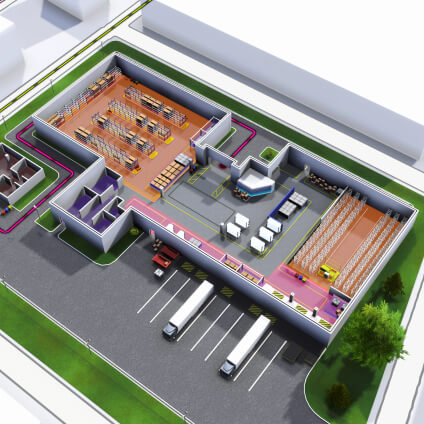
![Logistics optimization](/images/use-cases/logistics-optimization.jpg)

RTLS (real-time location service) data show you logistics from a new perspective. Identify waste, utilize your fleet, and save.

[Logistics optimization](/optimize-internal-logistics)

### Logistics management
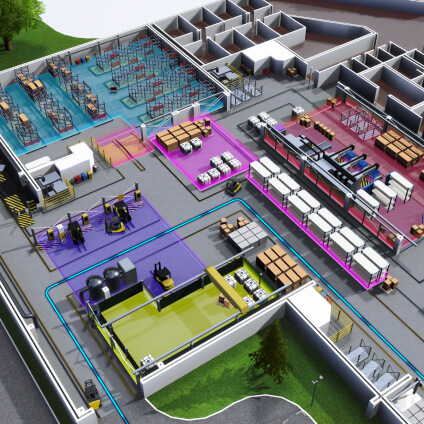
![Order automation](/images/use-cases/order-automation.jpg)

Avoid production micro-stoppages via an Automated Ordering System (AOS). It's Uber, just for a factory.

[Logistics management](/material-order-automation)

### Gemba, in 3D
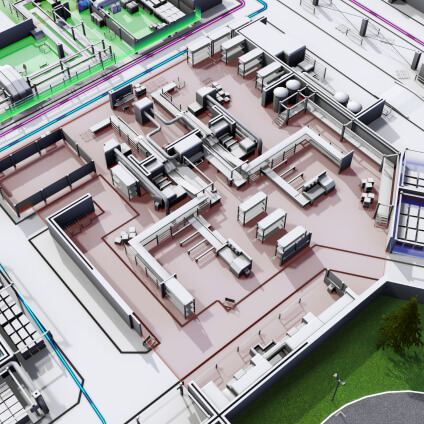
![Production monitoring](/images/use-cases/production-monitoring.jpg)

Have your Gemba Board 24/7 in your pocket. Production, quality, and logistics for all levels of command.

[Gemba in 3D](/monitor-production)

## Live 3D digital twin software for factories and warehouses

twinzo is a live 3D digital twin of your facility. It combines RTLS location data, IoT sensors, production KPIs, and material flow in one spatially accurate model that runs on phone, tablet, and desktop. Operations, logistics, and plant managers use it to see the shop floor in real time, find waste in internal transport, and act before micro-stoppages hit the line.

Connect the systems you already run, or deploy twinzo RTLS. Typical first use cases are forklift fleet utilization, automated material ordering, and a 3D Gemba board for production, quality, and logistics. Plants using live location and 3D context cut decision time with always-on data and reach ROI in 3–8 months.

### See, know, and manage in 3D — anytime, anywhere

See: Industry 4.0 in its essence. 24/7, all your data, available on any device, is visible under one roof. And in 3D. Data about logistics, production, quality, energy consumption, or environment.

Know: Seeing is knowing. A real-time spatially oriented dataset within a digital twin software shows your data in a new, previously unknown context. You don't need to combine different data sources in an Excel table.

Manage: Recognize risks in time. twinzo's digital twin notification system lets you know about the coming dangers. Just set the parameter thresholds or special zones for your material ordering processes and act without delay.

Your factory and your warehouse, in your pocket — on phone, tablet, and desktop.

## Testimonials

> "After the pilot phase, we performed installation throughout the entire plant. Twinzo has proved to be a flexible partner and has provided us with services that would not be possible to implement through manpower."
>
> — Igor Leskanic, Plastic Omnium Auto Exteriors

> "IPS is one of the solutions that will, in our opinion, build the big future of facility management. Thanks to twinzo, we now have a flexible and reliable partner that managed to implement IPS solution based on our requirements. After offices in Bratislava, we will jointly implement IPS also in other branches."
>
> — Karol Michaliak, HB Reavis, Data & Application Teamleader

> "The deployment of RTLS into the internal logistics process has helped us identify on-site locations from the perspective of technology and human resources."
>
> — Peter Pacek, Embraco, Warehousing & internal logistics leader

## Meet Michal

![Michal Ukropec](/images/people/michal-ceo.jpg)

An entrepreneur by heart. Keynote speaker. A sportsman. Doing business since the university, always on top of innovation. Previously in software development, now in the Industry 4.0 field. Bringing digital twins to the world of smart manufacturing.

**100k+** Followers — Michal is the #15 influencer in innovation worldwide.

**25+** Years of experience — Ups and downs teach what has value and what does not. Get in touch to find out more.

- [About us](/about)
- [Michal’s LinkedIn](https://www.linkedin.com/in/michalukropec)

## Get in control

It's simple. To see all the possibilities, go to the App Store or Google Play and download the "twinzo—digital twin" app.

- [Try for free](https://calendly.com/d/crvw-993-zd8/twinzo-trial-setup-call-30-days-free?utm_content=try_for_free)
- [Book Demo](https://calendly.com/d/cr2r-cbx-n66/twinzo-introduction?utm_content=twinzo_introduction)
- [App Store](https://apps.apple.com/us/app/twinzo-digital-twin/id1561970281)
- [Google Play](https://play.google.com/store/apps/details?id=eu.twinzo.digitaltwin)

[Contact us](/contact-us)

### Download Our Free Whitepaper

URL: https://www.twinzo.com/get-whitepaper

Unlock expert knowledge on Digital Twin & logistics optimization. Get your free twinzo whitepaper and discover how to boost efficiency.

## Data-driven intralogistics whitepaper

Fill out the form below to access your free copy of "A Guide to data-driven intralogistics optimization with digital twins". By providing your information, you agree to receive valuable insights, updates, or resources related to Industry 4.0 You can opt out at any time.

Thank you! Your submission has been received!   
  
The whitepaper will be sent to your email within 10 minutes.   
If you do not receive it, please check your SPAM folder or

### Features 

URL: https://www.twinzo.com/features

# Features

A 3D digital twin app for real-time view. Detailed web analysis for a deep dive. And if something goes wrong, get notified.

- ## Logistics analysis

Real-time logistics monitoring
- Spaghetti charts with a player
- Heatmaps
- No-go zones to optimize workflow
- Deep-dive analysis on the web

- ## Data analysis

Deep-dive analysis on the web
- KPIs / OEEs tracking for smart manufacturing
- Sensors and production data charts
- Customizable status visualisation
- Real-time notification watchdog

- ## Logistics management

Material ordering
- Avoid micro-stoppages
- Order processing analysis
- No need for integration

- ## Multiplatform support

Multi-site support
- Cloud or on-premise deployment
- iOS
- Android
- Windows

## Supported externaldata sources

General API available for any data-source

[More about REST API](https://twinzo.atlassian.net/wiki/spaces/PUBD/pages/73170950/REST+API)

UWB RTLS

- Ubisense
- Unlimited Storage

RFID RTLS

- RF - Controls
- Siements
- Zebra

BLE RTLS

- Quuppa
- Zebra
- Twinzo proprietary

Man down solution

- Quuppa
- Twinzo proprietary

Open source multiplatform middleware

AI-based camera feed twinzo RTLS

## Coming next

- Warehouse management system integration
- ERP systems module
- Skill matrix system integration

- Turn by turn navigation
- Correlation and cuasality analytics
- AI anomaly detection
- AI correlation detection

## Get in control

It's simple. To see all the possibilities, go to the App Store or Google Play and download the "twinzo—digital twin" app.

- [Try for free](https://calendly.com/d/crvw-993-zd8/twinzo-trial-setup-call-30-days-free?utm_content=try_for_free)
- [Book Demo](https://calendly.com/d/cr2r-cbx-n66/twinzo-introduction?utm_content=twinzo_introduction)

### Five Carmakers in Slovakia Have Secured Orders Until the End of 2026 – What Comes Next?

URL: https://www.twinzo.com/newsroom-posts/five-carmakers-in-slovakia-have-secured-orders-until-the-end-of-2026---what-comes-next-an-expert-weighs-in

# Five Carmakers in Slovakia Have Secured Orders Until the End of 2026 – What Comes Next?

Slovakia's automotive sector, a key pillar of the country's economy, is facing mounting challenges as it looks beyond 2026. While major car manufacturers currently have secured orders until the end of that year, industry experts warn of potential disruptions ahead. Trade policies, the shift toward electric vehicles, and rising production costs could significantly impact the competitiveness of Slovak carmakers in the global market.

‍

With the United States considering new tariffs, and production costs among the highest in the V4 region, Slovakia's ability to maintain its status as a European automotive hub is under question. Experts stress the need for innovation and state-backed initiatives to keep up with global competitors. Twinzo’s CEO, Michal Ukropec, emphasizes that greater flexibility and a shift in industry mindset will be essential for long-term sustainability.

‍

How will Slovakia’s automotive sector adapt to these challenges?

‍

Read full article here: [https://tvnoviny.sk/ekonomika/clanok/952619-paet-automobiliek-na-slovensku-ma-zabezpecene-zakazky-do-konca-roka-2026-co-bude-potom-nacrtol-odbornik](https://tvnoviny.sk/ekonomika/clanok/952619-paet-automobiliek-na-slovensku-ma-zabezpecene-zakazky-do-konca-roka-2026-co-bude-potom-nacrtol-odbornik)

‍

### How Can Digital Twins Improve Efficiency and Accelerate Processes Across Industries?

URL: https://www.twinzo.com/newsroom-posts/how-can-digital-twins-improve-efficiency-and-accelerate-processes-across-industries

# How Can Digital Twins Improve Efficiency and Accelerate Processes Across Industries?

The concept of digital twins has become a game-changer in the digital era, providing a real-time virtual replica of physical objects, processes, or systems. This technology allows businesses and governments to optimize operations, foresee potential issues, and make data-driven decisions faster than ever before. What would typically take weeks or months to adjust in reality can be tested and refined almost instantly in a digital environment.

‍

Slovakia’s twinzo has been at the forefront of this innovation, leveraging digital twin technology to enhance logistics, streamline manufacturing processes, and optimize urban infrastructure. The potential applications extend beyond industrial automation—smart cities are also benefiting from this approach, using real-time monitoring to manage traffic, detect pipeline failures, and improve energy efficiency.

‍

“Digital twins offer a comprehensive view of operations in real-time, helping businesses and municipalities improve efficiency, reduce downtime, and cut operational costs,” explains Michal Ukropec, CEO of twinzo. With the support of Venture to Future Fund, twinzo is set to push the boundaries of digital transformation even further.

‍

As industries seek faster, smarter, and more cost-effective solutions, digital twin technology is proving to be a key tool for future growth.

‍

Read full article here: [https://techpedia.ta3.com/technologie-pre-biznis/novinky/svet-it/12471/ako-mozu-digitalne-dvojicky-zefektivnit-a-zrychlit-procesy-v-mnohych-oblastiach](https://techpedia.ta3.com/technologie-pre-biznis/novinky/svet-it/12471/ako-mozu-digitalne-dvojicky-zefektivnit-a-zrychlit-procesy-v-mnohych-oblastiach)

### Material order automation

URL: https://www.twinzo.com/material-order-automation

Get rid of production idle times. Try it for FREE!

# Logistics management

Uber for your factory. Autonomous logistic operations with ease.

- ## 55k m2

size of the area
- ## 2 wk.

implementation process
- ## €120K

saved during the first year

![twinzo logistics analytics on a phone](/images/devices/phone-mockup-horizontal.png)

- ## Problem

Logistic operators navigate around the facility, searching for materials to deliver or empty packaging to remove from the line, often doing so randomly or following predefined cycles. This practice frequently leads to idle periods in production throughout the day due to material shortages, resulting in cumulative downtime. Additionally, there is a prevalent issue of uneven driver utilization, with some operators overloaded while others engage in non-productive activities such as browsing social media.
- ## Solution

Employing Android devices equipped with our companion app, dedicated ordering buttons, or direct line connectivity, twinzo can autonomously coordinate work orders among manufacturing stations, material pickers, and forklift drivers. When configured as a comprehensive solution, it establishes a shared pool of available drivers, ensuring a more equitable distribution of tasks. This approach eliminates idle times and promotes a balanced utilization of the fleet across the entire operation.

Book Your Free Expert Session

[Book now](https://calendly.com/d/cv66-765-hyx/book-your-free-expert-session?utm_content=expert_session)

## Let us talk about the numbers

- €40Ktotally invested
- 1 wk.implementationprocess
- €120Ksaved during the first year
- 7 m. in production increase
- 55k m2size of the area
- 20 minmore production daily36 forklifts to 20 forklifts

Get free Whitepaper for step-by-step instructions

[Download now](/get-whitepaper)

[![gemba walk in 3D](/images/use-cases/order-automation.jpg)](/monitor-production)

### Gemba, in 3D

Have your Gemba Board 24/7 in your pocket. Production, quality, and logistics for all levels of command.

[Learn more](/monitor-production)

[![internal logistics optimization](/images/use-cases/logistics-optimization.jpg)](/optimize-internal-logistics)

### Logistics optimization

RTLS (real-time location service) data show you logistics from a new perspective. Identify waste, utilize your fleet, and save.

[Learn more](/optimize-internal-logistics)

### Michal Ukropec: The “Good Old Days” Are Just a Trick of Memory – Slovakia Has Made Brutal Progress Since 1989

URL: https://www.twinzo.com/newsroom-posts/michal-ukropec-the-good-old-days-are-just-a-trick-of-memory---slovakia-has-made-brutal-progress-since-1989

# Michal Ukropec: The “Good Old Days” Are Just a Trick of Memory – Slovakia Has Made Brutal Progress Since 1989

Michal Ukropec, a seasoned entrepreneur and innovation leader, believes that Slovakia’s economic and industrial future depends on strategic global positioning rather than nostalgia for the past. A firm advocate for education reform, he argues that half of Slovakia’s teachers should be replaced, while the rest should receive double the salary to make teaching a more attractive profession.

‍

Having started his own business in high school and hiring employees during university, Ukropec now runs a global Slovak company, negotiating deals with some of the biggest names in international business. He stresses that Slovakia must invest in research, education, and innovation to prevent further brain drain and secure its place in an increasingly competitive world.

‍

"The so-called ‘golden days’ are just a consequence of our bad memory. The progress since 1989 has been bruta - not thanks to governments, but despite them."
 - Michal Ukropec

‍

With Central Europe’s economic outlook uncertain, Ukropec warns that without serious investment in education and industrial innovation, Slovakia risks falling behind in the global market. Waiting to hit rock bottom before improving is not a winning strategy.

‍

Read full article here: [https://www.aktuality.sk/clanok/72AlUNl/stare-zlate-casy-su-len-dosledok-nasej-zlej-pamati-pokrok-po-novembri-89-bol-brutalny-tvrdi-michal-ukropec/](https://www.aktuality.sk/clanok/72AlUNl/stare-zlate-casy-su-len-dosledok-nasej-zlej-pamati-pokrok-po-novembri-89-bol-brutalny-tvrdi-michal-ukropec/)

‍

### Monitor production

URL: https://www.twinzo.com/monitor-production

Monitor your facility in the operational digital twin.  Try it for FREE!

# Gemba, in 3D

Digital GEMBA 24/7 in your pocket. Organize your teams around interactive TV screens or evaluate latest notifications with ease in digital twin.

- ## €10K

totally invested
- ## 2 wk.

implementation process
- ## 20%

shorter breakdowns

![twinzo logistics analytics on a phone](/images/devices/phone-mockup-horizontal.png)

- ## Problem

Large manufacturing sites face challenges in achieving a comprehensive overview of production, logistics, safety, quality, and maintenance processes. Supervisors, maintenance crews, and other roles struggle to assess the current status and identify issues in real time, often necessitating phone calls and extensive walks across the facility. This inefficiency directly results in prolonged breakdowns and increased production idle times.
- ## Solution

Integrate all systems, such as ERP, MES, SAP, Quality, Breakdowns, PLC readouts, Environmental sensors, and more, into the twinzo digital twin. This information can then be accessed through our 3D digital twin app on various devices, including phones, tablets, TVs, and large touch screens. The data is presented in an easy-to-understand 3D format, providing every employee on the shop floor with instant access to critical information. This not only streamlines decision-making but also enhances data transparency throughout the manufacturing facility.

Book Your Free Expert Session

[Book now](https://calendly.com/d/cv66-765-hyx/book-your-free-expert-session?utm_content=expert_session)

## Let us talk about the numbers

- €10Ktotally invested
- 2 wk.implementationprocess
- 20%shorter breakdowns

Get free Whitepaper for step-by-step instructions

[Download now](/get-whitepaper)

[![automated material ordering](/images/use-cases/production-monitoring.jpg)](/material-order-automation)

### Logistics management

Avoid production micro-stoppages via an Automated Ordering System (AOS). It's Uber, just for a factory.

[Learn more](/material-order-automation)

[![internal logistics optimization](/images/use-cases/logistics-optimization.jpg)](/optimize-internal-logistics)

### Logistics optimization

RTLS (real-time location service) data show you logistics from a new perspective. Identify waste, utilize your fleet, and save.

[Learn more](/optimize-internal-logistics)

### Optimize internal logistics

URL: https://www.twinzo.com/optimize-internal-logistics

Increase your logistic fleet efficiency by 20%. Try it for free NOW!

# Logistics optimization

Optimize your intra-logistic routes and achieve an average of 20% fleet size reduction.

- ## 50k m2

size of the area
- ## 2 wk.

implementation process
- ## €960K

saved during the first year

![twinzo logistics analytics on a phone](/images/devices/phone-mockup-horizontal.png)

- ## Problem

Internal logistics are currently operating at maximum capacity, causing delays in deliveries. Despite a sense that there's room for improvement, the lack of data makes it challenging to pinpoint specific inefficiencies, leading to the consideration of purchasing additional forklifts as the only viable solution.
- ## Solution

Swiftly integrate Real-Time Location System (RTLS) technology using battery-powered beacons and Android tablets. This will seamlessly transmit real-time position data to Twinzo, providing users with immediate access to comprehensive information for quick decision-making. Engineers can leverage our analytical tools and reports to identify discrepancies between shifts, assess the optimization of current routes and layout for performance, and compare actual logistics with predefined routes.

Book Your Free Expert Session

[Book now](https://calendly.com/d/cv66-765-hyx/book-your-free-expert-session?utm_content=expert_session)

## Let us talk about the numbers

- €75Ktotally invested
- 2 wk.implementationprocess
- €960Ksaved during the first year
- 2 mo.return of investment
- 50k m2size of the area
- 45%maximization of forklift efficiency36 forklifts to 20 forklifts
- 48 driversdifference before usage of our app108 drivers to 60 drivers

Get free Whitepaper for step-by-step instructions

[Download now](/get-whitepaper)

[![automated material ordering](/images/use-cases/production-monitoring.jpg)](/material-order-automation)

### Logistics management

Avoid production micro-stoppages via an Automated Ordering System (AOS). It's Uber, just for a factory.

[Learn more](/material-order-automation)

[![gemba walk in 3D](/images/use-cases/order-automation.jpg)](/monitor-production)

### Gemba, in 3D

Have your Gemba Board 24/7 in your pocket. Production, quality, and logistics for all levels of command.

[Learn more](/monitor-production)

### Partner

URL: https://www.twinzo.com/partner

# Become a twinzo partner

As twinzo became a globally recognized brand in digital twin technology, we rely on a network of trusted partners to grow and provide outstanding services to our customers.  
‍  
Join our journey and bring innovation to industrial companies.

## Testimonials

The experience configuring and using Twinzo digital place has been refreshing, all our team and customers are more than comfortable working with the solution. Very intuitive and easy to use with an awesome valuable information to improve the operations.

Ignacio David Torres, Manager, Netnix

With twinzo as a partner, we collaborated on digital twin and logistics optimization projects for some customers. The collaboration was of a high standard, and their cooperation significantly contributed to the smooth progress of the entire project. The twinzo platform proved to be exceptionally easy to configure, saving both time and effort. The installation of hardware at the customer’s site also went smoothly, without any complications. Throughout the entire installation and configuration process, twinzo provided excellent support to us as a partner, as well as to the customer.

Marian Osuch, CEO, MARPEX

In a world of rapidly evolving technologies, Twinzo allows us to transform industry assets supervision stakes into reality and progress more quickly towards the digital twin values adoption in industry. Thanks to a super easy connected platform, Twinzo is one of these gamechangers for 3D contextualized twins.

Xavier Godart, Industry4.0 – Consulting unit director, Inetum

[](#)[](#)

## Why to become a partner

- 1Unique 3D live digital twin technology gives your practice a unique edge in the market
- 2Growing digital twin market opening new opportunities, broad industry applicability
- 3Attractive license revenue share conditions for resale partners
- 4Revenues for the implementation of on-site and SLA agreements with the customers are in the partners’ hands.

## How to become a partner

twinzo platform is built with a vision to enable a rich partner ecosystem. We are working collaboratively with Integrators, Resellers, Hardware vendors, and software solutions to provide our customers with the best possible services to solve their needs.

Based on your desired category, we will provide you with a tailored onboarding process that includes certifications, co-sell shadowing options, technical training, and much more.

Register

Explore the platform

Get trained

Get Certified

Sell and implement twinzo locally

# To join our growing ecosystem

please register your interest, and our dedicated partner manager will reach out to you.

### Thank you for your submission!

Oops! Something went wrong while submitting the form.

## Existing partner network

Who is already in twinzo’s partner network

- ### Integration

[![Inetum](/images/logos/inetum.svg)](https://www.inetum.com/)[![Marpex](/images/logos/marpex.png)](https://www.marpex.sk/)[![Netnix](/images/logos/netnix.png)](https://www.netnix.net/)
- ### Reseller

[![Tech Evolution](/images/logos/tech-evolution.svg)](#)[![ScanPro](/images/logos/scanpro-logo-gray.png)](https://scanpro.gr/)[![Athena](/images/logos/athena-logo-gray.png)](https://athenatec.com/)
- ### Technology partners

[![Actility](/images/logos/actility.png)](https://www.actility.com/)[![Blueup](/images/logos/blueup.png)](https://blueup.myshopify.com/)[![Heliotics](/images/logos/helietics.png)](https://www.heliotics.com/)[![Industry](/images/logos/industry.png)](https://www.tind.sk/)[![Kontakt.io](/images/logos/kontakt.svg)](https://kontakt.io/)[![MOKOSmart](/images/logos/moko-smart.png)](https://www.mokosmart.com/)[![RF Controls](/images/logos/rf-controls.png)](https://rf-controls.com/)[![Siemens](/images/logos/siemens.svg)](https://www.siemens.com/)[![Quuppa](/images/logos/quuppa.svg)](https://www.quuppa.com/)[![Zebra](/images/logos/zebra.png)](https://www.zebra.com/)[![Slamcore](/images/logos/slamcore.png)](https://www.slamcore.com/)[![Azitek](/images/logos/azitek-logo-slogan-gray.png)](https://azitek.io/)[![Wheere](/images/logos/logo-wheere-gray.png)](https://www.wheere.com/)[![Inductive Automation](/images/logos/inductive-automation-logo-gray.png)](https://inductiveautomation.com/)[![Visual Components](/images/logos/visual-components-logo-gray.png)](https://visualcomponents.com/)[![Iviso](/images/logos/iviso-logo-gray.png)](https://www.iviso.at/)[![GreenFuturz](/images/logos/greenfuturz-logo-gray.png)](https://greenfuturz.com/)[![DynaWo](/images/logos/dynawo-logo-gray.png)](https://www.dynawo.de/)

### Pricing

URL: https://www.twinzo.com/pricing

# How much does twinzo digital twin cost?

There are two basic options:

- 1

## Free for testing and smaller Proof of Concepts implementation

Just create an account, upload your 3D model (or use one of ours), integrate some data (API, or feel free to use our Google Sheet).[Try for free](https://calendly.com/d/crvw-993-zd8/twinzo-trial-setup-call-30-days-free?utm_content=try_for_free)

- 2

## Reach out to us with some basic information so we can give an offer:

How many locations do you operate in (we have discounts for multi-site implementations)
- If you need to track vehicles, material, people, plus how many. Do you already have some technology in place? Great, let us know – we have many connectors in place)
- Do you want to visualize some data from your sensors or information systems? Tell us how many
- And we will prepare an instant price offer

# Let us know your needs.

## Thank you for your submission!

Oops! Something went wrong while submitting the form.

## Have not found the answer to your problem?

- [Documentation](https://twinzo.atlassian.net/wiki/spaces/PUBD/overview)
- [Get in touch](#)

### Privacy policy

URL: https://www.twinzo.com/privacy-policy

## Privacy Statement of 5.0 technologies j.s.a

At twinzo – Digital Twin, accessible from https://twinzo.eu, one of our main priorities is the privacy of our visitors. This Privacy Statement document contains types of information that is collected and recorded by twinzo – Digital Twin and how we use it.


#### 


## 1. THE PURPOSE OF THIS STATEMENT. THE DATA CONTROLLER

##### 1.1 What is the purpose of this privacy statement?

This privacy statement (“Statement”) is intended to help business partners and other private individuals to understand how 5.0  technologies j.s.a., with its registered seat at Nezábudkova 471/8, 929 01 Dunajská Streda, Slovakia, ID No. 54 530 300, registered in the Commercial Register of the District Court Trnava, Section: Sja, Insert No. 29/T (“twinzo”) processes personal data of private individuals having dealings (directly or indirectly through their employers) with twinzo.

The Statement is addressed to any private individual who has or (to the extent applicable) had relationship with twinzo or whose personal data were provided to twinzo by employer of such private individual. Whether you are our contractual partner, representative of our contractual partner or whether you have been nominated by our contractual partner as his/her contact person or you have been appointed by our contractual partner as an administrator of our services or whether you have only sent an email, mail or other form of communication to twinzo or whether you have used our website, to the extent our encountering with you led to twinzo having access to your personal data, this Statement is relevant to you.

This Statement, however, does not cover processing operations with personal data carried out by twinzo in context of employment (including the recruitment process), where separate rules available at twinzo’s Human Resources department apply.

The Statement shall be read carefully and in its entirety. twinzo strived to ensure that the Statement contains complete and comprehensible information about the processing activities regarding your personal data. However, if you have any questions or if you are not sure about any aspects of processing of your personal data by twinzo, please, do not hesitate to contact us at the following email address: info@twinzo.eu


#### 1.2 Who is the data controller?


The data controller with respect to the personal data is twinzo.

twinzo needs to process your personal data to fulfil its contractual and other legal obligations. At the same time, twinzo may need to process your personal data to protect its legitimate interests, including operating its business activities in appropriate manner.

It is our objective to process all personal data in line with the applicable data protection laws, particularly (i) the Regulation of the European Parliament and of the Council (EU) 2016/679 of 27 April 2016 on the protection of natural persons with regard to the processing of Personal data and on the free movement of such data, and repealing Directive 95/46/EC, and (ii) Slovak Act No: 18/2018 Coll. on Protection of Personal Data and On Amendment and Supplement of Certain Acts (to the extent applicable). It is also our objective to ensure that all processing operations are conducted in a secure way only to the extent necessary for achieving purpose of the processing as described below.


#### 1.3 What could happen if personal data are not provided to twinzo?


twinzo has numerous contractual and legal obligations towards its business partners and towards the public authorities or other public bodies.

If your personal data are not provided to twinzo, twinzo may not be able to fulfil its obligations, which may result in twinzo not being able to enter into contract with its business or contractual partners or to respond to your communication.


## 2. PERSONAL DATA. PROCESSING OPERATIONS


#### 2.1. Where does your personal data come from?


twinzo collects the personal data directly from you or from your employer who provided your personal data to twinzo in the course of the business relationship. twinzo may obtain personal data directly from you or through twinzo’s website https://www.twinzo.eu as well as by other means (including public sources) directly from entities that use or wish to use the services provided by twinzo. twinzo may also receive some of the personal data from public authorities in relation to their queries or investigations. It may be also the case that twinzo will process personal data which are publicly available, particularly with respect to contact data. Please, also be aware that twinzo may create other data about you, which could qualify as personal data and twinzo will use and store also such personal data


#### 2.2 What kind of personal data are processed by twinzo?


Unless a particular situation requires otherwise, the personal data that twinzo will process may include:

(a)       identification and characteristic information: such as name, surname, title, details of your employer, job position;

(b)       contact data: such as address, business address, (business) phone number, (business) e-mail address, job position;

(c)        background information and skills overviews: such as information stated on any professional certificate or license (to the extent applicable);

(d)       any data provided by you either when using our website or through the established for use of twinzo services.

If other personal data are provided to twinzo, twinzo will always carefully evaluate whether such personal data are necessary for the intended processing purposes. To the extent not necessary, twinzo will not process such personal data.

#### 2.3 What are the purposes for processing of your personal data by twinzo?

twinzo processes personal data of its business partners, representative(s) of business partners and/or business partner’s contact persons to fulfil its contractual obligations and statutory obligations (such as keeping of accounting, tax purposes and similar). Such personal data may also be processed for purposes of legitimate interests of twinzo aimed at ensuring effective and secure conducting of twinzo’s and twinzo group’s business activities. The personal data may also be used for distribution of marketing and promotional materials to the business partner by the third party.

Your contact data will also be used to for communication purposes, including responding to any queries you may address to twinzo as well as sharing with you promotional and marketing materials regarding twinzo’s and twinzo group’s business activities and products.

twinzo does not intent to process any personal data uploaded by you through account created for use of twinzo’s services. Such personal data may, however, be stored at twinzo’s technological equipment.

#### 2.4 What is the legal base for the processing operations?

Pursuant to applicable data protection laws, personal data may only be processed based on adequate legal base. twinzo processes personal data based on the following legal bases:

(a)       performance of a contract

Data processing by twinzo is necessary to enable twinzo to fulfil its obligations deriving from the agreement concluded with you or with your employer.

(b)       fulfilment of legal obligation

Data processing by twinzo is necessary to enable twinzo to comply with its obligations prescribed in law, including the transmission of data to authorities and keeping of accounts.

(c)        legitimate interest of twinzo

In certain cases, twinzo will also process personal data on the basis of the fact that twinzo has a legitimate interest to do so. These cases include:

(i)        making or defending against claims;

(ii)       proving compliance with applicable laws (such as upon requests of supervisory authorities);

(iii)      security of twinzo assets (including infrastructure used for providing services);

(iv)       sharing your business personal data with other companies from the same group of companies to conduct twinzo’s (and twinzo group’s) business activities effectively and securely.

In cases where data processing by twinzo is based on the legitimate interest of twinzo, twinzo has, upon thorough deliberation, arrived at the conclusion that your interests or fundamental rights and freedoms that require protection of personal data do not override the legitimate interest of twinzo.

#### 2.5 For how long will your personal data be processed?

twinzo will not store or process personal data for a period longer than necessary to fulfil the purpose of the processing or as prescribed or allowed by applicable laws. Accordingly, when the purpose has been fulfilled in relation to a specific type of personal data, we will stop using the personal data for that purpose and, if the same data is not relevant for any other purpose, delete the relevant personal data as soon as reasonably possible.

The basic rule is that twinzo will store and process your personal data throughout the duration of the contract with the business partner and for a period of 5 years after its termination, unless the applicable laws provide for different period. To the extent possible, twinzo will anonymize your personal data for their use for statistical purposes.


## 3. YOUR RIGHTS


#### 3.1 What does twinzo do to protect your personal data?


twinzo ensures that the principles of protection of personal data laid down by the applicable data protection laws are strictly followed and adhered to. Particularly, twinzo ensures that (i) only those personal data are processed which are necessary for the purpose of processing, (ii) personal data are processed only for purpose for which the data were collected or (to the extent permitted by the applicable data protection laws) for purpose which is compatible with the original purpose, and (iii) the personal data are processed no longer than necessary.

The personal data will be stored and processed manually and also automatically with the help of electronic devices.

twinzo has taken appropriate technical, administrative, physical and procedural protection measures for the protection of personal data in their use and possession in order to ensure that such personal data are protected against misuse, unauthorized access, publication, corruption, modification and destruction. Such measures include the following:

(a)       technical protection measures: e.g., firewalls, anti-virus and endpoint protection software, encryption technologies, password-protected access and monitoring of our systems and data centers to ensure compliance with our security policies,

(b)       physical protection measures: e.g., closed doors and file cabinets, controlled entry to the premises of twinzo, and

(c)        organizational protection measures: by means of educational and awareness-raising programs regarding security and confidentiality, with the purpose of securing that the employees of twinzo understand and know the importance of protecting personal data and the tools that are mandatory to use, further, also by means of a data protection policy and regulations that define how twinzo processes personal data.


#### 3.2 What are your rights with regard to processing of personal data?


The applicable data protection laws confer on you several rights when it comes to processing of your personal data. Details of these rights are outlined below. Be aware that the rights below could be qualified in certain circumstances (e.g., in case of lega

### Quuppa and Twinzo: A Strategic Partnership to Transform Real-Time Location Solutions

URL: https://www.twinzo.com/newsroom-posts/quuppa-and-twinzo-a-strategic-partnership-to-transform-real-time-location-solutions

# Quuppa and Twinzo: A Strategic Partnership to Transform Real-Time Location Solutions

Twinzo, a pioneer in no-code live digital twin technology, has announced a strategic partnership with Quuppa, a globally recognized provider of Real-Time Locating Systems (RTLS). This collaboration is set to enhance operational efficiency, precision tracking, and automation across multiple industries, delivering unmatched location-based technology solutions.

‍

With Quuppa’s industry-leading RTLS platform, twinzo can now offer greater accuracy, flexibility, and reliability in real-time tracking solutions. From fleet management to order automation and presence detection, this partnership will help businesses streamline logistics and optimize operations like never before.

‍

“Quuppa RTLS not only met our stringent requirements but exceeded them. The system’s flexibility and precision in on-site installations offer our clients a highly adaptable tracking solution that significantly optimizes their operations. We are thrilled about this partnership and the opportunity to introduce Quuppa’s exceptional technology to our customers on a wider scope.”
 - Michal Ukropec, twinzo CEO

‍

“We are excited to welcome Twinzo into the Quuppa Partner Ecosystem and extend our coverage to Slovakia. twinzo digital twin combined with our reliable location information is a perfect match for track & trace, fleet management, and order automation in the industrial sector.”
- Soile Kankaanpää, Quuppa CEO

‍

As part of this exciting launch, twinzo is offering a 15% discount on licenses for the first 10 customers for the first year.

‍

Read full article here: [https://www.quuppa.com/blogs-articles/quuppa-and-twinzo-a-strategic-partnership-to-revolutionize-rtls/](https://www.quuppa.com/blogs-articles/quuppa-and-twinzo-a-strategic-partnership-to-revolutionize-rtls/)

‍

### Slovak Startup Helps Companies Optimize Operations and Cut Emissions - Now Backed by a €2M+ Investment!

URL: https://www.twinzo.com/newsroom-posts/slovak-startup-helps-companies-optimize-operations-and-cut-emissions---now-backed-by-a-eu2m-investment

# Slovak Startup Helps Companies Optimize Operations and Cut Emissions - Now Backed by a €2M+ Investment!

Slovak startup Twinzo is redefining how businesses and public sectors optimize processes and reduce environmental impact. By leveraging 3D digital twin technology, twinzo enables real-time visualization, analysis, and management of factories, offices, and entire cities - directly from a smartphone.

‍

With a €2.3 million investment, led by Portugal’s Critical Ventures alongside Czech and Slovak venture funds, twinzo is set to expand across Europe. The platform already optimizes operations for companies like Škoda, Whirlpool, and Benteler, helping them reduce costs and emissions while making key business decisions 35% faster.

‍

"With twinzo, companies can make data-driven decisions from anywhere, reducing inefficiencies, saving costs, and enhancing sustainability."
 -Michal Ukropec, twinzo CEO

‍

As digital twins continue to revolutionize industries, twinzo’s cutting-edge solutions are gaining recognition as a key driver of efficiency and environmental responsibility.

Read full article here: [https://www.techbyte.sk/2023/12/slovensky-startup-investicia-2-miliony-eur/](https://www.techbyte.sk/2023/12/slovensky-startup-investicia-2-miliony-eur/)

‍

### terms

URL: https://www.twinzo.com/terms

# Terms and Conditions for twinzo™ Services (“Terms”)


[1. Your Privacy](#table_of_content_heading_1706800853529_3477)[2. Your Content](#table_of_content_heading_1706800853529_3478)[3. Code of Conduct](#table_of_content_heading_1706800853529_3479)[4. Using the Services & Support](#table_of_content_heading_1706800853530_3480)[5. Using Third-Party Apps and Services](#table_of_content_heading_1706800853530_3481)[6. Service Availability](#table_of_content_heading_1706800853530_3482)[7. Updates to the Services or Software, and Changes to These Terms](#table_of_content_heading_1706800853531_3483)[8. Software License](#table_of_content_heading_1706800853531_3484)[9. Payment Terms](#table_of_content_heading_1706800853531_3485)[10. Contracting Entity, Choice of Law, & Location for Resolving Disputes](#table_of_content_heading_1706800853532_3486)[11. Warranties](#table_of_content_heading_1706800853532_3487)[12. Limitation of Liability](#table_of_content_heading_1706800853532_3488)[13. Service-Specific Terms](#table_of_content_heading_1706800853533_3489)[14. Miscellaneous](#table_of_content_heading_1706800853533_3490)[15. Claims](#table_of_content_heading_1706800853533_3491)[16. Export Laws](#table_of_content_heading_1706800853534_3492)[17. Reservation of Rights and Feedback](#table_of_content_heading_1706800853534_3493)[18. Notices](#table_of_content_heading_1706800853534_3494)


# 1. Your Privacy

a. Your privacy is important to us. Please read [https://www.twinzo.eu/privacy-policy](https://www.twinzo.eu/privacy-policy) (the "Privacy Statement") as it describes the types of data we collect from you and your devices ("Data"), how we use your Data, and the legal bases we have to process your Data. The Privacy Statement also describes how company 5.0  technologies j.s.a., with its registered seat at Nezábudkova 8, 929 01 Dunajská Streda, Slovakia, ID No. 54 530 300, registered in the Commercial Register of the District Court Trnava, Section: Sja, Insert No. 29/T] (“twinzo”) uses your content, which is your communications with others, postings submitted by you to twinzo via digital twin services offered by twinzo, including associated integration/configuration, and/or hardware delivery, software license(s) and cloud hosting associated with individual licenses and/or products, websites, and services - as specified in Your confirmed purchase order(s) (“Services”) and the files, photos, documents, audio, digital works, live streams and videos that you upload, store, broadcast, create, generate, or share through the Services, or inputs that you submit in order to generate content ("Your Content"). Where processing is required to be based on consent and to the extent permitted by law, by agreeing to these Terms, you consent to twinzo’s collection, use, and disclosure of Your Content and Data as described in the Privacy Statement. In some cases, we will provide separate notice and request your consent as referenced in the Privacy Statement.

b. With respect to the Data, twinzo acts as data controller only in relation to the personal information needed for your identification as our contractual partner and for identification of the administrators appointed by you with respect to the Services. Twinzo may use such identification data also for delivery of notifications regarding the Services, educational purposes and/or marketing activities. By making the order you agree to use the identification data for educational and marketing purposes; you can always unsubscribe from receiving such correspondence. Other than stated, twinzo does not require and does not expect to process any personal data contained within Your Content with respect to the Services. twinzo strictly encourages you to consider whether naming specific private individuals from your organization or other third parties is necessary to use the Services. Twinzo also encourages you to use pseudonymization techniques to protect personal data of your administrators or employees affected by the Services.

c. While not intended, we acknowledge that under certain circumstances we may be asked to process personal data contained in Your Content on your behalf. In such situations twinzo will act as your data processor and our relationship will be governed by the following data processing agreement (“Data Processing Agreement”):

c1. You remain responsible for compliance with the applicable legal framework, including the Regulation of the European Parliament and the Council (EU) 2016/679 (“GDPR”) regarding processing of personal data of the data subjects included in Your Content, including determination of the appropriate legal basis for such processing, fulfilment of all duties towards the data subjects and maintenance of all documentation required by the GDPR.

c2. twinzo shall only process personal data based on your detailed written instructions; twinzo may refuse to follow such instructions, if in the opinion of twinzo, these would lead to processing incompliant with the GDPR or other applicable legislation. Twinzo shall notify of any deemed non-compliance regarding processing of the personal data, to the extent twinzo is reasonably able to identify such non-compliance.

c3. When processing personal data, twinzo shall act in compliance with the GDPR and any other applicable legislation. Twinzo shall not be obliged to verify accuracy of any personal data processed with respect to the Services.

c4. Twinzo undertakes to protect any personal data processed by twinzo under this Data Processing Agreement using the appropriate safety requirements in line with Article 32 of the GDPR. Any changes to the measures adopted shall be notified to you without undue delay.

c5. Twinzo shall ensure that any person processing the personal data is bound by appropriate confidentiality undertaking.

c6. Twinzo may use third parties to process the personal data, if it ensures at least the same level of protection, as if processed by twinzo.

c7. Considering the circumstances of processing and role of twinzo, twinzo shall provide you with reasonably requested information and assistance with respect to fulfillment of your statutory duties with respect to the processing of personal data and particularly when dealing with data subjects’ requests. twinzo remains supportive for any data processing audit you may decide to carry out, provided it does not affect twinzo’s operations and provided that appropriate security measures are put in place.

c8. Unless required by law or necessary to protect twinzo’s rights and interests, following your written instruction, twinzo shall delete or return to you (to the extent possible) all copies of personal data available at the information systems of twinzo.

c9. The Data Processing Agreement is effective as of the day of confirmed purchase and remains in effect throughout duration of the Services.


# 2. Your Content


Many of our Services allow you to create, store or share Your Content or receive material from others. We don’t claim ownership of Your Content. Your Content remains yours and you are responsible for it.

a. When you share Your Content with other people, you understand that they may be able to, on a worldwide basis, use, save, record, reproduce, broadcast, transmit, share, and display Your Content for the purpose that you made Your content available on the Services, without compensating you. If you do not want others to have that ability, do not use the Services to share Your Content. You represent and warrant that for the duration of these Terms, you have (and will have) all the rights necessary for Your Content that is uploaded, stored, or shared on or through the Services and that the collection, use, and retention of Your Content will not violate any law or rights of others. Twinzo does not own, control, verify, pay for, endorse, or otherwise assume any liability for Your Content and cannot be held responsible for Your Content or the material others upload, store or share using the Services.

b. To the extent necessary to provide the Services to you and others, to protect you and the Services, and to improve twinzo products and Services, you grant to twinzo a worldwide, perpetual, royalty-free, non-exclusive intellectual property license to use Your Content, for example, to make copies of, retain, transmit, reformat, modify (adapt/create derivative works), display, and distribute via communication tools Your Content on the Services and/or to be used, adapted or modified by twinzo in anonymized way to create anonymized insights into digital twin performance and industrial insights. If you publish Your Content in areas of the Service where it is available broadly online without restrictions, Your Content may appear in demonstrations or materials that promote the Service.


# 3. Code of Conduct


You are accountable for your conduct and content when using the Services.

a. By agreeing to these Terms, you’re agreeing that, when using the Services, you will follow these rules:

i. Don’t do anything illegal or try to generate or share content that is illegal.

ii. Don’t engage in any activity that exploits, harms, or threatens to harm children.

iii. Don’t send spam or engage in phishing or try to generate or distribute malware. Spam is unwanted or unsolicited bulk email, postings, contact requests, SMS (text messages), instant messages, or similar electronic communications. Phishing is sending emails or other electronic communications to fraudulently or unlawfully induce recipients to reveal personal or sensitive information, such as passwords, dates of birth, birth registration numbers, Social Security numbers, passport numbers, credit card information, financial information, or other sensitive information, or to gain access to accounts or records, exfiltration of documents or other sensitive information, payment and/or financial benefit. Malware includes any activity designed to cause technical harm, such as delivering malicious executables, organizing denial of service attacks, or managing command and control servers.

iv. Don’t publicly display or use the Services to generate or share inappropriate content or material (involving, for example, nudity, bestiality, pornography, offensive language, graphic violence, self-harm, or criminal activity) or Your Content or material that does not comply with local laws or regulations.

v. Don’t engage in activity that is fraudulent, false, or misleading (e.g., asking for money under false pretenses, impersonating someone else, creating fake accounts, automating inauthentic activity, generating, or sharing content that is intentionally deceptive, manipulating the Services to increase play count, or affect rankings, ratings, or comments) or libelous or defamatory.

vi. Don’t circumvent any restrictions on access to, usage, or availability of the Services (e.g., attempting to “jailbreak” an AI system or impermissible scraping).

vii. Don’t engage in activity that is harmful to you, the Services, or others (e.g., transmitting viruses, stalking, trying to generate or sharing content that harasses, bullies, or threatens others, posting terrorist or violent extremist content, communicating hate speech, or advocating violence against others).

viii. Don’t violate or infringe upon the rights of others (e.g., unauthorized sharing of copyrighted music or other copyrighted material, resale, or other distribution of software, or taking photographs or video/audio recordings of others without their consent for processing of an individual’s biometric identifiers/information or any other purpose using any of the Services).

ix. Don’t engage in activity that violates the privacy or data protection rights

### They Help Companies Save Through Data: Slovak Startup Twinzo Secure an Investment

URL: https://www.twinzo.com/newsroom-posts/they-help-companies-save-through-data-slovak-startup-twinzo-secure-an-investment-of-over-two-million-euros

# They Help Companies Save Through Data: Slovak Startup Twinzo Secure an Investment

Imagine having the ability to monitor and analyze factories, offices, and entire cities in real-time—right from your smartphone. That’s exactly what Slovak startup twinzo is offering with its cutting-edge digital twin technology.

‍

By combining 3D visualization with real-time data tracking, twinzo allows industrial companies to optimize logistics, track production workflows, and identify inefficiencies—without ever setting foot inside the facility. Instead of relying on 2D spreadsheets and disconnected information systems, managers can now access a fully interactive, digital model of their operations.

‍

This innovative approach has earned Twinzo a €2.3 million investment, led by Portugal’s Critical Ventures, alongside Czech venture funds Soulmates Ventures and Depo Ventures, and the Slovak Venture to Future Fund. The funding will drive twinzo's European expansion, bringing its next-generation digital twin solutions to even more industrial giants.

‍

"No more flying thousands of kilometers just to check factory conditions. Our technology puts real-time operational data in the palm of your hand, enabling businesses to cut costs and boost efficiency like never before."
 - Michal Ukropec, CEO of twinzo

‍

Already deployed in 95 facilities spanning 270 million square meters, twinzo is trusted by industry leaders such as Škoda, Whirlpool, Benteler, Nemak, and Mondelez International (Figaro).

‍

With demand for real-time industrial monitoring on the rise, twinzo is positioned to lead the digital transformation in manufacturing, logistics, and beyond.

‍

Read full article here: [https://index.sme.sk/c/23256076/startup-twinzo-ziskal-investiciu-vyse-dva-miliony-eur.html](https://index.sme.sk/c/23256076/startup-twinzo-ziskal-investiciu-vyse-dva-miliony-eur.html)

‍

### twinzo - Get Started

URL: https://www.twinzo.com/get-started

# Supercharge Your Logistics with Real-Time 3D Insights

Cut costs, optimize operations, and gain full control over your facility.

[Get in touch](/ppc-contact)[Try for free](https://calendly.com/d/crvw-993-zd8/twinzo-trial-setup-call-30-days-free)

Empowering

- ![Skoda](/images/logos/logo-skoda.svg)
- ![Whirlpool](/images/logos/logo-whirlpool.svg)
- ![Benteler](/images/logos/logo-benteler.svg)

- 35%Time savingsMake decisions much faster thanks to real-time data.
- 3-8Months ROIDirect insights leading to fast return of your invested money.

[Get in touch](/ppc-contact)
[See](#intro)[Know](#know)[Manage](#manage)

![twinzo logistics analytics on a phone](/images/devices/phone-mockup-horizontal.png)

Gain 24/7 visibility into every process, asset, and activity across your facility.

[Try for free](https://calendly.com/d/crvw-993-zd8/twinzo-trial-setup-call-30-days-free/)

[Get in touch](#)

## Where twinzo makes the biggest impact

Optimize warehouse layouts, track inventory in real time, and monitor production with 3D insights. Twinzo helps you eliminate bottlenecks and boost operational efficiency.

[Get in touch](/ppc-contact)[Try for free](https://calendly.com/d/crvw-993-zd8/twinzo-trial-setup-call-30-days-free/)

[![internal logistics optimization](/images/use-cases/logistics-optimization.jpg)](/optimize-internal-logistics)

### Logistics optimization

RTLS (real-time location service) data show you logistics from a new perspective. Identify waste, utilize your fleet, and save.

[Learn more](/optimize-internal-logistics)

[![automated material ordering](/images/use-cases/production-monitoring.jpg)](/material-order-automation)

### Logistics management

Avoid production micro-stoppages via an Automated Ordering System (AOS). It's Uber, just for a factory.

[Learn more](/material-order-automation)

[![gemba walk in 3D](/images/use-cases/order-automation.jpg)](/monitor-production)

### Gemba, in 3D

Have your Gemba Board 24/7 in your pocket. Production, quality, and logistics for all levels of command.

[Learn more](/monitor-production)

## Testimonials

"After the pilot phase, we performed installation throughout the entire plant. Twinzo has proved to be a flexible partner and has provided us with services that would not be possible to implement through manpower."

Igor Leskanic, Plastic Omnium Auto Exteriors

"IPS is one of the solutions that will, in our opinion, build the big future of facility management. Thanks to twinzo, we now have a flexible and reliable partner that managed to implement IPS solution based on our requirements. After offices in Bratislava, we will jointly implement IPS also in other branches."

Karol Michaliak, HB Reavis, Data & Application Teamleader

"The deployment of RTLS into the internal logistics process has helped us identify on-site locations from the perspective of technology and human resources."

Peter Pacek, Embraco, Warehousing & internal logistics leader

[](#)[](#)

## Take control of Your Logistics

Get in touch to learn how twinzo can help you optimize logistics, reduce costs, and gain real-time 3D visibility into your operations.

[Get in touch](/ppc-contact)[Try for free](https://calendly.com/d/crvw-993-zd8/twinzo-trial-setup-call-30-days-free/)


[Download the App](https://get.twinzo.eu/)[Sign Up](https://platform.twinzo.com/login)[Get in touch](#)


Landscape mode is not supported, please rotate your device.

### What Management Model Pays Off Even in Times of Crisis?

URL: https://www.twinzo.com/newsroom-posts/what-management-model-pays-off-even-in-times-of-crisis

# What Management Model Pays Off Even in Times of Crisis?

Economic crises challenge businesses to rethink their operations and survival strategies. For Michal Ukropec, CEO of INFOTECH, resilience is not just about weathering uncertainty - it's about building a company that remains unshaken by any crisis.

‍

Having faced his first business crisis years ago, Ukropec structured his company around two key pillars that ensure stability even in turbulent times: maximum efficiency and performance combined with a strong partnership-driven operational model. A crucial part of this approach is the Pulse-checks tool, which actively monitors and optimizes company dynamics, ensuring adaptability in a rapidly changing environment.

‍

How can businesses safeguard their future against unforeseen crises?

‍

Read full article here: [https://www.forbes.sk/aky-model-riadenia-sa-oplati-aj-do-krizy/?srsltid=AfmBOoqf1-2Aecx4m-HxJjpwXj-lPuIknPUG70QcD7lMEtRrwW1SeqI2](https://www.forbes.sk/aky-model-riadenia-sa-oplati-aj-do-krizy/?srsltid=AfmBOoqf1-2Aecx4m-HxJjpwXj-lPuIknPUG70QcD7lMEtRrwW1SeqI2)