
Blog

Materials at the Station Before the Truck Line Stops

Wire process-stage alerts on real positions so in-house builds and supplier parts both hit planned assembly on time.

  • Tomas Vojtek

  • November 17, 2026

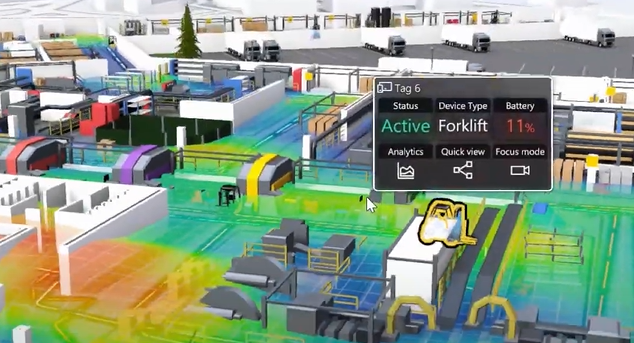
twinzo logistics analytics on a phone
Materials at the Station Before the Truck Line Stops

Chassis on Station, Kit Still Somewhere

It is mid-morning in a heavy-truck assembly hall. A chassis sits at Station 12 with the build ticket open. The team needs the sequenced cab module and a line-side kit that left the supermarket an hour ago. MES still shows the previous putaway as complete. The warehouse scan says the cage left Dock 3. Nobody on the radio can say which buffer aisle it is sitting in, or whether the tugger diverted it for another call. Production starts walking. Logistics starts walking. The chassis waits.

‍

That scene is ordinary in commercial vehicle manufacturing, especially on heavy truck assembly floors where option mix is high and buffers are thin by design. The pain is not that the plant has no systems. It has too many partial truths: a scan at the dock, a call on the radio, a status in MES, and a finished truck yard that only production owns. What is missing is a shared picture of where the material actually is relative to the station that needs it, the same job industry teams call intralogistics when they talk about moves inside the four walls. The product shape for that job sits on twinzo's commercial vehicles industry page. The floor version starts here: materials at the station before the line stops, not a search after the stoppage is already logged.
‍

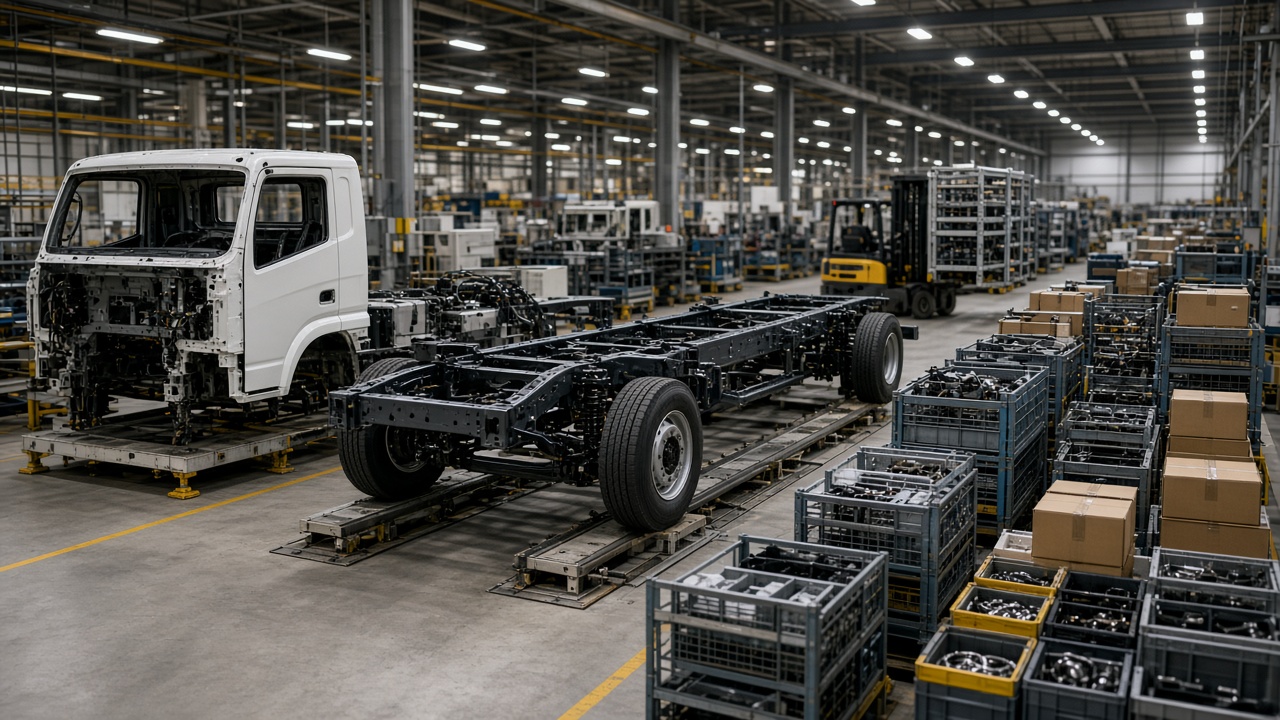
Heavy truck chassis on the assembly line with line-side kits and modules

Why Truck Halls Feel This Harder

Passenger-car plants feel the same pressure, but commercial-vehicle builds amplify it. Axles, cabs, powertrains, and body options multiply the kit variants per station. Many modules arrive under just-in-sequence (JIS), not only under just-in-time (JIT) timing. JIS means the rack must match the build order at the station, not only arrive sometime that morning. A swapped cage is as dangerous as a late one, because line-side space leaves little room to reshuffle.

‍

A lot of heavy-truck manufacturers also run deep primary processes in-house. Axle dress, cab prep, frame work, and module builds start hours before the chassis reaches assembly. Those internal builds have to finish and move on a planned clock so the part arrives at the station when the build ticket says so. Other parts still come from suppliers on short JIS windows. The plant therefore runs two clocks at once: make it on site in time, and receive the rest in sequence. Either clock fails and Station 12 waits the same way.

‍

Published plant studies make the supplier side of that window concrete. In a redesign study of Volkswagen Commercial Vehicles logistics in Hannover, direct JIS suppliers sat inside a five-kilometre radius, and the final call-off after painted bodies entered assembly left most parts a handling window of roughly three to six hours (two to six hours on Amarok components). That is enough time to sequence and haul when the path is clean. It is not enough when an in-house module sits between process two and process three, or when a supplier rack sits in the wrong buffer and the only recovery tool is a radio search across the hall.

‍

Internal logistics owns the metres between those processes and the station. End-to-end logistics visibility covers the supplier path into the same picture. twinzo is built to do both, so a late in-house build and a late inbound cage show up on one model. The decision filter for whether location tech helps that job is in when RTLS makes sense for material, not in a brochure accuracy claim.

‍

What a Late Kit Actually Costs

Industry numbers put a price on the minutes Station 12 burns. Siemens' True Cost of Downtime 2024 report puts unplanned downtime at a large automotive plant at about $2.3 million per hour, more than $600 per second. Across the large plants Siemens surveyed, sites still lost an average of about 27 hours a month to unplanned downtime even after years of cutting incident counts. Not every truck micro-stop is a full plant hour, and heavy-truck lines are not always the same scale as volume car plants. The direction is still clear: once assembly waits on material, the cost stack (labor, energy, overtime, late customer delivery) rises fast enough that searching the hall is a poor recovery plan.

‍

Upstream pressure makes the floor job worse. Capgemini's Automotive supply chain research found that difficulties sourcing parts were the most common cause of order backlogs, named by 61 percent of respondents. Inbound logistics sat among the top disruptions for 39 percent. Those figures describe the broader automotive chain, including commercial vehicles. When inbound is already tight, the plant cannot afford to lose sequenced kits again inside the four walls.

‍

Commercial-vehicle OEMs also live with a known inventory management paradox. Vector Consulting's write-up on CV OEM supply chains quotes an operations head who keeps roughly 10 to 15 days of component inventory yet says the assembly line would stop after the next shift if the front gate locked. The same piece notes that schedule-level OTIF for part supply rarely sits above 90 percent, and that roughly 40 percent of schedules change in a typical month. High stock days do not equal a full kit at Station 12, which is the opposite of what lean manufacturing wants from thin, honest buffers. Broken kits and plan changes push rush moves into the hall, which is exactly when radio logistics loses the cage.

‍

Primary Process Late, Hours Before Assembly

Typical moment: axle prep or cab dress runs slow on the morning shift. The delay is real, but assembly will not feel it for hours. Without a spatial rule, the only people who know are the ones standing at that primary process. The sequenced drop for Station 12 still looks healthy on the schedule until the chassis arrives and the kit is not there. MES may still show the order open in the right cell. It does not show that the carrier never left for the next process, or that it sat in a side aisle after the operation closed.

‍

Heavy-truck plants that keep primary work in-house need that early handoff more than a dock-only story. The kit has to be built in time to reach planned assembly a few hours down the line. Position-based alerts change the handoff. When tagged carriers or movers leave a named primary zone later than the plant rule allows, logistics and production see the lag while there is still time to resequence, pull a spare kit, or rebalance the feed. That is the same family of area rules plants already use for no-go and dwell, applied to the feed that protects assembly. The commercial vehicles industry page frames it the same way: get notified when material through primary processes is delayed hours before assembly, not after the micro-stop lands in MES.

‍

Match the radio to the decision first. If the job is 'warn me when axle prep is late relative to tonight's build,' you need zone presence and timestamps on the carriers that matter, not centimeter claims on every pallet in the plant. That discipline is the point of start with the decision, not the technology.

‍

Hour Three on a Six-Hour Kit Path

Take a kitting path that must reach Station 12 just in time after about six hours of plant work. The kit moves through three named processes, each with a planned dwell and a planned move to the next zone. At hour three the schedule still looks fine if you only read MES operation status. On the transport floor the carrier is still in process-one buffer, or it is riding the wrong loop after process two. True position from a real-time location system (RTLS) already says the remaining three hours are not enough at the normal pace. Assembly does not need a stoppage yet. It needs a risk call: the part that should be at Station 12 in three hours already has a real chance of being late.

‍

twinzo wires different notifications for different stages of that path. One rule watches whether the carrier left process one by the planned minute. Another watches presence in the process-two polygon and the handoff aisle. Another watches whether the kit entered the line-side buffer with enough lead time before the chassis. That is asset tracking tied to the process clock, not a status flag alone. Supplier parts get their own rules on gate, dock, and JIS drop zones. In-house builds get rules on process zones and the moves between them. The same digital twin carries both, so the assembly lead sees one risk list instead of two radio languages. Depth on the supplier-to-line pattern sits in end-to-end JIT logistics visibility. Indoor and outdoor continuity for the same move is in GPS plus indoor location across sites.

‍

The point of the hour-three alert is not to replace MES. MES still owns the operation. The twin owns the place. When place and plan disagree early, assembly can pull an alternate kit, resequence the next chassis, or free a mover before the micro-stop is booked. That is earlier than a late scan and earlier than a starved station. It is also earlier than a dashboard that only updates when someone walks the hall and confirms what the radio already feared.

‍

Empty Buffer, Wrong Kit, Same Stoppage

A second typical moment looks quieter and costs the same. The buffer face for Station 12 is empty, or it holds the wrong module for the next chassis. The previous team left a cage one aisle over because the milk-run was late and someone 'parked it safely.' WMS still believes the putaway is correct. Production believes the kit should be line-side. Search time begins.

‍

Industry lean language already names that waste as motion and waiting inside muda. On a truck floor it is not abstract. Drivers and line-side teams burn minutes hunting kits, modules, and empties across steel aisles while a chassis sits under lights. Capgemini's inbound-logistics pressure makes that hunt more frequent: when schedules change and rush parts arrive, temporary drops multiply and the map in people's heads goes stale.

‍

Live positions on the carriers that matter (or on the movers that carry them) turn the empty buffer into an early signal. Spot the shortage while replenishment can still run. Spot the wrong location before the station claims the kit. The longer job split between tagging movers and tagging material is in tagging the mover vs tagging the material. For a missing cage that already left the dock scan, the floor story matches searching the hall for a missing cage.

‍

Plan Distance Versus Real Travel

MES and the logistics plan often assume a clean path from supermarket to station. Real travel takes the long way around a blocked aisle, doubles back for an empty, or serves three radio calls before the sequenced drop. Those extra metres rarely show up as a named stoppage. They show up as chronic lateness on the feed that nobody can prove.

‍

Compare plan and MES intent with real movements on one hall model. Spaghetti from the tagged fleet for a peak window shows the waste loops. Area occurrence and dwell on the buffer polygons show where time piles up. That material-flow analysis is closer to a living value stream mapping view than to a clipboard walk, and it is the same stack used for internal logistics optimization on other floors, applied to truck kits before they go late. Related depth sits in logistics analysis with a digital twin.

‍

When Vector's schedule churn hits (roughly four in ten schedules changing in a month), the plan path becomes fiction faster. Continuous measurement of real travel is how you see which bottlenecks are layout and which are dispatch. Snapshot lean walks miss the hour when the rush parts arrived and every driver left the standard loop.

‍

Materials and Finished Trucks on One Map

Heavy-truck plants also lose alignment between inbound material and finished goods. Assembly believes the next unit is clear. The yard is holding finished trucks that still need a rework part. The supermarket is feeding a sequence that no longer matches what will leave the hall today. Separate dashboards keep those stories apart until the morning meeting argues about which one is true.

‍

One spatial view of inbound flow and finished vehicles keeps plan and live production on the same picture. A finished truck that sits too long in a named yard polygon is as visible as a late kit at Station 12. Production, logistics, and shipping stop trading partial status. That is live plant visibility in the gemba sense: go see, on a model the hall already recognizes, without walking every aisle first. The product path is monitor production on the same twin that already carries the material feed, with 3D visualization that matches the hall people walk.

‍

An operational digital twin of the factory earns its keep here because it joins systems by space. SAP, MES, and WMS stay the systems of record. The twin shows where their events land on the floor so a late primary process, an empty buffer, and a parked finished truck stop living in three different conversations.

‍

How to Put the Hall on One Picture

On the twin, the path from a starved chassis to a usable picture is short when positions and areas are first-class:

‍

1. Name the stations and process stages - Station 12 feed face, each in-house primary zone on the six-hour path, supermarket exit, supplier drop, finished-yard polygons the plant already uses in speech.

2. Decide what to locate - sequenced carriers for in-house kits and inbound modules, line-feed forklifts, tuggers on the kit loop. Leave the rest of the plant out of the first pilot so the map stays readable.

3. Wire stage alerts that protect assembly - late leave from process one, missing presence at process two by hour three, empty line-side buffer, wrong-zone presence for a named kit family, and separate rules for supplier gate-to-drop.

4. Compare plan vs real travel - spaghetti and area views on the same window that actually hurt, not on the calm hour when the vendor visited.

5. Review stoppages, early risk calls, and search time on real data - then decide rollout, wider tagging, or stop. A live pilot twin on your RTLS in a few weeks beats a year of slideware.

‍

twinzo sits beside SAP, MES, and WMS. It does not replace them. The pilot answers whether Station 12 waits less often when the hall is visible, which is the only ROI story that matters to the floor. If you want that scoped to your layout and fleet size, book a 30-min fleet assessment. The same walk-through path is summarized on the commercial vehicles page.

‍

Call-Offs That Move the Kit on Demand

Visibility without a claimable job still leaves the station on the radio. A workstation material call-off turns 'we need the next kit' into a transport request logistics can accept, instead of a shout that the nearest driver may or may not hear. Plants that already run digital pull often pair that signal with e-kanban. On truck floors that already run milk-runs, the call often opens a staged path: supermarket prep, then tugger delivery. On pallet-size modules, the call is often a direct forklift bring.

‍

That is material flow orchestration tied to the same spatial picture. On-demand moves when a workstation calls beat fixed tours that cruise past an empty Station 12 because the loop clock said so. The older twinzo write-up on the same idea is AOS as part of the digital twin. Related plant stories sit in the case library.

‍

When Capgemini-style inbound pressure and Vector-style schedule churn hit the same week, call-offs keep the floor from inventing a new radio language for every rush part. The request carries place, material, and priority. The twin shows whether the claimed mover is actually heading toward the starved buffer.

‍

The Fleet That Feeds the Stations

Even with call-offs, the hall still fails when half the fleet runs empty while two units carry every urgent line call. Finished WIP sits at line end. The hot trucks are stuck in another bay. The quiet trucks loop corridors that never touch Station 12. Overtime and rental quotes follow the loud units.

‍

Forklift tracking on the twin ranks utilization, empty travel, and saturation on the same windows that starved the chassis. That is industrial fleet management with proof, not overtime guesses. Rebalance lanes and radio groups before you buy more steel. The live map alone will not prove that. History and saturation will, which is why ask about history, not the live RTLS map belongs in the same conversation as kit visibility. Product entry for logistics optimization on the fleet job is optimize internal logistics.

‍

Siemens' downtime cost and Capgemini's sourcing pressure make empty travel expensive in a second way: every wasted loop is capacity you already paid for while assembly waits on a kit that is already inside the plant. Treat the fleet as part of the material story, not as a separate 'logistics project' that never joins production's stoppage review.

‍

Same Pattern on Adjacent Truck Jobs

Late kits are the lead case. The same spatial discipline covers neighboring jobs on a commercial-vehicle site:

‍

• Sequenced rack integrity - prove the JIS order survived the last metres, not only the trailer ETA.

• In-house multi-process kits - stage alerts from process one through line-side so assembly hears risk at hour three, not at the chassis.

• Supplier and plant on one risk list - inbound JIS and internal builds share the same twin and notification stack.

• Empties return - claimable pickup at line end so finished cages do not orphan while drivers chase radio work.

• Yard dwell on finished trucks - long sits in named polygons before shipping or rework.

• Shared-aisle congestion - milk-run and line-feed blocking each other at the crossing that feeds Station 12.

• Temporary movers without permanent tags - place borrowed forklifts on the twin when the rental fleet shows up for a peak week. See add assets without live tracking.

• AGV and tugger loops - when an automated guided vehicle (AGV) or tugger shares the same aisles as forklifts, keep stage alerts on the kit carrier, not only on the mover.

• Multi-hall feed - primary process in one building, assembly in another, same map for the lag alert.

‍

See the Kit Before the Chassis Waits

Commercial-vehicle plants already know that high inventory days do not guarantee a full kit at the station. Many of those kits are built in-house across several primary processes before they ever see a supplier dock. Siemens puts a hard price on the hour that follows a miss. Capgemini shows how often parts and inbound logistics still drive backlog pressure. Vector shows how schedule churn and incomplete kits keep the firefighting cycle alive. The floor fix is earlier visibility on both paths, process-stage notifications on true positions, call-offs that move kits on demand, and a fleet picture that explains why Station 12 waited. That is smart manufacturing as a hall people can act on, not as a slogan wall.

‍

Start from the commercial vehicles industry page for the truck-plant shape, then open twinzo features for the product stack. The solutions that fit this story are material flow orchestration, live plant visibility, and forklift fleet optimization. For IT and OT constraints, see security and integration.

‍

Ready to map Station 12, the in-house process zones, and the hour-three checkpoints on your own layout? Book a 30-min fleet assessment. Not ready to book yet? Calculate your savings, get the whitepaper, browse the case library, or get in touch.

‍

You might also be interested in:

No previous posts
Back to all posts
Ask About History, Not the Live RTLS Map

Ask About History, Not the Live RTLS Map

Line 3 starved mid-shift. The live RTLS map already moved on. Replay yesterday's internal moves on the twin and you see the crossing wait, the orphan WIP, and the empty forklifts you can actually fix.

Landscape mode is not supported, please rotate your device.

By clicking “Accept”, you agree to the storing of cookies on your device to enhance site navigation, analyze site usage, and assist in our marketing efforts. View our Privacy Policy for more information.