One large building and a large fleet
One roof covers 100,000 m² (about 1.08 million ft²). Dozens of forklifts share it. The lease request for more trucks is already written. A location quote copied from a small pilot will not see the empty kilometres (miles). A quote that carpets every bay in exact-position hardware will not pay back within six months for a different reason.
What a shared grid is paying for
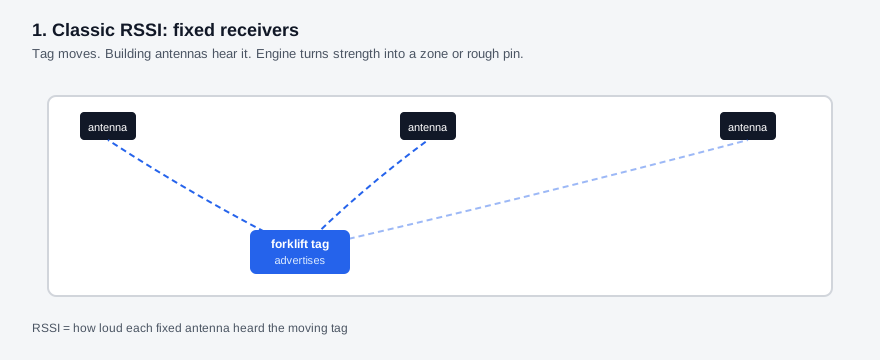
On one large building the infrastructure is mostly an area cost, and the fleet is large enough to share it. Classic BLE at medium precision, about 1–3 m (3–10 ft), is enough for corridors, dwell, and fleet load. AOS (commonly known as FGS) sits beside it so claimable jobs and live paths use one hall. Exact floor position stays in the cells that need it, as described in exact floor position only where the mark matters.
Industry notes on large floorplates point the same way: a medium-precision layout across a big hall costs less per square metre (per square foot) than site-wide UWB, and the benefit is the trucks you no longer need. A small fleet in a hall this size cannot make that trade. That case is described in small fleet in a large hall.
What measured sites in this size band returned
A documented 30,000 m² (about 323,000 ft²) automotive Tier-2 plant invested €120,000. The fleet fell from 36 to 20 forklifts and drivers from 108 to 60. First-year operating cost saved was €960,000. A second plant of the same size invested €81,000. Productivity rose from 63% to 75%. The fleet fell from 15 to 13. Four FTEs left. First-year operating cost saved was €179,000. Both year-one savings are larger than the investment, which is consistent with ROI within six months. A 100,000 m² (about 1.08 million ft²) roof is the same template at a larger scale: one building, many trucks, one shared grid. It is not a measured euro copy of those two plants.
The fleet cut is described in when buying more forklifts is the wrong first answer. Daily productivity is described in forklift productivity from 63% to 75%.
What you must not export from this roof
The grid that pays here is the wrong template for a compact hall and the wrong template for every shed on a 2 km² (about 494 acre) site. Smaller buildings keep their own combination, described in small fleet in a small hall. Buildings that differ from each other, with outdoor moves between them, keep a VHF layer, described in different buildings across two square kilometres.
Positions and closed jobs from this roof still fill the spatially oriented dataset. Correlation and causality analytics can ask which corridors keep preceding a starve after the fleet is smaller. That record is a reason to keep the locations. It is not a reason to clone the hardware into the next building.
How teams check ROI within six months on one large roof
1. Confirm one roof and a fleet large enough to share the locators - Dozens of trucks, not a handful.
2. Price medium precision for aisles and fleet, plus AOS for the claim loop - Both belong in internal logistics optimization and material order automation.
3. Compare the locator quote with trucks you can release so the investment pays back within six months - Use the €120,000 and €81,000 cases as a template, not as this building's quote.
4. Stop the purchase order at this building's walls - How that test works is described in the six-month return depends on the combination.
What the product can do is on the features overview. How a rollout is priced is on pricing.
Get in touch if you want to test a shared grid on one large roof before anyone copies it across the rest of the site.