When RTLS makes sense for forklifts
Two trucks run hot all shift. Two more wait for radio calls. The rental quote still arrives because the loud units looked like the whole fleet. That pattern is the forklift filter for a [real-time location system (RTLS)](https://www.twinzo.com/glossary/rtls-real-time-location-system): buy continuous location on movers when empty travel and uneven load are expensive enough that the same or a smaller fleet can deliver more value-added work, not when a vehicle map sounds complete.
## What the forklift decision really is
Vehicle location fills the minutes between [WMS](https://www.twinzo.com/glossary/wms-warehouse-management-system) completes and radio 'on the way' claims. Move counts prove a drop happened. They do not prove how many empty kilometers (miles) the truck burned, how long it sat in a blocked aisle, or which driver absorbed every surge. That gap is [asset tracking](https://www.twinzo.com/glossary/asset-tracking) on the mover itself.
The definition sits under [what RTLS is](https://www.twinzo.com/wiki/what-is-rtls). Material economics live under [when RTLS makes sense for material](https://www.twinzo.com/wiki/when-rtls-makes-sense-for-material). People load and security live under [when RTLS makes sense for people](https://www.twinzo.com/wiki/when-rtls-makes-sense-for-people). This page stays on [forklifts](https://www.twinzo.com/glossary/forklift), [tuggers](https://www.twinzo.com/glossary/tugger), and the fleet cost of how they move.
## When empty travel is the money leak
[Non-value-added](https://www.twinzo.com/glossary/non-value-added-work) travel on a mover is time and distance without a useful load: hunting after a vague call, looping a corridor twice, waiting in a pinch point. Last-scan records never draw that path. Coverage dense enough to rebuild movement becomes a [spaghetti](https://www.twinzo.com/glossary/spaghetti-diagram) picture and a [heat map](https://www.twinzo.com/glossary/heat-map-logistics) logistics can act on this week.
Medium-precision location around 1–3 m (3–10 ft) is usually enough to separate loaded corridors from empty loops and to time [dwell](https://www.twinzo.com/glossary/dwell-time) in buffers. That picture is what [internal logistics optimization](https://www.twinzo.com/optimize-internal-logistics) runs on. The longer empty-travel benefit story sits under [pinpointing non-value-added travel on the floor](https://www.twinzo.com/wiki/pinpointing-non-value-added-travel-on-the-floor). If empty share is low and the hall is short, walking and radio may still be cheaper than a tagged fleet.
## When load distribution across the fleet is broken
A healthy fleet does not ask two trucks to carry the hall while others idle. [Fleet saturation](https://www.twinzo.com/glossary/fleet-saturation) ranking from live locations shows that spread before overtime and rental quotes harden into habit. Rebalancing lanes and call groups is often the first win. Buying another truck is the wrong win when spare capacity already sits quiet.
That is [fleet management](https://www.twinzo.com/glossary/fleet-management) tied to location, not only to maintenance hours. How to run the balance job once tags are on sits under [balancing forklift fleet saturation](https://www.twinzo.com/wiki/balancing-forklift-fleet-saturation). Compare shifts with the same evidence under [shift balancing with RTLS](https://www.twinzo.com/wiki/shift-balancing-with-rtls) when night still copies the morning roster for no measured reason.
## When the same fleet can deliver more value-added output
Cutting empty travel and evening the load is not asking drivers to go faster. It removes scramble work so more of the shift is loaded, purposeful moves. Stress drops when hot trucks stop absorbing every urgent kit. Fleet cost drops when fuel, battery, wear, and rental pressure follow empty miles down.
The ROI shape plants actually buy is simple. Hold today's completes with fewer empty kilometers (miles), or raise completes without adding vehicles. The same or a smaller fleet delivers more value-added output. [Throughput](https://www.twinzo.com/glossary/throughput) of useful moves per truck is the [KPI](https://www.twinzo.com/glossary/kpi-key-performance-indicator) that matches, not vehicle hours alone. [Total cost of ownership](https://www.twinzo.com/glossary/tco-total-cost-of-ownership) for the fleet falls when spare units and overtime on hot trucks stop being the default answer.
## Volume, hall size, and what to tag
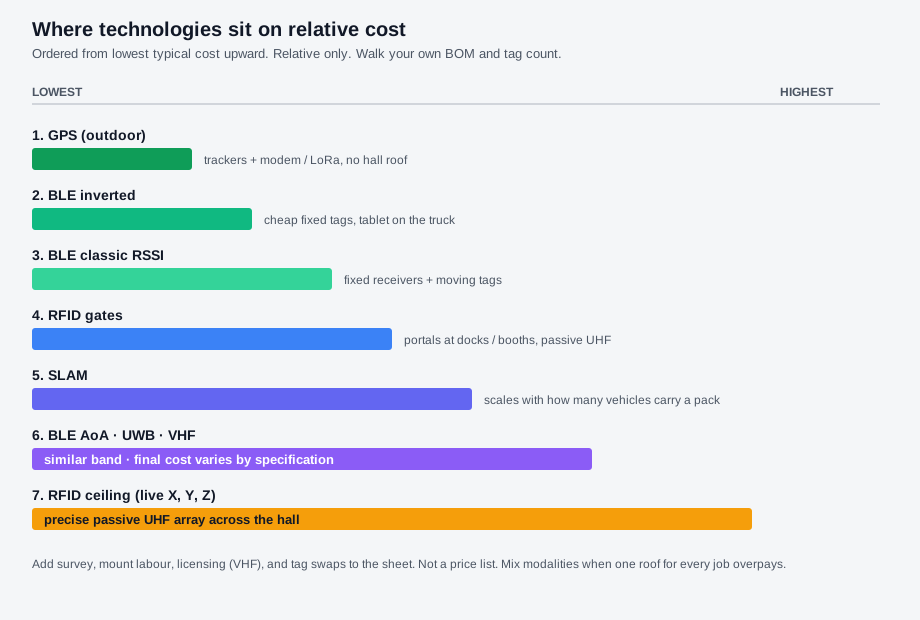
Volume decides whether empty loops are a rare annoyance or a daily drain. A hall that moves hundreds of unit loads per shift has a different case than a compact bay where every truck is in sight from dispatch. Tag the movers that carry the logistics questions you care about. You rarely need every spare parked unit on day one.
Accuracy follows the job. Utilization, empty share, and bay-level dwell usually need medium precision. Pedestrian [no-go](https://www.twinzo.com/glossary/no-go-zone) boxes and dock-face rules for trucks may need a tighter floor. Match the modality in [start with the decision, not the technology](https://www.twinzo.com/wiki/start-with-the-decision-not-the-technology). Vehicle tags do not replace material identity. A tagged forklift shows where the truck is. The cage on the forks still needs its own host if the miss is a material miss.
## Different mixes, different ROI
High empty share plus uneven saturation is one case: tag the active fleet, cut empty loops, rebalance, then decide whether the next volume bump needs steel. Yard-only movers with working outdoor location may not need an indoor grid for the trailer park.
Do not force the material or people ROI story onto forklifts. Name empty travel cost, saturation spread, and fleet size pressure, then size the tag count to the trucks that matter. What to put in the cost model sits under [what to include when calculating RTLS ROI](https://www.twinzo.com/wiki/hidden-costs-of-rtls-technologies). Capability depth once the case is clear sits on the [features overview](https://www.twinzo.com/features).
## When you should skip
Skip when every truck is visible from the desk and empty travel is rare. Skip when move counts already match what supervisors will act on, and nobody will open a fleet map during the shift. Skip tagging quiet spares before the active fleet proves value. [Change management](https://www.twinzo.com/glossary/change-management) still matters: mounts, power, and who owns dead tags. [ROI](https://www.twinzo.com/glossary/roi-return-on-investment) does not show up from a spaghetti chart nobody uses.
[Get in touch](https://www.twinzo.com/contact-us) if you want to walk the same forklift mix (empty travel, saturation, and fleet size) on your own facility model.