Compare RTLS technologies: precision, battery, and cost
A logistics lead has three vendor decks and one shared question: which radio family fits aisle search, yard presence, and exact floor position without blowing the battery budget or the install crew. Absolute euros (dollars) wait for a site BOM. Relative precision, power, and cost bands do not. This page places the main RTLS technologies on those three charts so you can shortlist before you walk the floor.
How to read these charts
The bands below are twinzo planning guides from plant work, not lab guarantees. Walk a pilot aisle or yard with inventory in place before you scale. Match the job first under start with the decision, not the technology. The family survey sits in RTLS technologies out there. Peer deep dives cover each radio alone. This page is the comparison layer.
Precision: where each technology sits
Shorter bars mean tighter typical location error. High precision (about 10–30 cm / 4–12 in) fits exact floor position and dock-face proof when line of sight holds. Medium precision (about 1–3 m / 3–10 ft, or about 3–10 m / 10–33 ft on BLE RSSI) fits aisle and bay search for most logistics jobs. Coarse zone presence and outdoor lot presence accept larger jumps.
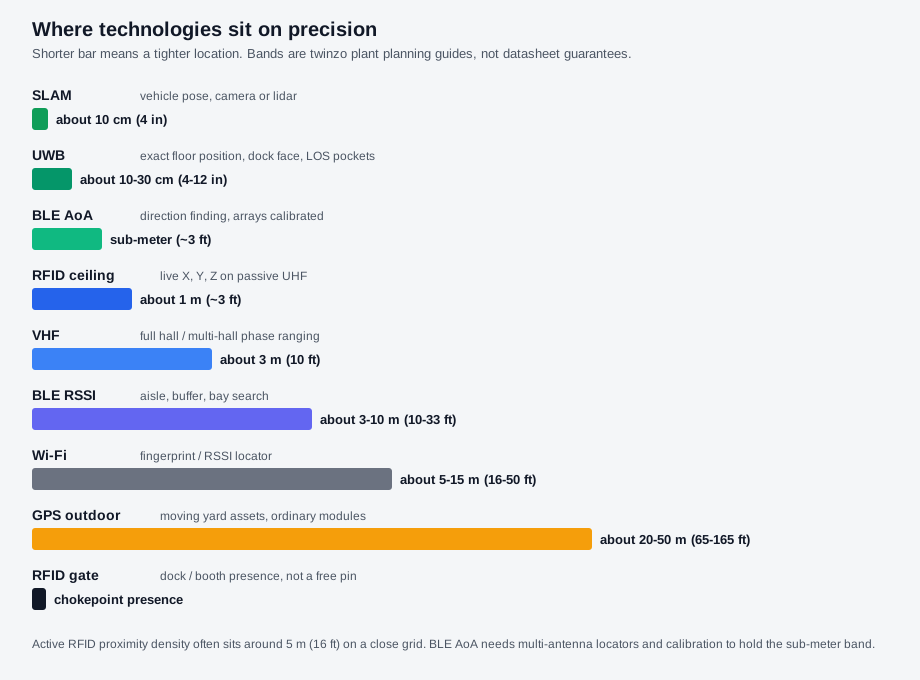
SLAM on a vehicle often plans around 10 cm (4 in). UWB commonly holds about 10–30 cm (4–12 in) under clean line of sight. BLE AoA sits next, near sub-meter (~3 ft) when locator arrays and calibration hold. Ceiling RFID on passive UHF sits near 1 m (~3 ft). VHF plans around 3 m (10 ft) on full-hall layouts. BLE RSSI typically lands about 3–10 m (10–33 ft). Wi-Fi location often sits about 5–15 m (16–50 ft). Outdoor GPS on moving yard assets with ordinary modules commonly jumps about 20–50 m (65–165 ft). RFID gates answer presence at a chokepoint, not a free-space distance. Deep dives: SLAM, UWB, RFID, VHF, BLE, Wi-Fi, GPS.
Battery life: power models, not brochure years
Life claims only mean something next to sample rate. Spaghetti and utilization analytics need a position sample at least every 5 seconds, ideally every 3 seconds. Sub-second updates exist and burn power. Motion wake and fifteen-minute blinks stretch life and starve the chart. Full detail sits under battery life for RTLS.
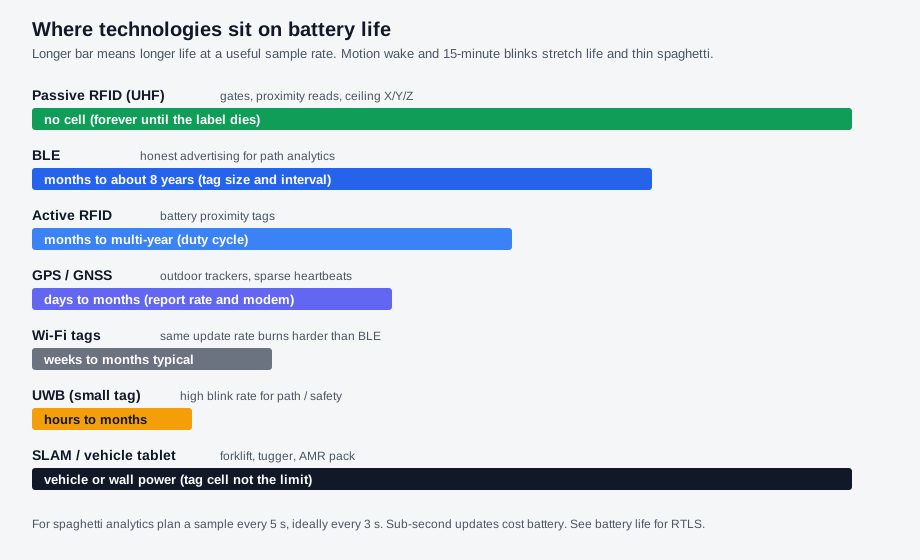
Passive UHF RFID (gates, many proximity reads, ceiling live X, Y, Z) has no cell. BLE often runs months to about eight years depending on tag size and advertising interval. Active RFID and sparse GPS packs sit in the months-to-years band when reports stay rare. Wi-Fi tags burn harder than BLE at the same rate. Small UWB tags at high blink rates often sit hours to months. SLAM packs and forklift tablets pull vehicle power, so the cell on a returnable tag is not the constraint.
Cost: relative bands, not a price list
Absolute euros (dollars) depend on hall size, tag count, labour rates, and how many modalities you mix. The chart below ranks typical cost from lowest upward for common plant job shapes. Put mount labour, tag swaps, licensing, and duty-cycle tricks on the BOM in what to include when calculating RTLS ROI.
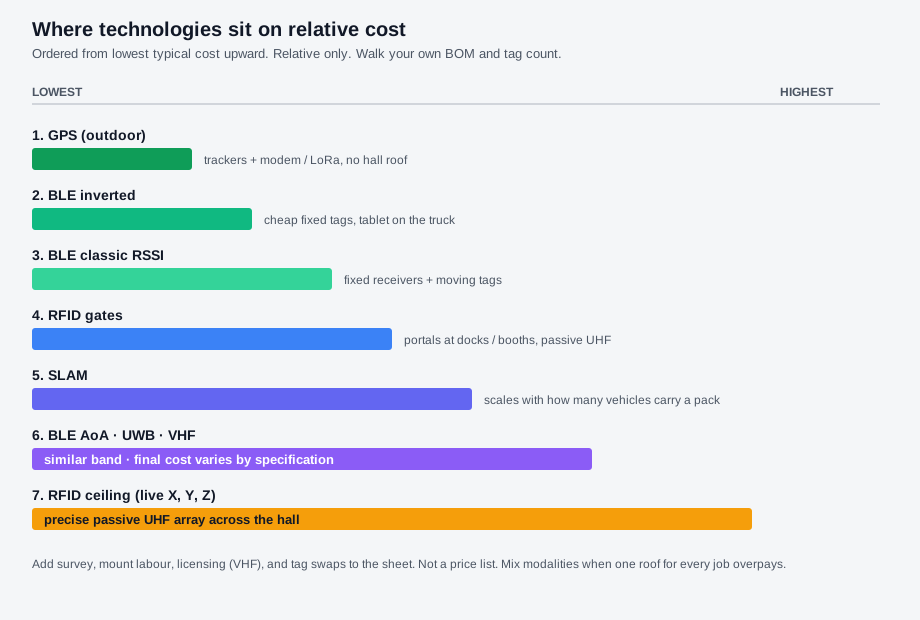
From lowest: outdoor GPS (trackers and modem or LoRa, no hall roof), then inverted BLE (cheap fixed tags, tablet on the truck), then classic BLE RSSI (fixed receivers plus moving tags), then RFID gates (passive UHF portals). SLAM sits next and scales with how many vehicles carry a pack. BLE AoA, UWB, and VHF land in a similar higher band. Final euros (dollars) still swing with specification, density, and licensing. Precise ceiling RFID RTLS (live X, Y, Z on a hall array) sits at the top of this relative ladder. Many plants still mix: GPS in the yard, inverted or classic BLE in the hall, a gate at the dock, UWB only where exact floor position is required, all on one digital twin for internal logistics optimization.
How teams shortlist without picking a religion
1. Name the shift question and accuracy floor - Bay search, exact floor position, gate presence, full-hall fleet, or outdoor lot. Read the precision chart against that floor only.
2. Name the power model and sample rate - Passive, battery, or powered. Reject multi-year claims that silently drop below a 3–5 second analytics floor.
3. Rank relative cost for that job shape - From GPS and inverted BLE upward through gates, SLAM fleet count, then AoA / UWB / VHF, with ceiling RFID at the top. Then price a pilot, not a brochure hall.
4. Mix on one map - Put streams into twinzo for logistics and production monitoring. Product capabilities are on the features overview. Definitions start at what is RTLS.
Use the charts to kill unfit radios early, then prove the shortlist on your concrete. Get in touch if you want to walk precision, battery, and cost bands on your own facility model.